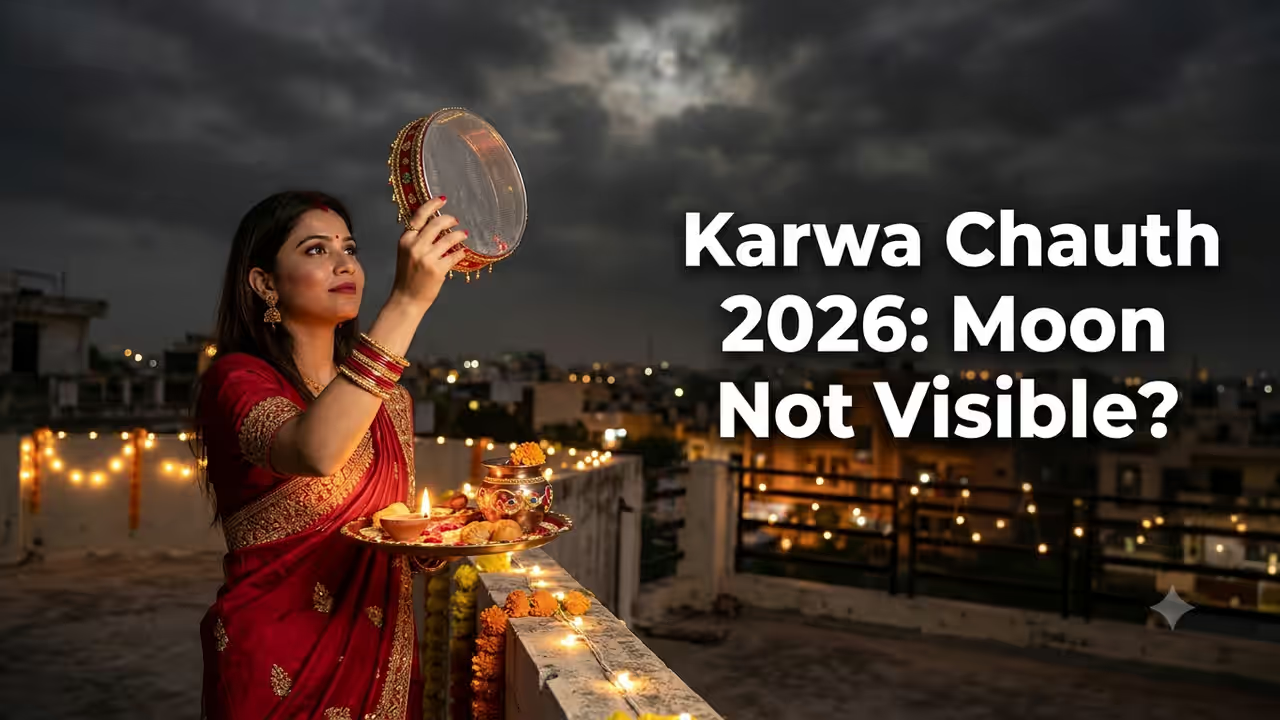
Karwa Chauth is a Hindu festival where married women fast for their husbands' longevity, breaking it only after offering water to the moon. The tradition stems from the mythological tale of Veeravati, whose premature breaking of the fast led to tragic consequences.
Karwa Chauth, the Hindu festival where married women fast for their husbands' health and life, is closely linked with the Moon. It is a festival celebrated widely across North India . It is celebrated on the fourth day following the full moon in the Hindu lunar month of Kartik .
Women fast all day, often without food or drink, and pray for their husbands’ long life. The fast is generally broken once the moon rises. Katha and puja rites are also done and ladies donate water to Moon. On this day, women dress in festive attire, apply mehndi and gather for prayers, and cook delicious food.
What Is The Significance Of Offering Water To The Moon?
One of the important things about this celebration is that the fast is not broken until giving water to the moon. In Hindu mythology, it is thought that the fast is completed without presenting water to the moon.
Related Articles

The notion is said to have come from the mythical account of Veeravati, daughter of a Brahmin called Vedsharma. After marriage, Veeravati kept Karwa Chauth fast for the long life of her spouse but died due to hunger and fainted.
In this condition she was seen by seven brothers who deceived her into believing the moon had risen. So she broke her fast early and found that her spouse had died. Later Goddess Indrani told her that this sad happening was because she broke the fast without presenting Arghya (water) to the moon. Veeravati practiced monthly fasts with dedication and was ultimately obsessed in getting her husband back.
What To Do If Moon Is Not Visible?
Based on this story, many women consider offering water to the moon an important part of Karwa Chauth puja. But pollution, fog and other conditions might have a role in the visibility of the Moon. In such instances, you can check your local news updates and social media to see whether there is any Moon sighting report in your city.
The Moon will be visible in most cities sometime between 8 p.m. and 9 p.m. — with 8:30 p.m. being a popular time. But time may vary from place to another. You may also verify the Moon visibility information using sky-map applications or local weather maps.
There is no single alternative procedure that can confidently be described as universally accepted by all Karwa Chauth traditions.
Some contemporary religious guides recommend offering Arghya in the direction of the Moon at the calculated moonrise time when clouds prevent visibility. Other families prefer to wait for the Moon to become visible or seek guidance from their family priest.
If you cannot see the Moon in the sky and you are feeling sick, it is recommended that you do not take chances with your health by prolonging the fast.