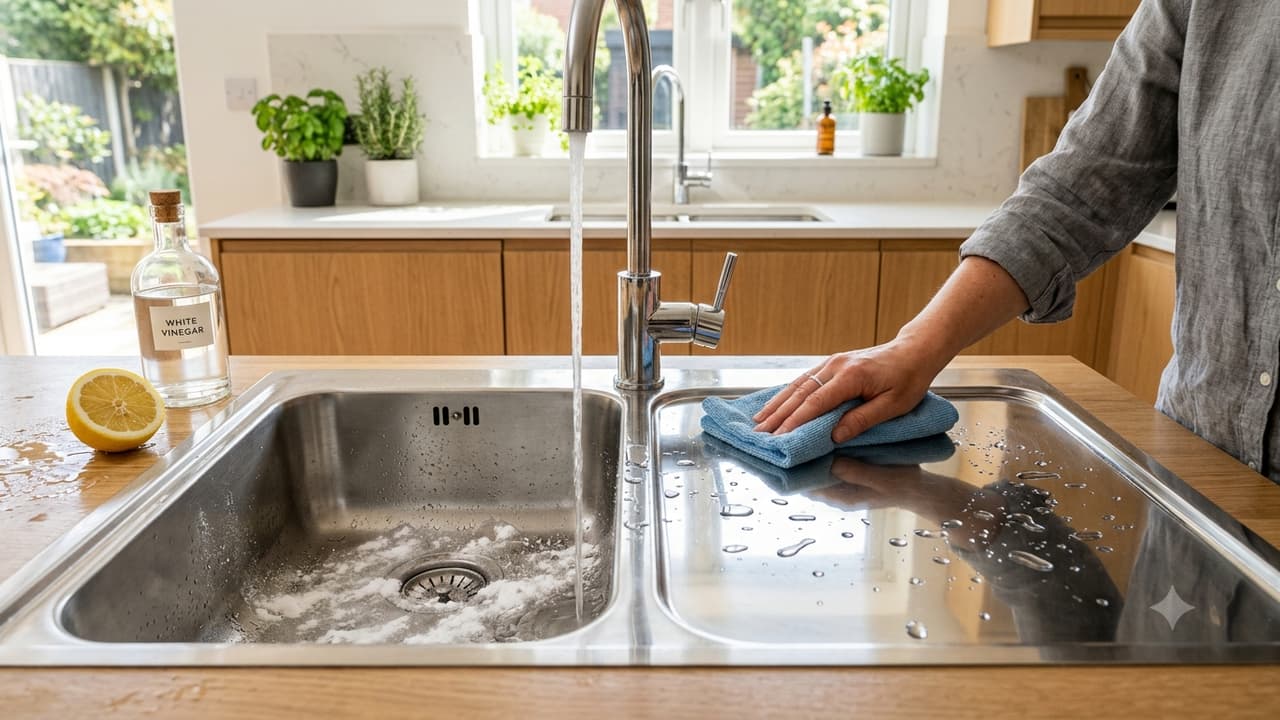
Restore your dull and spotted stainless steel sink to a mirror-like finish using simple, non-abrasive household staples. This step-by-step guide reveals how to effectively remove hard water stains, grease, and rust using baking soda, vinegar, and natural oils.
A stainless steel sink is the workhorse of the modern kitchen. However, over time, constant exposure to hard water minerals, food grease, soap scum, and coffee or tea stains can turn a once-glistening fixture dull and spotted.
Restoring that showroom shine doesn't require harsh, abrasive chemical cleaners. With a few affordable household staples, you can deep clean, sanitize, and polish your stainless steel sink back to a pristine, mirror-like finish. Here is a simple, step-by-step guide to tackling tough stains, grease, and water spots.
Step 1: Clear and Rinse
Before starting, remove all dishware, sponge holders, and drain strainers from the sink. Give the entire basin a thorough rinse with hot water to wash away loose debris and melt surface grease.
Related Articles

Step 2: Scrub with Baking Soda (The Secret Weapon)
Baking soda is a mild abrasive that breaks down grease and lifts surface stains without scratching stainless steel.
How to do it: Sprinkle a generous layer of baking soda across the wet surface of the sink.
The Technique: Using a soft damp sponge or microfiber cloth, scrub the sink along the direction of the metal's grain. Pay extra attention to high-stain areas around the drain, edges, and faucet base.
Step 3: Dissolve Mineral Spots with Vinegar
To remove stubborn limescale, chalky hard water marks, and lingering soap film, bring out white vinegar.
How to do it: Spray distilled white vinegar directly over the baking soda layer.
The Reaction: The vinegar and baking soda will fizz instantly. This chemical reaction breaks down mineral deposits and lifts embedded grime. Let it sit for 3 to 5 minutes, then scrub gently and rinse thoroughly with warm water.
Step 4: Lift Tough Stains and Discoloration
For deep rust spots, dark coffee rings, or stubborn heat stains that won't budge:
Lemon & Salt Method: Cut a fresh lemon in half, sprinkle coarse sea salt directly on the pulp, and use the lemon half as a scrubber over the problem spots. The citric acid brightens the steel while the salt provides extra scrubbing power.
Hydrogen Peroxide Paste: For persistent discoloration, mix baking soda with a few drops of hydrogen peroxide to form a thick paste. Apply to the stain, leave for 15 minutes, scrub, and rinse.
Step 5: Sanitize Faucets, Handles, and Drains
Don't forget the surrounding hardware where bacteria and grime tend to hide.
Use an old toothbrush dipped in a baking soda-vinegar mixture to scrub tight crevices, around the base of the faucet, and inside the drain rim.
Wipe down the handles, spout, and sprayer nozzle with a soft cloth soaked in diluted vinegar.
Step 6: Polish for a Streak-Free, High-Gloss Shine
Rinse the entire sink thoroughly with warm water, then dry it completely with a clean microfiber towel. Leaving water droplets to air-dry will cause new water spots to form immediately.
The Final Polish: Apply a few drops of olive oil, baby oil, or mineral oil to a soft, dry cloth. Buff the stainless steel in circular motions along the metal grain.
The Result: The oil leaves a protective barrier that repels water spots, prevents fingerprint marks, and restores a brilliant, glossy luster.
Pro-Tips to Keep Your Sink Looking New
Longer Never Use Steel Wool: Avoid harsh wire sponges or chlorine bleach, which can scratch, dull, or corrode stainless steel surfaces over time.
Dry After Use: Wipe down the basin with a towel at the end of the day to stop hard water spots from developing.
Avoid Leaving Wet Sponges: Never leave wet dish sponges, rubber mats, or cast-iron pans sitting in the sink overnight, as standing water and trapped moisture lead to rust and water rings.