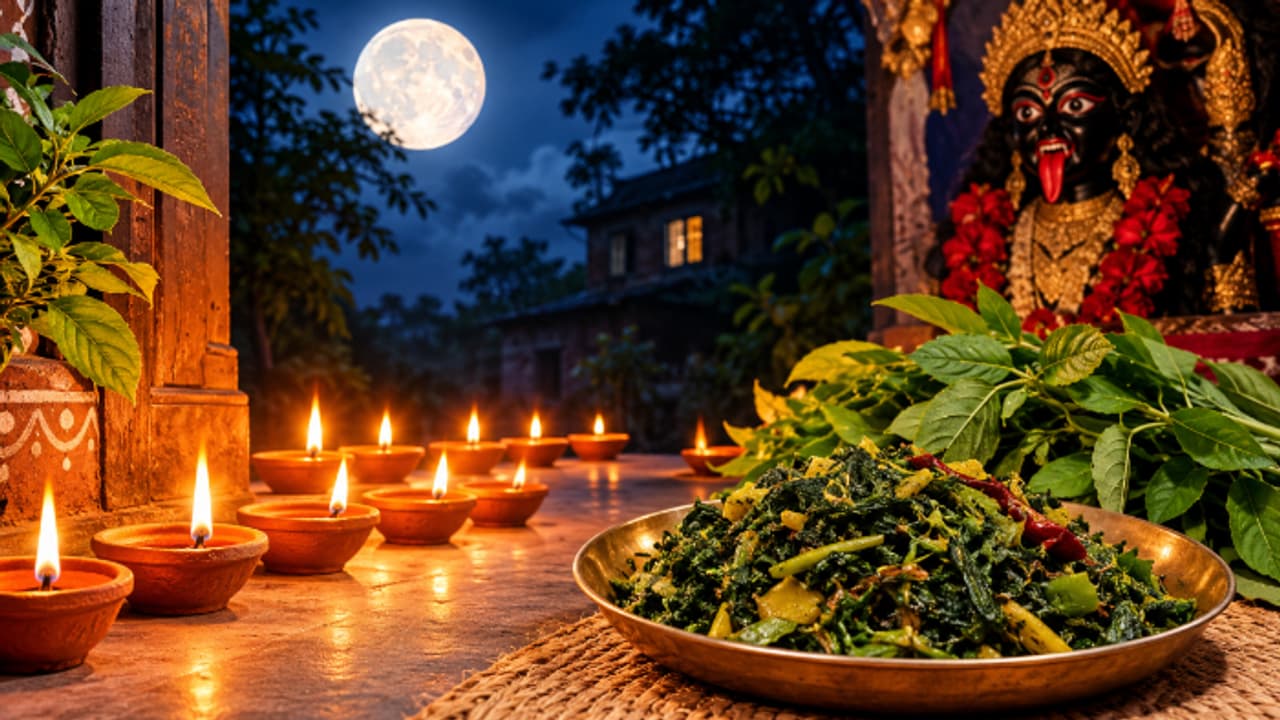
Halloween vs Bhoot Chaturdashi: Forget Halloween costumes and trick-or-treating! Bengal has Bhoot Chaturdashi, a mysterious pre-Kali Puja tradition featuring 14 earthen lamps, 14 leafy greens and fascinating beliefs about ancestral spirits
While Halloween is celebrated with spooky costumes, pumpkin decorations and trick-or-treating, Bengal has its own fascinating night associated with ghosts, spirits and age-old folklore. Known as Bhoot Chaturdashi, the occasion falls on the 14th day of Krishna Paksha in the Bengali month of Kartik, just a day before Kali Puja.
What makes this occasion particularly interesting is its unusual combination of food traditions, ancestral beliefs and rituals. From lighting 14 earthen lamps to preparing a special dish featuring 14 varieties of leafy greens, Bengali households observe customs that have been passed down through generations.
According to popular Bengali folklore, the spirits of 14 generations of ancestors return to their homes on this night. The rituals are believed to help guide them back while protecting families from negative energies and unwanted spirits.
Related Articles

Bhoot Chaturdashi: Why Bengal Celebrates A Night Of Spirits
The name Bhoot Chaturdashi comes from two words: 'Bhoot', meaning ghost or spirit, and 'Chaturdashi', referring to the fourteenth lunar day.
Observed on the eve of Kali Puja, the occasion is closely associated with the Bengali belief in Choddo Purush, or 14 generations of ancestors. According to folklore, the souls of these ancestors return to their former homes for a brief visit on this particular night.
For families, the occasion is also a reminder of their roots and the generations that came before them. The belief in ancestral spirits forms the foundation of several rituals performed throughout the evening.
However, the night is not associated only with welcoming ancestors. Certain folk traditions also connect it with wandering spirits and negative supernatural forces. This is why lighting lamps around the house is considered significant.
In some religious interpretations, Goddess Kali, particularly in her fierce Chamunda form, is also believed to protect devotees from evil spirits and negative energies.
Choddo Prodip And Choddo Shaak: The Two Unusual Rituals Of Bhoot Chaturdashi
Two customs define Bhoot Chaturdashi: lighting 14 earthen lamps and preparing a special dish with 14 varieties of leafy greens.
Choddo Prodip: Why Are 14 Lamps Lit?
As evening approaches, Bengali households light 14 small earthen lamps, traditionally known as Choddo Prodip.
These lamps are placed at different corners of the house, including entrances, windows, staircases and other relatively dark spaces.
According to popular belief, each lamp represents one generation of ancestors. Their light is intended to guide the returning spirits home, ensuring they can find their way through the darkness.
The lamps are also traditionally associated with keeping unwanted spirits away from the household. Beyond their supernatural significance, the ritual reflects the importance of remembering departed family members.
Choddo Shaak: The Traditional Dish Made With 14 Greens
If there is one Bhoot Chaturdashi tradition that stands out for food lovers, it is Choddo Shaak.
On this occasion, Bengali families prepare a traditional preparation using 14 different varieties of leafy greens. Unlike an ordinary vegetable dish, this seasonal combination carries cultural and symbolic significance.
The traditional greens include:
- Ol
- Keu
- Beto
- Kalkasunda
- Neem
- Shorshe
- Shalincha
- Jayanti
- Gulancha
- Palta
- Ghentu
- Hinche
- Shushni
- Sheluka
The exact ingredients may differ depending on the region, family traditions and seasonal availability.
The greens are thoroughly washed, chopped and cooked together, often as a mixed shaak bhaja. The preparation generally has an earthy flavour, with some varieties adding a characteristic bitterness.
In certain households, even the water used to wash the greens is considered significant. Some families traditionally sprinkle it around their homes as part of the ritual.
Choddo Shaak is also associated with traditional beliefs about protecting the family from illness and negative influences. It is a reminder of how food, folklore and seasonal practices come together in Bengali culture.
Why The Number 14 Matters And How Bhoot Chaturdashi Leads To Kali Puja
The number 14 is central to almost every aspect of Bhoot Chaturdashi. Both Choddo Prodip and Choddo Shaak are traditionally associated with Choddo Purush, the 14 generations of ancestors.
While the lamps symbolically guide ancestral spirits home, the 14 varieties of greens form an important part of the evening's traditional food preparations.
The customs reflect a deeper cultural connection with family history, ancestry and remembrance. Although the rituals are rooted in folklore, they continue to hold a special place in Bengali households.
Bhoot Chaturdashi also sets the stage for Kali Puja, one of Bengal's most important religious celebrations.
The following night, devotees worship Goddess Kali, who represents Shakti and the destruction of evil. Homes and neighbourhoods come alive with illuminated decorations, religious ceremonies and elaborate pandals.
Unlike Halloween, Bhoot Chaturdashi does not revolve around costumes, candy or spooky entertainment. Instead, its identity lies in ancestral traditions, fourteen flickering lamps and a distinctive seasonal food preparation.