
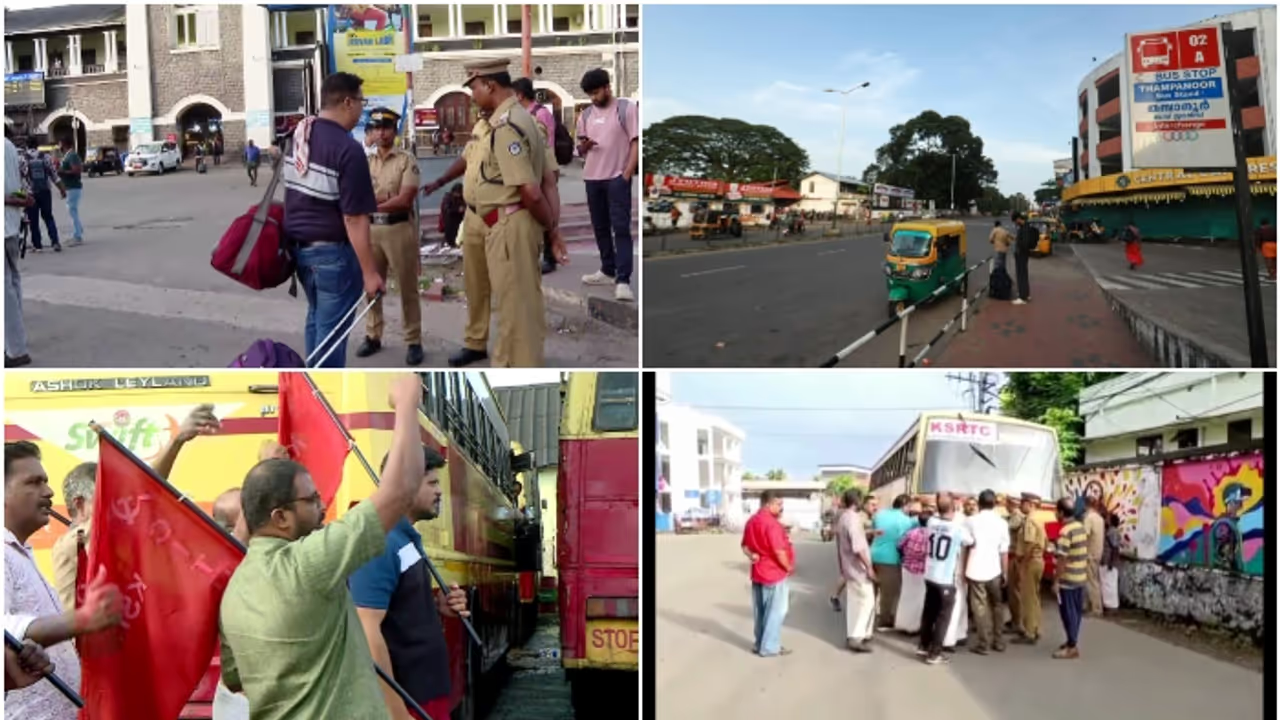
The nationwide strike against the central government's anti-worker policies brought Kerala to a standstill.
Thiruvananthapuram: The nationwide strike called by opposition labour unions in protest against the central government's alleged anti-worker policies brought life to a halt in Kerala. The strike, which resembled a state-wide hartal, led to the suspension of public transport services, shut down commercial activity, and triggered clashes in several locations across the state.
Public transportation was one of the worst-hit sectors, with KSRTC buses staying off the roads entirely. In many areas, efforts by KSRTC employees to run limited services were blocked by protestors. Even in the constituency of Transport Minister Ganesh Kumar, who had publicly declared that KSRTC services would operate, buses were stopped by strike supporters. The widespread disruption left only private vehicles on the roads, while shops and other commercial establishments remained shut. However, train services in the state ran as usual, with police making special arrangements at major railway stations to assist passengers and avoid further inconvenience.
Dies-non declared
In an attempt to deter participation in the strike, the state government declared a 'dies-non' day, effectively warning government employees against taking leave. Despite this, attendance at government offices, particularly the Secretariat in Thiruvananthapuram, was extremely low. Out of 4,686 employees, only 423 turned up for work. The Public Administration Department recorded 320 employees present, while the Finance Department had only 99. The Law Department saw just four employees report for duty. Notably, Chief Secretary V. Venu was among those who attended work at the Secretariat.
Related Articles

Clashes erupt
Tensions escalated in parts of the state, where confrontations between protestors and the police were reported. In Attingal, Thiruvananthapuram, a scuffle broke out after protestors attempted to block a bus and allegedly tried to assault a policeman who intervened. A similar clash occurred in Manjeri, Malappuram, where police were pushed by protestors when they tried to stop them from blocking a private vehicle. Heated verbal exchanges also occurred in several locations where protestors disrupted normal functioning.
In Alappuzha, KSRTC services were entirely suspended, with only two low-floor buses operating to Nedumbassery in the early morning. Some drivers and conductors reported for duty, raising the possibility of resuming limited services, especially on the Chambakulam boat race route, depending on police instructions. Water transport in Alappuzha was also halted, adding to the disruption.
Central government institutions were not spared either. In Kollam, CITU workers blocked employees from entering the head post office. Although many employees had arrived for work, protestors refused to allow the gates to be opened, resulting in a verbal altercation with police. In Kasaragod, protestors blocked vehicles near the new bus stand, further contributing to the chaos.
While Kerala bore the brunt of the strike, its impact was far more limited in the rest of the country. States like Maharashtra, Gujarat, and Goa remained largely unaffected. Public transport, including government buses, ran smoothly, and schools remained open. Mumbai continued its usual pace with traffic congestion and busy streets. In contrast, parts of Bihar and West Bengal witnessed isolated incidents. Protestors blocked the Vande Bharat Express in Jehanabad, Bihar, while in Howrah, West Bengal, police resorted to lathi charge to disperse agitators. However, overall life in cities like Delhi, Mumbai, and Bengaluru remained undisturbed.
Although intended as a national demonstration of worker solidarity, the strike’s intensity was most deeply felt in Kerala. With mass absenteeism in government offices, the suspension of public services, and confrontations across districts, the state experienced near-total paralysis, effectively turning the protest into an unofficial hartal.

