
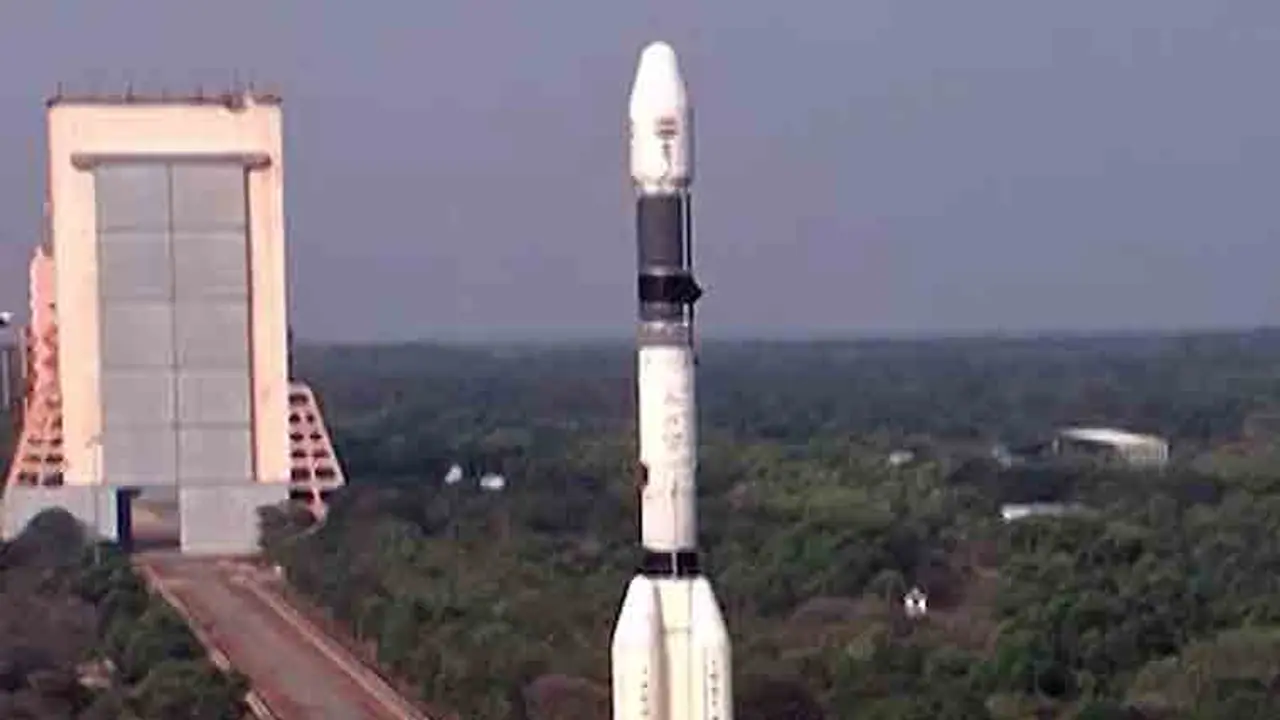
ISRO will be launching its GSLV Mk II to carry the team's 600-kg baby spacecraft to the lunar orbit. Unlike 2008 Chandrayaan-1 mission, ISRO is planning to take a heavier payload, which is a combined launch mass of 3,250 kg. Team Indus has signed an agreement with Antrix, which is ISRO's commerical Arm for using the launch service of PSLV.
In another breakthrough by the ISRO, the space organisation is likely to launch two lunar missions from Indian soil early next year. One of them being the much-awaited Chandrayan-2 mission, which will probe deeper into the lunar surface probe and another mission by Team Indus, which will be launched by a group of space enthusiasts who are likely to unfurl the tricolour on the moon's surface as part of a global lunar competition.
Team Indus would be comprised of young engineers who would be led by IIT-Delhi Alumnus Rahul Narayan. The team would be participating in a global contest to win $30 million Google Lunar XPRIZE. And the competition requires a rover to move 500 meters on the moon's surface and should be able to beam back high-definition images back to Earth.
To fulfill its ambition, Team Indus has roped in investors like Infosys co-founder and former UIDAI chairman Nandan Nilekani and space experts such as former ISRO chairman K Kasturirangan and others from the space agency. Meanwhile, it is being said that Team Indus has signed an agreement with Antrix, which is ISRO's commerical Arm for using the launch service of PSLV.
However, explaining the difference between both the missions, the ISRO chairman said, "Both the missions are scientifically and technically totally different. Even the instruments used in the two spacecrafts will be different. There is no question of any comparison."
Apart from Team Indus, the other participants in the competition are US team (Moon Express), an Israeli team (SpaceIL) and an international team (Synergy Moon). PSLV will deploy its heavyweight rocket GSLV Mk II for take its 600-kg baby spacecraft to the lunar orbit. Dr K Sivan, director of Thiruvananthapuram-based Vikram Sarabhai Space Centre, speaking to TOI, said, "Unlike the 2008 Chandrayaan-1 mission when PSLV rocket was used for carrying the spacecraft, this time ISRO is planning to take a heavier payload (combined launch mass: 3,250 kg) comprising orbiter, lander and rover to the moon. Therefore, GSLV Mk II is the preferred choice.”
