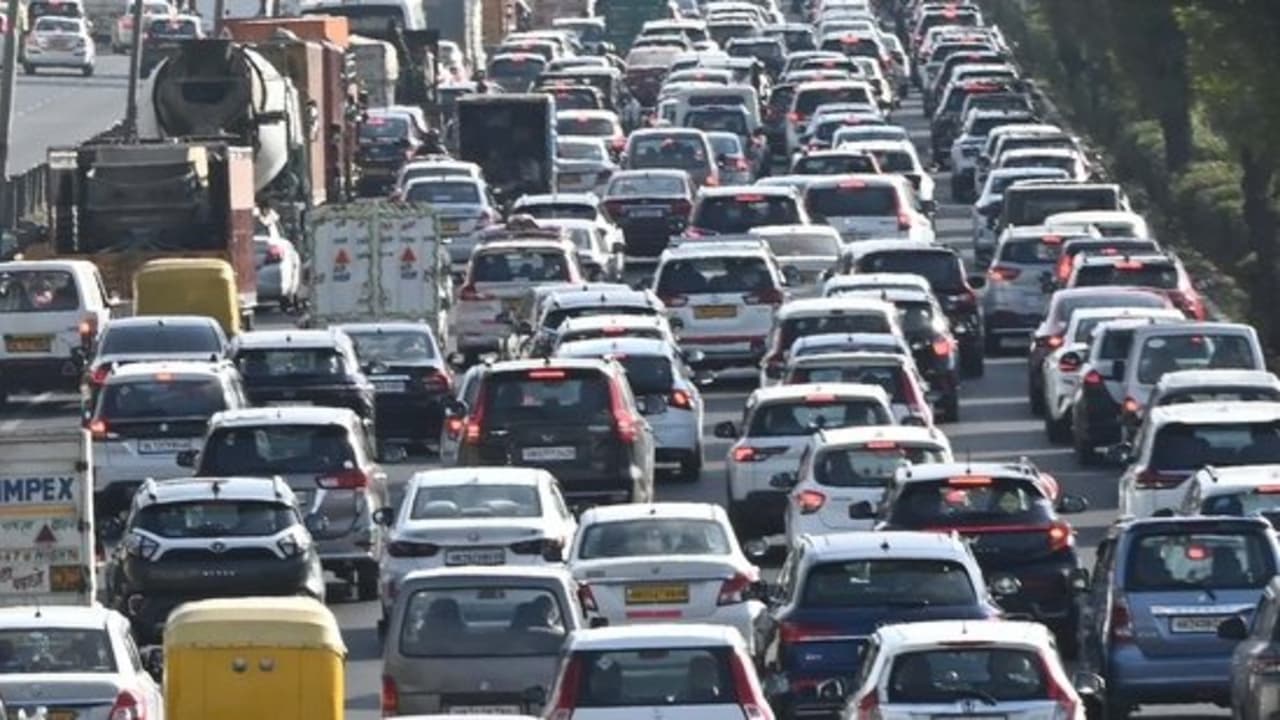
A founder's LinkedIn post about his daily commute in Bengaluru has sparked a debate on civic responsibility and infrastructure. He observed that a major traffic jam is caused by numerous pedestrians crossing a busy road, despite the presence of a foot overbridge, leading to discussions on convenience versus urban design.
A founder's daily travel in Bengaluru has raised some concerns about civic conduct and municipal infrastructure. What started as a typical stroll to the badminton court evolved into an observation about how minor decisions made by people may destabilise a whole system.
In a LinkedIn post, Aaditya Aanand described how a 5-kilometer trip that should take "not more than 10 minutes" ended up taking longer each day. He leaves home at 6.40 a.m. and travels to HAL Old Airport Road, but he frequently gets caught in traffic.
He explained the problem, writing, "You know there is a HAL office here, and people work a 7 a.m. shift." According to him, the problem occurs at 6:50 a.m., when a big number of employees cross the street at the same time, causing congestion. "Irony is that hundreds of HAL employees cross the road causing a traffic jam and chaos," he said.
Related Articles

According to the CEO, the issue is not just the volume of vehicles but also the way pedestrians cross the road during peak hours. He noted that despite the presence of a foot overbridge at the same spot, many people choose to cross directly through traffic, bringing vehicles to a halt.
He also pointed to what he sees as a contradiction: even with safer, designated infrastructure available, it is often ignored in favour of more immediate but disruptive crossing methods.
Check Out Viral Post
How Did Social Media React?
The post has sparked widespread discussion, with people weighing in on both sides. While some acknowledged that disregarding fundamental infrastructure contributes to everyday traffic problems, others questioned the utility of pedestrian bridges, claiming that considerations such as accessibility and convenience frequently discourage people from utilising them.
One user wrote, "While this appears funny, it reflects the sad reality that our cities are built for cars, not people. Pedestrian bridges are car infrastructure, not pedestrian infrastructure. They impede pedestrians while facilitating car movement. Nobody wants to climb, then descend, 2 flights of stairs to cross a 2 lane road. Let alone the accessibility nightmare to disabled people."
Another commented, "Unless there are lifts or escalators, it's unfair to expect people to use a foot overbridge every day. If the infrastructure isn't designed for ease and accessibility, people aren't the problem, the system is."
A third said, "Convenience always wins over discipline, especially when people are in a rush to make it to an early shift.
The conversation illustrates a common trend in Indian cities, where infrastructure and conduct frequently fail to coincide. As Aanand's piece illustrates, the problem may not always be a lack of answers, but rather how consistently they are applied.