
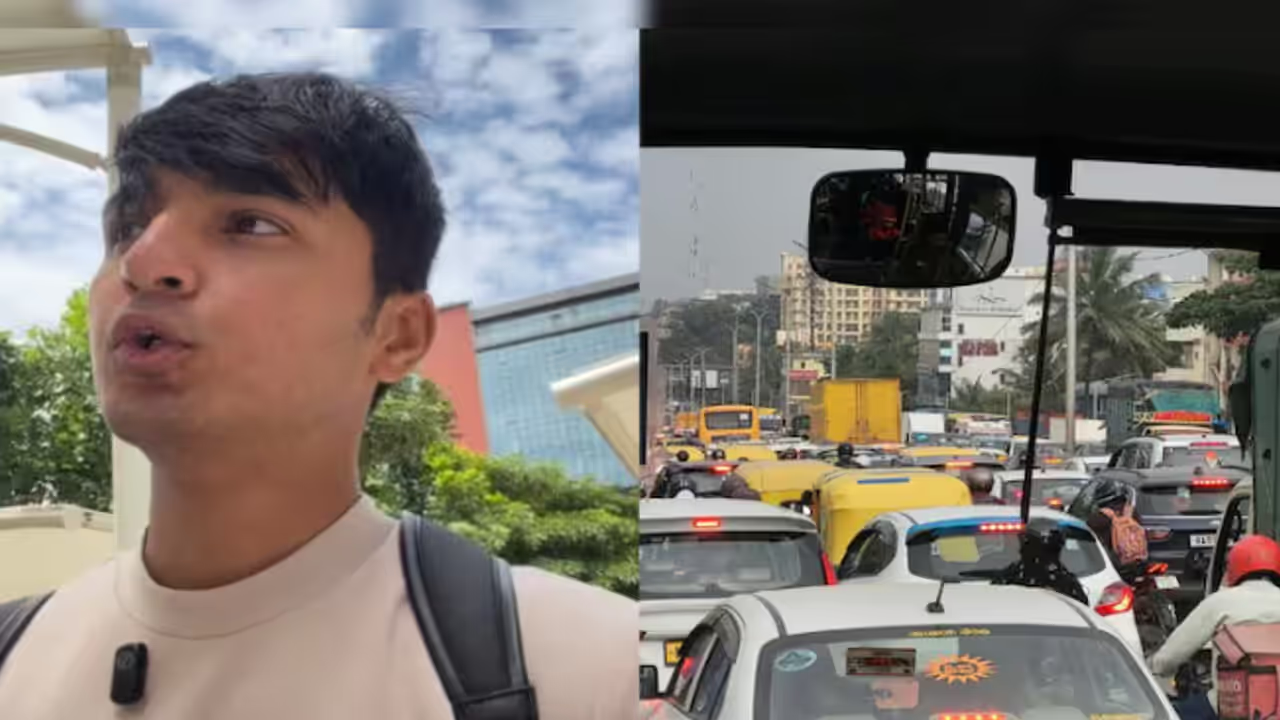
A Google employee's viral social media post about taking 45 minutes to travel 4 kms has spotlighted Bengaluru's severe traffic congestion. The post resonated with frustrated residents, triggering widespread online discussion. Many citizens attribute worsening problem to rapid urbanization, inadequate infrastructure, and rising number of vehicles.
Bengaluru’s traffic woes are once again under the spotlight after a Google employee’s viral social media post highlighted the daily struggles faced by commuters in India’s tech capital. The post, which described taking 45 minutes to travel just 4 kilometres, struck a chord with thousands of frustrated residents and quickly triggered widespread online discussion about the city’s worsening congestion problem.
The viral post was shared on X by a Google software engineer who expressed disbelief over the time taken to cover such a short distance in Bengaluru. Sharing his experience, he wrote: “4 km in 45 minutes. Bengaluru traffic is undefeated.”
The statement quickly resonated with people across the city, many of whom flooded social media with their own experiences of being stuck in traffic for hours despite travelling relatively short distances.
Several users blamed rapid urbanisation, inadequate road infrastructure, poor public transport connectivity, and increasing vehicle numbers for Bengaluru’s growing traffic nightmare. Others pointed out that traffic congestion has become one of the biggest quality-of-life issues for professionals living in the city.
One user commented, “In Bengaluru, distance is measured in time, not kilometres.”
Another joked, “You can probably walk faster during peak hours.”
The issue of traffic congestion has long plagued Bengaluru, especially in major IT corridors where office commuters face severe delays during peak hours. Experts have repeatedly warned that without large-scale improvements in public transportation, road planning, and urban infrastructure, the city’s mobility crisis could worsen further in the coming years.
The viral post has once again reignited conversations about sustainable urban planning and the urgent need for long-term traffic solutions in one of India’s fastest-growing metropolitan cities.
