Padil-Subrahmanya rail route in Dakshina Kannada handled 16.38 lakh passengers and generated ₹31.31 crore in revenue between January 2025 and August 2026. Railway users have sought better infrastructure and more train services.
The Padil-Subrahmanya Road railway corridor on the outskirts of Mangaluru has recorded strong passenger demand, highlighting its growing importance for both local commuters and religious tourists in Dakshina Kannada. The nine stations along the route handled a massive 16.38 lakh passengers between January 2025 and August 2026, generating around ₹31.31 crore in passenger revenue for the Railways. The figures underline the significance of the corridor, which connects several rural areas with important religious and tourism destinations. The data was obtained through an RTI query by the Dakshina Kannada District Railway Users Committee.
The official data covers a 20-month period from January 2025 to August 2026. The nine stations on the route are Bantwal, Neralakatte, Kabaka Puttur, Narimogaru, Kaniyoor, Edamangala, Kodimbala, Bajakare and Subrahmanya Road.
During this period, the stations collectively handled 10.51 lakh unreserved passengers and 5.87 lakh reserved passengers. The Railways earned ₹7.55 crore from unreserved tickets and ₹23.76 crore from reserved tickets.
Related Articles

Subrahmanya Road Takes The Lion's Share
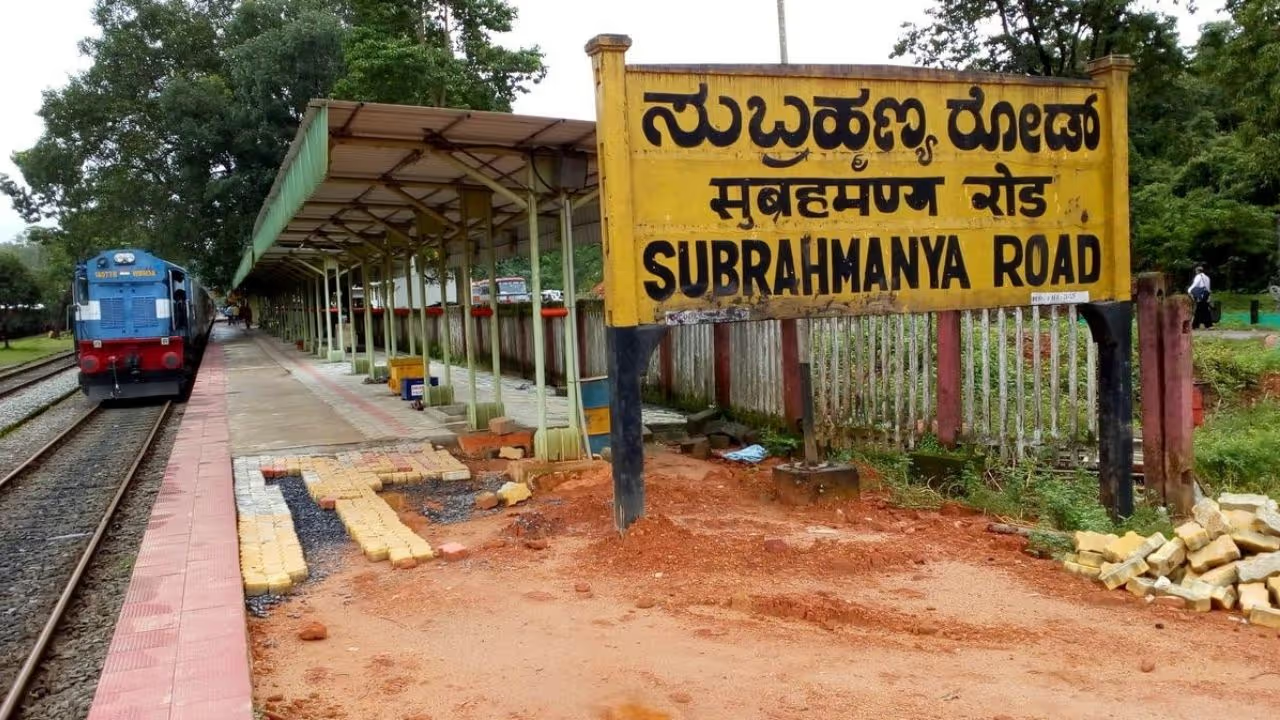
Subrahmanya Road station recorded the highest passenger traffic among the nine stations. A total of 8.05 lakh passengers used the station during the 20-month period, generating ₹18.86 crore in passenger revenue.
The station accounted for around 49 per cent of the total passenger traffic and 60 per cent of the total passenger revenue generated by all nine stations.
The strong passenger numbers have strengthened the local demand to develop Subrahmanya Road as a terminal station. Railway users have also been seeking additional train services connecting Mangaluru with the Konkan belt, Kerala and Tamil Nadu.
Kabaka Puttur Secures Second Spot
Kabaka Puttur station recorded the second-highest passenger traffic, with 5.04 lakh passengers using the station during the period. It generated ₹7.59 crore in passenger revenue.
The station handled 3.64 lakh unreserved passengers and 1.39 lakh reserved passengers. It also recorded around 53,000 platform ticket sales, the highest among the nine stations.
Bantwal station recorded 2.15 lakh passengers and generated ₹4.69 crore in passenger revenue. The station also sold around 37,180 platform tickets during the period.
Subrahmanya Road, Kabaka Puttur and Bantwal together accounted for 14.25 lakh passengers, or around 87 per cent of the total passenger traffic across the nine stations. These three stations alone generated ₹31.14 crore in passenger revenue.
Smaller Stations Also Show Steady Demand
The smaller stations along the corridor also recorded notable passenger movement. Kaniyoor handled 31,700 passengers, while Kodimbala recorded 26,600 passengers and Edamangala saw 25,300 passengers.
Bajakare, Neralakatte and Narimogaru recorded 11,100, 10,100 and 9,100 passengers, respectively, during the 20-month period.
The passenger figures indicate sustained demand across the Padil-Subrahmanya Road corridor, with the major stations accounting for a significant share of the traffic. The growing passenger movement has further strengthened calls for additional local train and MEMU services on the route.
Railway Users Seek Better Infrastructure, More Trains
The Dakshina Kannada District Railway Users Committee has urged the Railway Department to expand infrastructure and improve train services along the corridor in line with the growing passenger demand.
The committee has pointed to the substantial passenger traffic and revenue generated by the route as evidence of its importance. Railway users have called for better basic infrastructure at the stations, along with more frequent local and MEMU services, to improve connectivity for residents of rural areas and passengers travelling to major religious and tourism destinations.
The committee said the Railways should respond to the growing demand by strengthening services and infrastructure along a corridor that is already contributing significantly to passenger traffic and revenue.