Researchers in Tumakuru’s Sathyamanagala have uncovered a rare 14th-century hero stone, revealing details of the lost Murugalu Rajya kingdom and commemorating a warrior’s sacrifice, shedding new light on the region’s cultural heritage.
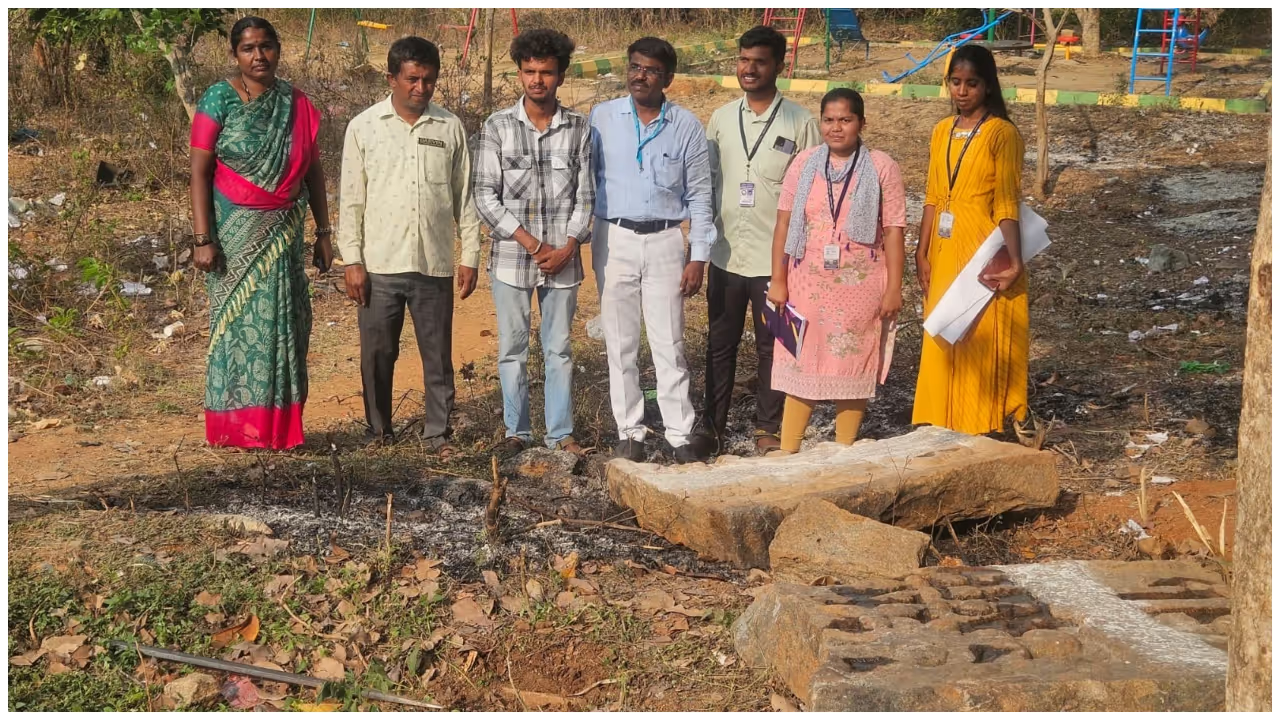
In a remarkable archaeological discovery, a team of researchers has unearthed a rare hero stone in Sathyamanagala, Tumakuru, shedding light on the region’s rich 14th-century cultural heritage. The discovery, led by students from Tumkur University’s History and Archaeology department under the guidance of senior professor M. Kotresh and Dr. Sudha, reveals previously undocumented historical details that could reshape our understanding of the area before the rise of the Vijayanagara Empire.
Hero Stone Dates Back to Pre-Vijayanagara Era
The hero stone was found near the compound wall of a private school, in an area where new layouts are emerging as Tumakuru city expands. The stone contains seven lines of inscriptions, which historians believe belong to the reign of King Veeranarasingadeva during the Vikrama Samvatsara. The text refers to this region as the kingdom of ‘Murugalu Rajya’, with its prime ministers titled Singeya Dandanayakas. Notably, the fifth line of the inscription explicitly mentions the village name, Sathyamanagala, linking the historical record to the present-day location.
A Glimpse of Festivals and Heroic Sacrifice
The hero stone is not just text; it also carries a remarkable carving depicting life in the 14th century. The artwork shows women walking joyfully to a festival, carrying decorated pots, or kumbhas, on their heads. The last few lines of the inscription describe a temple festival, though the deity being honoured is not specified. According to historians, while villagers were on their way to the festival, they may have been attacked by enemies or robbers.
Related Articles

The stone commemorates a warrior who fought to protect the villagers. The inscription mentions ‘kadi satta’, indicating that he died in battle, and depicts him ascending to Kailasa, or heaven, symbolising his heroic sacrifice.
Significance of the Discovery
Professor M Kotresh highlighted the importance of this find, noting that despite rapid urbanisation, the hero stone provides invaluable insights into the social security, religious practices, and cultural traditions of the Tumakuru region during the 14th century. This discovery is expected to aid historians and archaeologists in understanding the area’s early governance, community life, and valorous heroes.