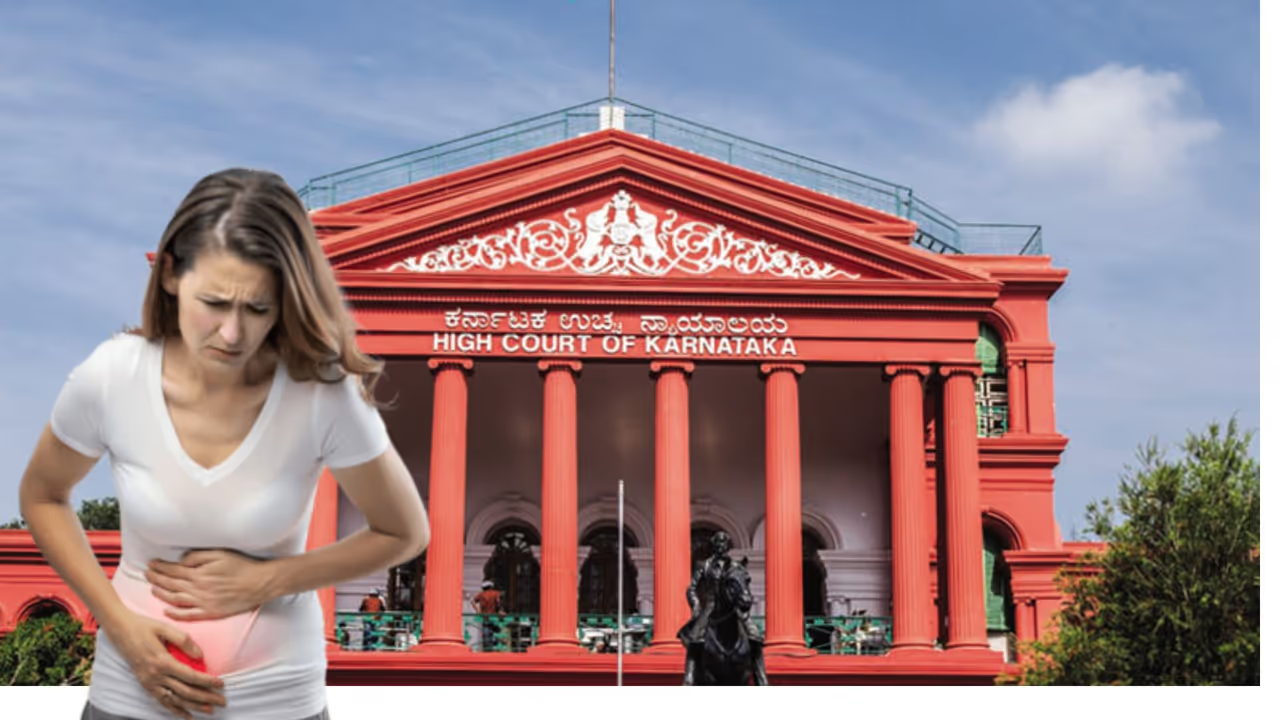
The Karnataka High Court has directed the state government to strictly enforce one day of paid menstrual leave for women across all sectors. The order came after a petition by a Belagavi hotel worker highlighted poor implementation of the policy.
In a significant ruling aimed at strengthening workplace dignity and gender-sensitive policies, the Karnataka High Court’s Dharwad bench on Wednesday directed the state government to strictly enforce the provision of one day of paid menstrual leave for women employees every month. The court emphasised that the rule must be implemented across both organised and unorganised sectors, covering workplaces ranging from large companies to small establishments such as shops and hotels. It made it clear that compliance with this policy is mandatory.
Directive Applies To All Sectors
The court underlined that the menstrual leave policy, already notified in the government gazette, must be followed uniformly across all sectors. This includes the vast unorganised workforce, where implementation has often been inconsistent. The bench stressed the need for accountability to ensure that women workers receive their entitled benefits without discrimination.
Petition By Belagavi Hotel Worker
The directive came in response to a petition filed by Chandravva Hanamant Gokavi, a hotel employee from Belagavi district. She highlighted that despite the existence of the policy, many establishments, including hotels, have failed to implement it. The court took up the matter after noting the lack of enforcement and the challenges faced by women workers.
Related Articles

Court Emphasises Dignity And Fairness
Justice M Nagaprasanna, who heard the case, made a strong observation during the proceedings. He stated that while the law recognises equality between men and women, biological differences must be acknowledged with sensitivity. He remarked that menstrual leave is not a special concession but a matter of dignity, fairness, and a humane understanding of women’s realities. The court subsequently directed the government to ensure strict compliance.
Government Cites Practical Challenges
During the hearing, Additional Advocate General Pratima Honnapura informed the court that the policy reflects a progressive approach by the state. However, she pointed out practical difficulties in implementing it across the unorganised sector due to its scale and diversity. She also noted that a new bill on menstrual leave is under consideration by the Legislative Assembly.
Worker’s Fight For Rights
Chandravva Hanamant Gokavi, who works as a cook in a hotel in Belagavi, had sought leave during her menstrual period, but her employer refused to grant it. She then approached the Labour Department, requesting that the policy be made mandatory and enforceable. She also urged authorities to treat denial of such leave, wage cuts, or threats against women employees as violations of labour laws, and called for awareness campaigns at the grassroots level. After receiving no response, she moved the High Court, leading to the present ruling.