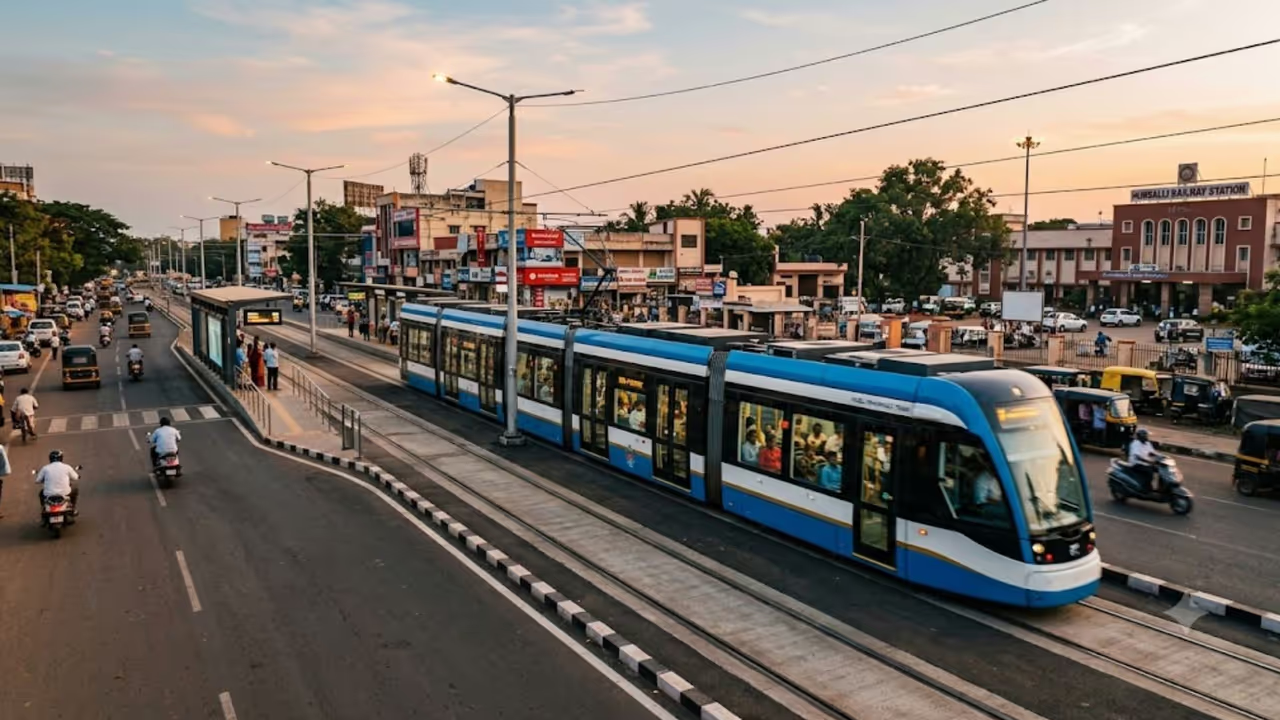
Karnataka's Directorate of Urban Land Transport has initiated a techno-economic feasibility study for a modern AC tram system between Hubballi and Dharwad to assess its costs, infrastructure needs and long-term viability.
The Directorate of Urban Land Transport (DULT), under the Karnataka Urban Development Department, has initiated a techno-economic feasibility study to assess the possibility of introducing a modern, air-conditioned (AC) tram system between Hubballi and Dharwad. The proposed system aims to provide an additional public transport option for commuters travelling between the twin cities.
If found feasible, the project could transform the existing transport corridor by introducing electric trams designed to carry large numbers of passengers efficiently. However, the project will depend on the findings of the feasibility study, particularly its assessment of costs, infrastructure requirements and long-term financial viability.
Hubballi-Dharwad Could Get a Modern Tram System
If the proposal receives approval, Hubballi and Dharwad could become among the Indian cities to introduce a modern tram system of this kind. Several European cities, including those in France, Germany and Switzerland, operate tram networks as part of their public transport systems.
Related Articles

The proposed trams could have between two and five coaches, depending on passenger demand and operational requirements. Unlike conventional buses, trams run on tracks laid along roads or within dedicated corridors. The infrastructure and passenger facilities would be planned according to the requirements of the proposed route.
How Could the Tram System Change Public Transport?
More than one lakh passengers use Chigari bus services daily on the existing 23-km Bus Rapid Transit System (BRTS) corridor between Hubballi and Dharwad, according to the information provided. The proposed electric tram system could offer an alternative for transporting large numbers of passengers along this busy route.
Electric trams produce no tailpipe emissions during operation, potentially helping to reduce local air pollution. The system could also improve connectivity between the twin cities if its capacity, frequency and integration with other transport services are planned effectively.
The Urban Development Department is examining the proposal as a possible way to strengthen public transport along the corridor. However, the project's suitability will depend on factors such as passenger demand, track requirements, road space and implementation costs.
Tram Fares Could Be Lower Than Metro Fares
Tram systems can offer a cost-effective public transport option in suitable urban settings. Depending on their design and operating model, they may also have different infrastructure and maintenance requirements from metro rail systems.
The proposed trams could potentially operate along the existing BRTS corridor, subject to technical assessments and any necessary changes to the current infrastructure. Fares would depend on operating costs, passenger demand and the pricing policy adopted by the authorities.
A key consideration will be whether the project is financially viable in the long term. Officials from the Urban Development Department are expected to gain a clearer understanding of the project's costs and feasibility once the study is completed.
Kolkata Is India's Historic Tram City
Kolkata, in West Bengal, has a long history of tram transport and is widely known for its historic tram network. The system was introduced during British rule and became an important part of the city's public transport history.
The proposed Hubballi-Dharwad project differs in its focus on a modern, air-conditioned tram system. Whether it can be implemented successfully will depend on the feasibility study's findings and the authorities' decisions regarding infrastructure, funding and operations.