Easemytrip CEO Prashant Pitti has unveiled a collaborative plan to reduce Bengaluru’s traffic by 25–30% within a year. The initiative involves public-private partnerships, data-driven routing, and tech-based traffic management.
Bengaluru: In a major development, Easemytrip co-founder and CEO Prashant Pitti has announced an ambitious plan to reduce Bengaluru’s notorious traffic congestion by 25–30% within the next 12 months. Sharing the update on social media, Pitti outlined a collaborative, data-driven, and community-involved approach to tackling the city’s gridlock.
Collaboration With Public and Private Stakeholders
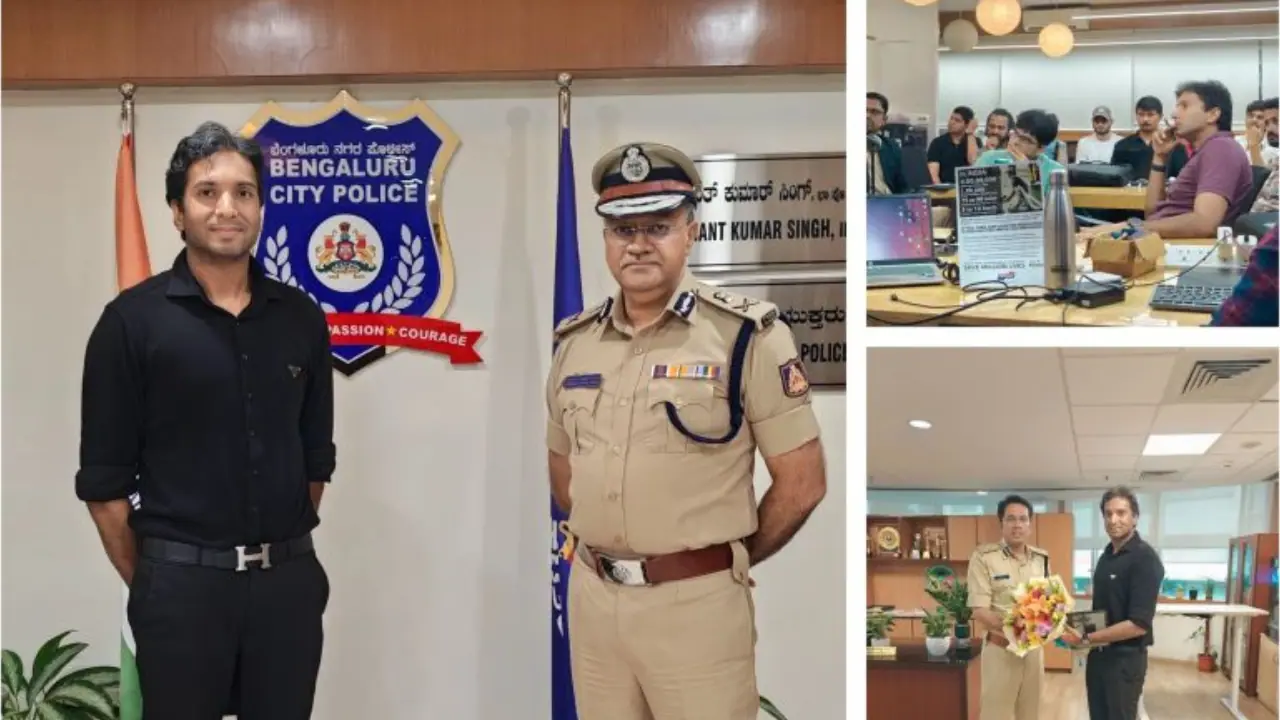
In the last ten days, Pitti has met with key stakeholders, including the commissioners of the Bengaluru Traffic Police (BTP), BBMP, City Police, Google representatives, IISC professors, scientists, road engineers, and traffic-related entrepreneurs.
“All three newly appointed commissioners were very kind to invite me to showcase existing capabilities and collaborate to work together,” Pitti noted. “For the first time, we are bringing all key public and private players to the same table.”
Related Articles

Optimization Projects to Be Rolled Out Quickly
Pitti listed a series of focused, high-impact projects that will be implemented in the near term:
A) Bengaluru Traffic Simulators
Both BTP and IISC have traffic simulation models that create millions of rerouting permutations based on travel time rather than distance. Pitti has requested travel data from Google, Uber, Ola, and Rapido to improve model predictions. Some companies have agreed to help, while responses from others are awaited.
“If the model starts working, we will be able to predict where/when gridlock is going to happen, so we can fix it before it occurs,” Pitti said.
B) Fixing the Feedback Loop
While the government already has apps for reporting potholes, Pitti plans to expand their scope to include illegal parking, broken signals, wrong-side driving, waterlogging, and stalled vehicles. He also aims to increase transparency and accountability by publicly displaying all lodged complaints and the corresponding actions taken with timestamps.
C) Hyperlocal Rain Prediction
Rain often disrupts road maintenance work, causing delays and worsening traffic. The Hyperlocal Rain Predictor project will enable authorities to anticipate and avoid such disruptions while also helping solve drainage issues proactively.
D) Green Wave Traffic Signals
Traffic lights will be synchronised to move vehicles in coordinated “green waves” across junctions. A pilot project is already underway, and its results will determine the feasibility of scaling it citywide.
Broader Vision for India
Pitti addressed critics who claimed Bengaluru's traffic is purely an infrastructure issue.
“If we continue to wait for the infra to become better, then we are merely playing a catch-up game with the West,” he said. “There is so much scope to optimise current infra, and we would rather focus on that.”
Calling his initiative a form of “practical optimism”, he emphasised that data, intent, and collaboration can solve even problems that seem unfixable.
A Call for Public Participation
Pitti urged citizens to join the effort:
- Share and amplify the initiative: “The more you amplify, the more right folks will be able to join us in solving this gridlock.”
- Join the WhatsApp community: The group will be used to gather information on key problem junctions and keep members updated on progress.
Citizens Respond With More Suggestions
Several social media users responded with additional practical solutions, including:
- Fast-tracking completion of Metro construction projects
- Encouraging remote and hybrid work models
- Promoting the use of public transportation such as BMTC buses
While some users questioned the next concrete steps beyond meetings, many appreciated Pitti’s initiative and intent to bring tangible change to Bengaluru’s traffic scenario.