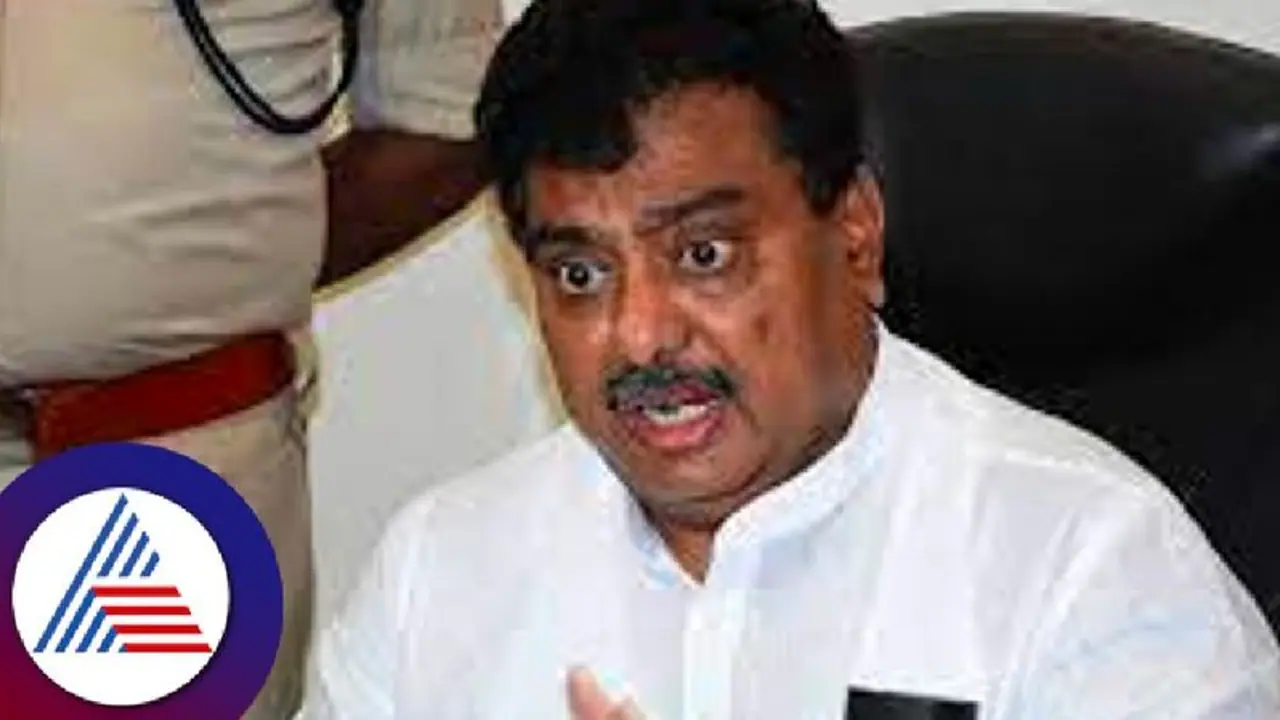
Minister MB Patil stated that raising the Alamatti dam height by one metre is possible if there are no legal hurdles. He also stressed the need for unity in the Veerashaiva-Lingayat community and expanding Basavanna’s ideals across India.
Vijayapura: Minister for Commerce & Industries, Infrastructure GoK MB Patil said that increasing the height of the Alamatti dam by one metre is possible, provided there are no legal obstacles. He added that a consultation with legal experts would be held to evaluate the feasibility of the proposal.
Speaking to reporters in Vijayapura, Patil was responding to Minister Shivanand Patil’s recent suggestion about raising the dam height.
“If there are no legal complications, we have no objections to increasing the dam’s height by one metre,” he said.
Related Articles

He also emphasised the need for a comprehensive discussion on how many villages would need to be relocated due to the increased water storage.
“Suggestions are welcome,” he added.
No link between Alamatti dam and Maharashtra floods
Addressing concerns that raising the dam could lead to flooding in Maharashtra, the minister dismissed the claims.
“The Alamatti dam has not caused any floods in Maharashtra. Multiple reports confirm this. There is no connection between the floods and Alamatti,” he clarified.
Call for a ‘Basava Bharat’
Patil further stressed the need to build a “Basava Bharat”, a more humane India based on the ideals of 12th-century reformer Basavanna.
“The Veerashaiva-Lingayat community has more than one crore members in Karnataka alone. Unfortunately, Basavanna’s ideals have remained confined to Karnataka and Maharashtra. These values must be extended across the nation,” he said.
Calling the Veerashaiva-Lingayat community inclusive, he stated, “Our community serves all others by providing food, education, healthcare, and shelter.”
Urging unity, Patil said internal sub-groups within the community should come together. “Let go of the feeling of being separate from each other. During Basavanna’s time, all working communities were part of Anubhava Mantapa. If the Kalyana revolution had fully materialised, our community would have spread across half of Karnataka,” he remarked.
He appealed for political differences to be set aside for community matters. “Let’s do politics during elections. When it comes to the community, we must unite beyond party lines and regions, North Karnataka, Central Karnataka, and South Karnataka.”
“Basavanna’s principles and Vachanas should reach the world. We must work together in that direction, with harmony and collective purpose,” he concluded.