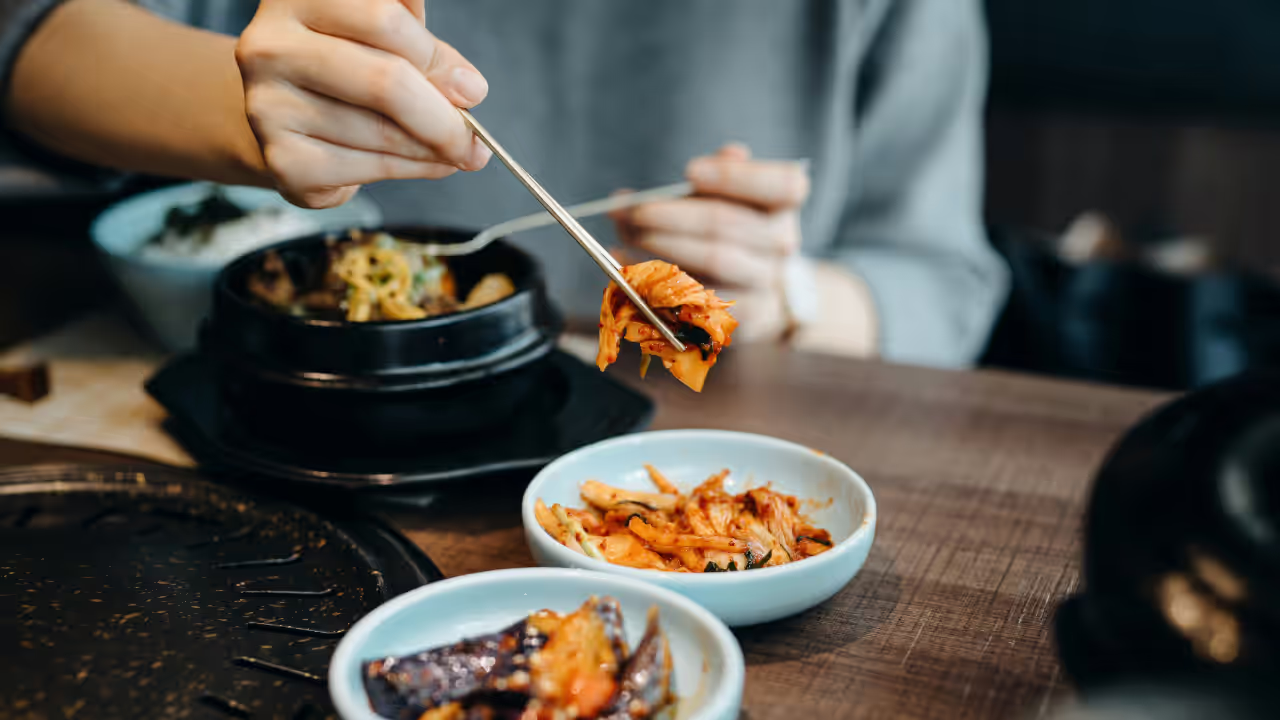
Curious about kimchi's health benefits? A new study reveals how this fermented food fine-tunes your immune system to fight illness. Read about its benefits and how it works.
As the weather changes, many people become concerned about catching seasonal illnesses like colds and flu. This has led to a rising interest in common foods that could help improve immune function. A recent scientific study shows that kimchi, a traditional Korean fermented food, might play a crucial role in supporting immune health.
Kimchi has long been appreciated for its health benefits, but this latest study offers new scientific evidence on how it may work. The research found that eating kimchi regularly can help immune cells respond more effectively to threats, while also preventing the immune system from becoming overactive. This balance is important because both a weak and an overly active immune system can be harmful. The study was published in the npj Science of Food.
How Kimchi Influences Immunity
The study was conducted by scientists at the World Institute of Kimchi, a government-backed research centre in South Korea. Using advanced research methods, the team looked at how kimchi affects individual immune cells in the human body.
Related Articles

According to the scientists, this is the first global study to investigate kimchi’s immune effects at the single-cell level. The results suggest that kimchi does not just "boost" the immune system but helps regulate it in a smart and balanced way.
How the Study Was Conducted
The clinical trial involved 39 overweight adults, who were divided into three groups. For 12 weeks, one group received a placebo, another group consumed kimchi powder made from traditionally fermented kimchi, and the third group took kimchi powder produced using a controlled starter culture fermentation method.
At the end of the study, blood samples were taken from all participants. Researchers focused on specific immune cells present in the blood and analyzed the activity of genes inside each cell.
Stronger Defences, Better Control
The findings showed that individuals who consumed kimchi had immune cells that were more effective at identifying harmful bacteria and viruses. In particular, certain cells that serve as "early warning systems" for the immune response became more active.
At the same time, other immune cells developed in a balanced way, supporting defence while also helping to reduce immune activity when it was not needed. This suggests that kimchi may help the body fight infections without causing unnecessary inflammation or an overactive immune response.
Rather than pushing the immune system into overdrive, kimchi appears to function more like a fine-tuner, strengthening protection while maintaining control.
Does The Fermentation Method Matter?
The researchers also discovered that the way kimchi is fermented can make a difference. While both traditional and starter-fermented kimchi helped maintain immune balance, the starter-fermented version showed stronger effects. These included improved threat detection by immune cells and a greater reduction in unnecessary immune activity.
This suggests that controlled fermentation techniques might be used in the future to enhance kimchi’s health benefits even further.
A Growing Role for Kimchi in Modern Health
Dr Woo Jae Lee, who led the study, explained that the research shows kimchi can both activate immune defences and reduce excessive responses at the same time. He added that more international research is planned to explore how kimchi and beneficial bacteria may support immune and metabolic health.
Overall, the study highlights its potential as a functional food that may help support immune health and contribute to future approaches in disease prevention and overall wellbeing.