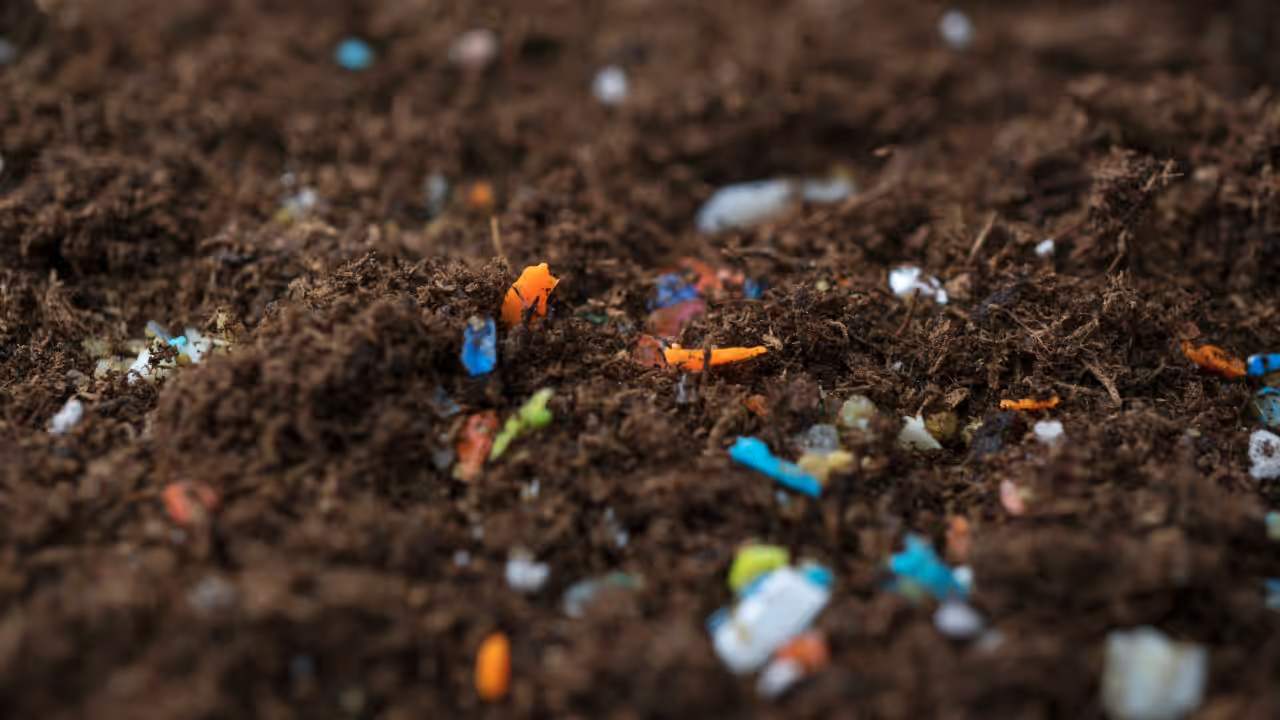
Did you know forests are accumulating airborne microplastics? A new study reveals how tree canopies trap plastic pollution, leading to soil contamination. What does this mean for our health?
Scientists have long known that tiny plastic pieces, called microplastics and even tinier nanoplastics, are found in oceans, rivers, and farmland. Recent studies now show that forests are also affected, largely due to pollution that comes through the air. A research team from TU Darmstadt, published in Nature Communications Earth & Environment, has brought attention to this often-overlooked environmental issue.
The research discovered that most of these plastic particles don't come from nearby sources. Instead, they travel through the air before landing on the tops of trees. This process, called the comb-out effect, involves microplastics being caught by leaves in the upper canopy.
Airborne Plastics
Once the particles settle on leaves, they eventually move down to the forest floor. In forests, rain and falling leaves help transport the plastics downward. This natural process ensures that the particles do not stay in the canopy for very long.
Related Articles

On the ground, decomposing leaves play a key role. As leaf litter breaks down, it traps microplastics, allowing them to build up in the soil. The study found the highest levels in the top layer of recently fallen leaves, though smaller amounts were also present deeper underground. Over time, soil organisms help move these particles into lower layers.
Also read: TERRIFYING! Study Predicts How Many People Will Die By 2050 if Climate Crisis Worsens
Research Methods
To investigate this, the scientists collected samples from forest areas near Darmstadt, Germany. They analysed soil, fallen leaves, and airborne deposits using advanced methods. The team also developed a model to estimate how much microplastic has entered forests since the 1950s, helping them understand the long-term extent of the pollution.
Environmental Impact
The findings suggest that forests can serve as indicators of airborne plastic pollution. High levels of microplastics in forest soil point to pollution mainly from the air, rather than from direct human activities like farming. According to the researchers, this makes forests a useful way to track how plastic spreads throughout the environment.
Health Concerns
This research is among the first to clearly connect forest contamination with plastics carried through the air. It raises concerns not only for forest ecosystems, which are already stressed by climate change, but also for human health. The study suggests that microplastics travel widely in the air, meaning they could be present in the air we breathe, highlighting a growing environmental and health concern.
Also read: Earth’s Days Are Getting Longer Faster Than Ever, and Climate Change Is to Blame