
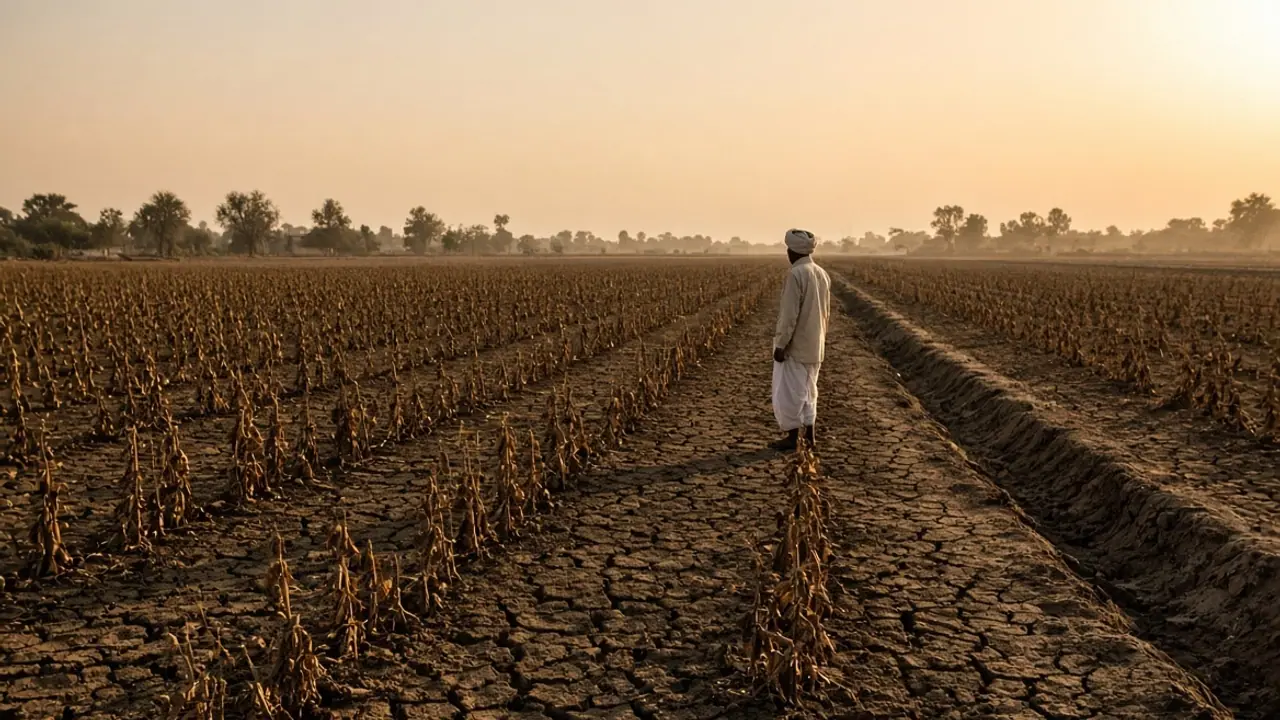
New research highlights the growing financial challenge of climate resilience, suggesting future protection costs may rise faster than many economies are prepared to manage as weather risks intensify.
India may need to devote a significantly larger share of its economy to climate adaptation than advanced nations if global temperatures rise by 2°C, according to a new international assessment that highlights the growing cost of protecting communities, infrastructure and economic activity from escalating climate risks.
The study estimates that adaptation expenditure in India could reach as much as 3 per cent of gross domestic product under a 2°C warming scenario. By comparison, developed economies such as those in North America and Europe may need to allocate only about 0.3 to 0.5 per cent of GDP toward similar climate-protection measures.
The findings underscore a widening global challenge: countries facing some of the most severe climate risks often have the fewest financial resources available to respond.
Researchers argue that the disparity reflects more than exposure to rising temperatures, droughts, floods and extreme weather events. Wealthier economies typically possess stronger infrastructure, broader insurance coverage and greater fiscal flexibility, making it easier to absorb climate-related shocks.
For India, the adaptation challenge is particularly complex because climate vulnerability intersects with rapid urbanisation, population density and infrastructure gaps.
The report estimates that around 60 per cent of India's population is currently exposed to heat stress. At the same time, air-conditioning penetration remains close to 10 per cent, highlighting a substantial protection gap.
The contrast with developed nations is stark. In the United States, only a small proportion of people face similar heat exposure, while cooling access is available across most households.
This difference means adaptation in India extends well beyond emergency responses to climate disasters. It increasingly involves investments in cooling solutions, housing improvements, resilient urban infrastructure, water management systems and measures designed to protect outdoor workers.
As temperatures continue to rise, these requirements are expected to become more urgent and more expensive.
The report identifies heat adaptation as one of the most significant future spending categories globally. Worldwide adaptation investment needs could reach approximately $1.2 trillion annually by 2050 under the same warming scenario, with heat-related measures accounting for nearly half that amount.
Financing Challenges Could Slow Climate Resilience Efforts
While many adaptation solutions are already known and technically feasible, financing remains the greatest obstacle.
Researchers examined a range of adaptation measures, including cooling systems, irrigation networks, flood-management infrastructure and drainage improvements. The challenge, they argue, lies not in identifying solutions but in mobilising sufficient capital to deploy them at scale.
India faces particular difficulties in this area.
The report suggests that less than one-fifth of the country's adaptation requirements are currently considered deployment-ready. The remainder faces barriers including affordability issues, financing constraints and competing spending priorities.
Many adaptation projects also struggle to attract private investment because their benefits are often indirect.
Unlike traditional infrastructure projects that generate predictable cash flows, climate-resilience investments frequently produce value through avoided losses, improved productivity and reduced vulnerability. Although these benefits may be substantial, they are harder to monetise and therefore more difficult to finance through conventional market mechanisms.
Researchers estimate that adaptation measures can generate returns worth several times their cost when avoided damage, productivity gains and public-health benefits are included.
That finding strengthens the argument that adaptation should be viewed not only as environmental protection but also as an economic investment.
For policymakers, the report highlights a growing reality: climate adaptation is becoming a central development challenge.
Higher temperatures, more variable rainfall and increasing weather extremes are expected to place additional pressure on housing, transport systems, energy networks and water infrastructure. Delays in strengthening resilience may ultimately raise costs as repeated climate impacts force governments to spend more on recovery and reconstruction.








