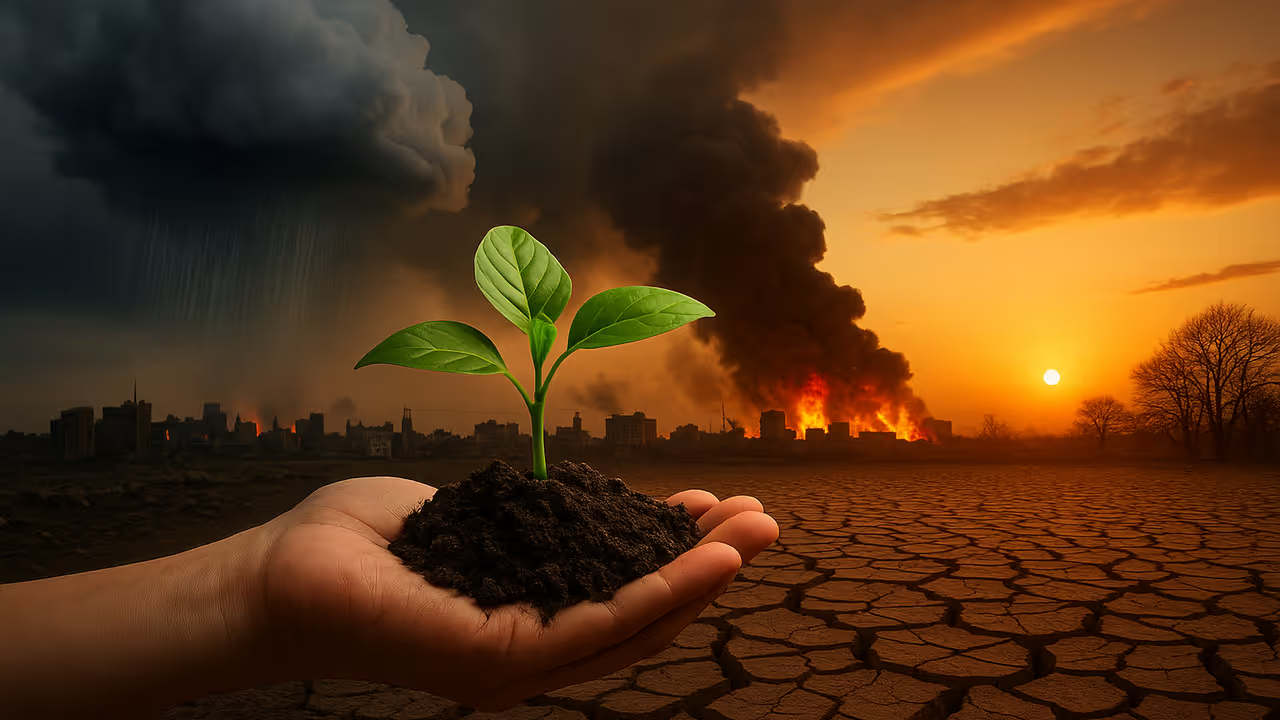
A new study shows that even when people face outside risks like war or pandemics, their willingness to act on climate change does not drop. This gives hope that cooperation for climate action is still possible.
We all know climate change is real. But fixing it is not easy. Everyone must work together, even when it's costly. What makes this harder is that the world is already full of problems such as wars, pandemics and rising prices. These problems may make people more cautious and less willing to help the planet.
But a new study, published in Nature, has found something surprising: even when people are facing these background risks, many still choose to take climate action. That gives us some hope.
What is a background risk?
A background risk is something big and uncertain that a person cannot control. It could be a war, a pandemic like COVID-19 or a financial crisis. These risks are not related to climate change directly, but they still affect how safe people feel.
Related Articles

When people face such risks, they often become more careful in every part of life. This can make them less likely to take risks, like investing time or money in solving climate problems, especially if they don't know if others will also contribute.
The social dilemma in climate action
Climate change is a global problem. If everyone does their part, we all benefit. But the problem is: individuals have to pay now, and there’s no promise others will help too. It's like a gamble. You give your share to fight climate change, but if not enough people join in, your effort might not be enough.
This is what experts call a 'collective-risk social dilemma'. People must act for the common good without a guarantee of success.
The experiment: Testing how people behave
To understand this better, researchers set up an experiment. They used something called a Public Goods Game. This game helps study how people make choices about giving to a common goal.
In this version of the game, each person was given a small amount of money. They had to decide how much to contribute to a climate fund. If everyone together reached a target amount, the money would go to buying real carbon offsets, something that helps reduce pollution.
But if the group failed to reach the target, they risked losing the money they didn't donate. This made the decision more serious, just like in real life.
Now, to test background risk, the researchers added extra problems in the game that were not related to the climate goal. This way, they could see if people would still contribute even when they felt unsure about the world.
The results: A hopeful surprise
What they found was unexpected!
Even with background risks in place, people still gave similar amounts of money toward climate protection. Their willingness to cooperate did not go down as much as the theory had predicted.
This shows that, when the message is clear and when people feel their actions really matter, many are still ready to help, even if the world feels uncertain.
Why this matters right now
The Earth is in trouble. In 2023, global temperatures hit record highs. That year, more than six out of nine key environmental safety zones were crossed. Disasters like floods, droughts, and storms are becoming more common and more deadly.
At the same time, people are dealing with wars, inflation, job losses and health crises. It's easy to think that these problems might stop people from caring about the climate.
But this study shows that if the risks are clearly explained and if people understand how their actions make a difference, many will still step up.
Understanding the bigger picture
Human decisions about climate do not happen in isolation. We all live in a world full of stress and uncertainty. But this research tells us that background risk does not always stop people from making good choices for the planet.
Instead, the key is good communication and strong cooperation incentives. When people know that their contributions count, they are more likely to act, even in hard times.
What policymakers can learn
Leaders and governments should take this message seriously. Even in unstable times, people can still work together on big problems like climate change. But it only happens if:
- The risks are explained clearly
- People trust the system
- They feel their actions truly matter
If these conditions are met, climate cooperation can succeed, no matter what background risks exist.
The study gives us a clear message. Even when the world feels uncertain and dangerous, people don’t give up. Many still choose to help protect the Earth. That is powerful.
The climate fight is hard. But this shows we still have a chance, if we work together and believe that what we do matters.