
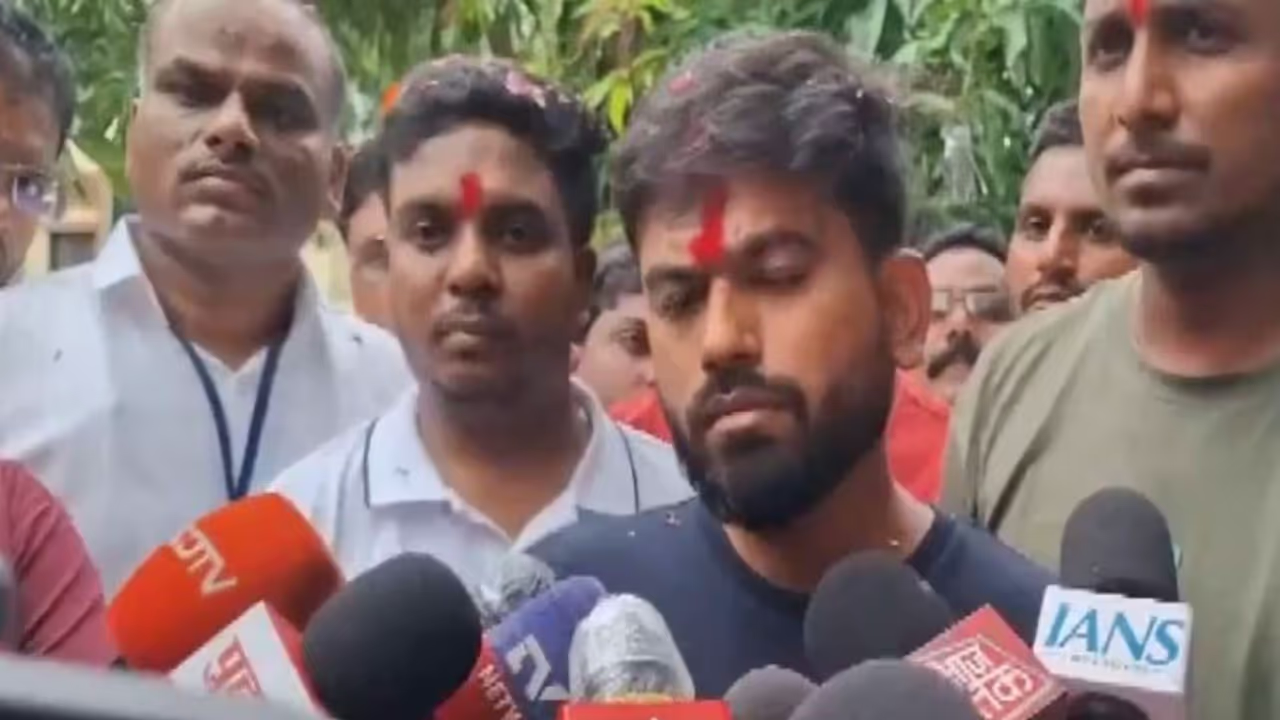
CJP founder Abhijeet Dipke threatened larger protests if FIRs against students are not withdrawn. Both Dipke and spokesperson Ashutosh Ranka criticised the new Public Examinations Bill, arguing it fails to address the root causes of paper leaks.
Cockroach Janta Party (CJP) founder Abhijeet Dipke on Wednesday warned that protests would continue if FIRs registered against students were not withdrawn, saying the next agitation could be even bigger. Dipke received a warm welcome upon his arrival at his home in Maharashtra's Chhatrapati Sambhajinagar. Speaking to the reporters, Dipke said, "We will continue our protests if the FIRs against students are not withdrawn... If needed, the next protest will be even bigger."
Dipke on Exam Bill, Personal Struggle
On the Public Examinations (Prevention of Unfair Means) Amendment Bill, Dipke said that reforms cannot bring change without improving the intentions of those responsible, alleging that the first hearing of a fast-track court in a paper leak case was postponed due to the absence of a CBI counsel. The Public Examinations (Prevention of Unfair Means) Amendment Bill, 2026 was passed in the Lok Sabha after a long debate and sharp exchanges. "There are many reforms in the country, but nothing can be changed without an improvement in the intention of the people... The very first hearing of the fast-track court on paper leaks was postponed due to the absence of CBI Council. I was at Jantar Mantar for 37 days, and I am delighted to come back home after such a long struggle; now I can finally sleep peacefully... I wish to return to my normal life," he further said.
CJP Spokesperson Criticises Bill's Focus
Further, Cockroach Janta Party's National Spokesperson Ashutosh Ranka criticised the Public Examinations (Prevention of Unfair Means) Amendment Bill, saying it focuses on punishment after paper leaks occur rather than addressing the root causes and strengthening the examination system to prevent such incidents.
Speaking to ANI in Jaipur, Ranka said, "The primary focus appears to be on the punishment to be meted out after a paper leak occurs; the penalties and punitive measures have indeed been increased. However, the fundamental question remains: how do we prevent the leak in the first place?... Have you considered blacklisting vendors?" "The bill fails to address critical measures such as digitising the entire system, enhancing cybersecurity, incorporating blockchain technology, strengthening exam centres, and implementing end-to-end tracking to prevent leaks... We have maintained from day one that fast-track courts and harsher penalties alone are insufficient. If you truly want to stop paper leaks, you must address the root cause and resolve the structural issues within the system," he further said. (ANI)
(Except for the headline, this story has not been edited by Asianet Newsable English staff and is published from a syndicated feed.)