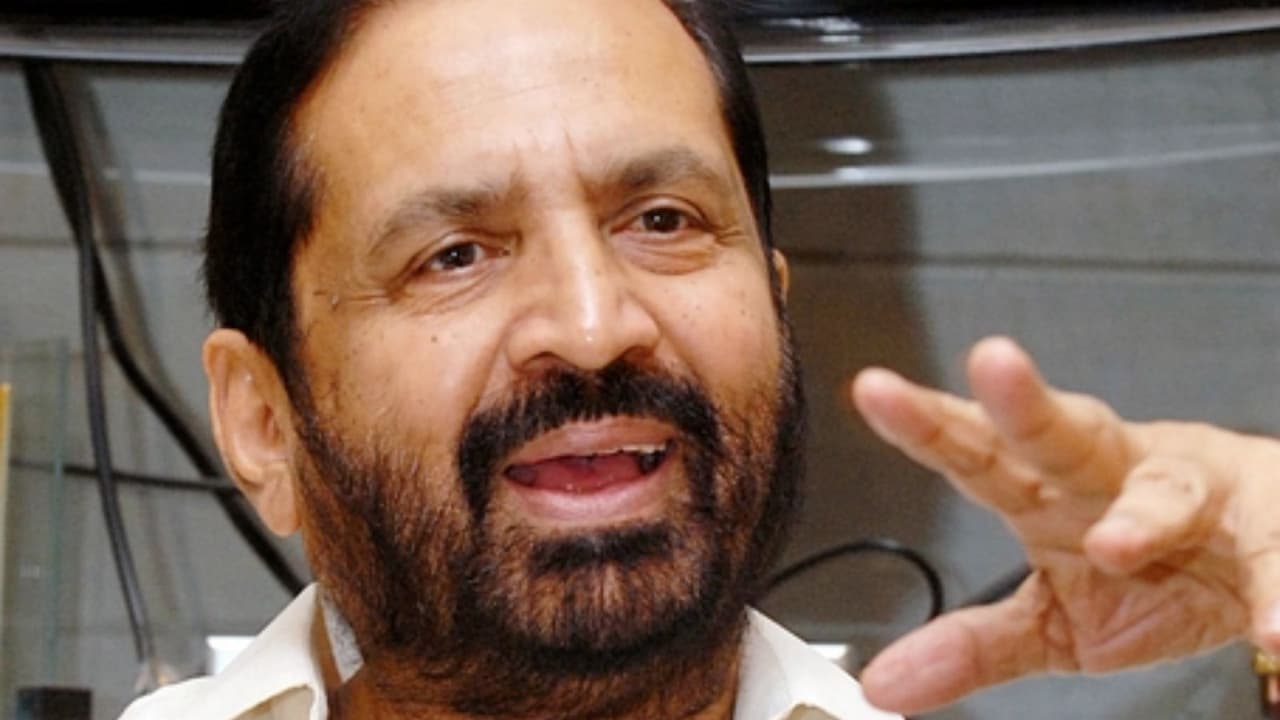
A senior Congress leader, he was best known as the chairman of the 2010 Commonwealth Games (CWG) Organising Committee. The event was marred by a major corruption scandal involving allegations of financial irregularities and inflated contracts.
Former Union minister and senior Congress leader Suresh Kalmadi passed away at the age of 81 in Pune after a prolonged illness, marking the end of a long and controversial public life. Kalmadi was widely known for his roles in Indian politics and sports administration, particularly as chairman of the Organising Committee for the 2010 Commonwealth Games in Delhi.
Born in 1944, Kalmadi’s political journey saw him serve as a member of Parliament from Pune and as Minister of State for Railways. However, his legacy is most closely associated with India’s hosting of the 2010 Commonwealth Games - an event that was marred by allegations of massive financial irregularities and corruption. The Commonwealth Games (CWG) scandal quickly became one of the most high-profile graft controversies in recent Indian history.
The CAG (Comptroller and Auditor General) and investigative agencies alleged that contracts for essential services and equipment, including timing systems and other facilities, were awarded at inflated prices and often on restrictive terms that excluded competitive bids. Critics said this resulted in undue financial burden and raised serious red flags about transparency and governance.
Related Articles

In 2011, the Central Bureau of Investigation (CBI) charged Kalmadi and several associates with conspiracy, cheating, and corruption, leading to his arrest. The Enforcement Directorate (ED) later pursued money-laundering allegations related to CWG contracts. However, these cases dragged on for years with limited convictions.
In April 2025, a special Delhi court accepted the ED’s closure report in the money laundering case, effectively ending that chapter after nearly fifteen years — a development that sparked political debate about justice and accountability.
Supporters argue Kalmadi was unfairly targeted, while critics believe the CWG scandal symbolised deep-rooted issues of corruption and mismanagement in major public events. Regardless, the controversy shaped public perception of Kalmadi’s career. His death has prompted reflection on both his contributions and the scandals that defined his time in the spotlight.