
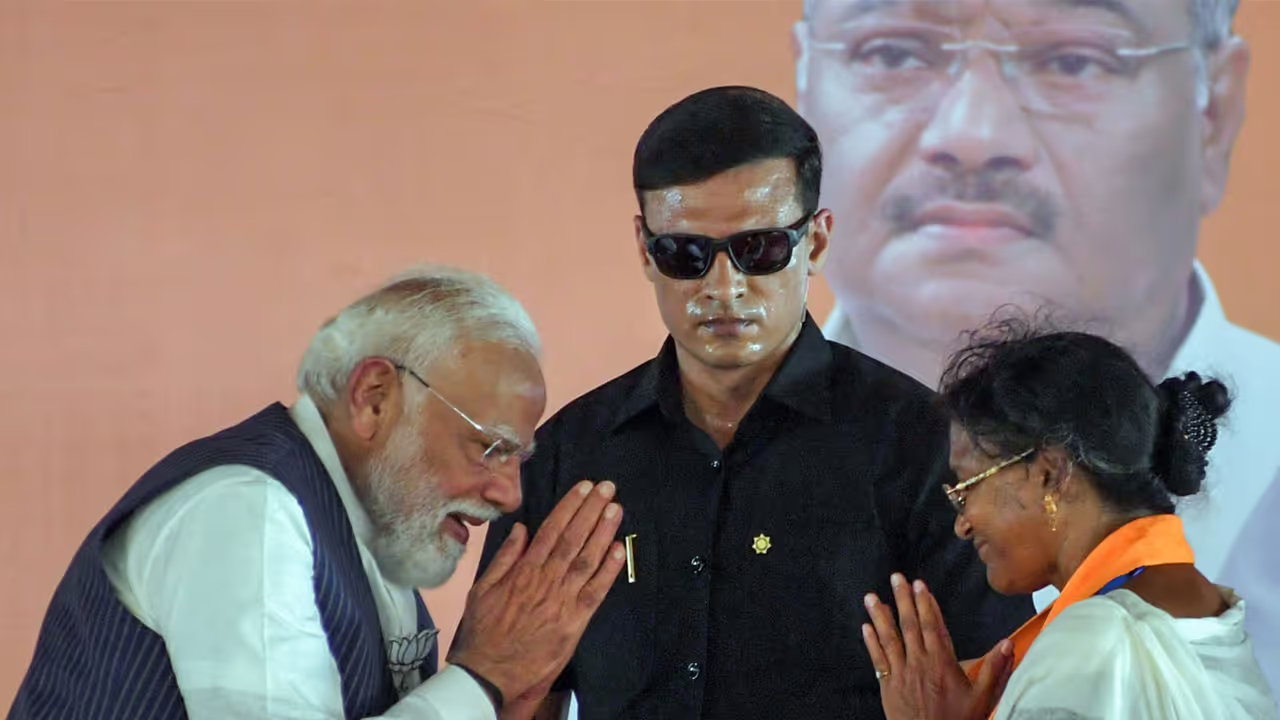
Ratna Debnath, mother of the RG Kar victim, has emerged as the giant-killer in the 2026 West Bengal polls. Her commanding lead in Panihati for the BJP has dismantled TMC's dominance and derailed Mamata Banerjee's bid for a fourth term.
While the political pundits cite electoral rolls and anti-incumbency, the 2026 West Bengal election will be remembered for one face: Ratna Debnath. The mother of the RG Kar Medical College victim, once a private citizen grieving an unimaginable tragedy, has emerged as the giant-killer who dismantled the Trinamool Congress's (TMC) 15-year urban industrial dominance. As of Monday afternoon, Debnath holds a commanding lead of over 56,000 votes in Panihati, a seat the TMC has held without pause since 2011.
Her surge is not just a seat gained; it is the moral narrative that derailed Mamata Banerjee's bid for a fourth term. Debnath's journey from a mourning mother to a political catalyst changed the face of this election in three distinct ways.
From Grief to Political Catalyst: The Debnath Effect
By fielding Debnath, the BJP successfully pivoted the election from "Didi vs. Modi" to "The Citizen vs. The System." Every rally she attended wasn't about policy; it was a reminder of the RG Kar tragedy. Her campaign phrase, "My daughter's tragedy could have happened to anyone," resonated across every household in Bengal, turning a local crime into a statewide referendum on women's safety.
Just days before the results, standing amidst the record-breaking 91.62% voter turnout in the second phase, Ratna Debnath issued a chilling warning to the ruling dispensation. She told reporters that the people were ready to "uproot and throw out" the TMC, specifically citing the government's perceived apathy toward women's safety. "Our only regret is that when such an incident happens, our female Chief Minister herself insults women," Debnath had said, referencing controversial statements that suggested women should avoid night shifts or late-night outings. "This time, Bengal will fight against this."
Campaign Under Siege: Intimidation and 'Silent Voting'
The campaign in Panihati was a microcosm of the state's tension. On polling day, Debnath was allegedly surrounded, abused, and intimidated by TMC workers who reportedly accused her of "doing business" in her daughter's name. Despite being targeted by motorcycle-borne groups and being barred from having her Chief Election Agent by her side, Debnath refused to leave the polling stations. Instead of suppressing her vote, the images of a victim's mother being bullied by political "goons" sparked a firestorm of "silent voting."
The record turnout in North 24 Parganas (91.70%) became the instrument of her revenge. Her performance is being widely interpreted as a "referendum on justice" and a direct response to the tragic events that shook the state's conscience.
Debnath is leading against the TMC's Tirthankar Ghosh by a significant margin. Reports indicate she has crossed the 56,000-vote mark, placing her on the verge of victory. Panihati, located in the North 24 Parganas district, had been held by the TMC since 2011. Debnath's surge represents a massive swing in the urban-industrial belt, fueled largely by public sentiment surrounding the RG Kar case. Her campaign was deeply personal, centred on issues of women's safety and judicial accountability. During the polls, she reported being harassed and intimidated by rival party workers, incidents that supporters say only galvanised the "silent vote" in her favour.
The Fall of a Fortress: How Debnath Broke TMC's Vote Bank
Debnath's lead is more than just a seat gain for the BJP; it highlights the strategic failures of the TMC in 2026. Mamata Banerjee's most loyal voter base has historically been women. Debnath's presence on the ballot created a massive rift in this demographic. In urban pockets like Panihati, the "silent female vote" shifted from the Lakshmir Bhandar scheme to the "Justice for Abhaya" movement, effectively stripping the TMC of its most reliable armour.
While Mamata Banerjee relied on her "Street Fighter" image and welfare schemes like Lakshmir Bhandar, the BJP's decision to field the victim's mother successfully framed the election as a moral battle between the "common citizen" and "institutional apathy." For many voters in Panihati and beyond, a vote for Ratna Debnath was viewed as a demand for a safer Bengal, directly challenging the state government's handling of the law-and-order situation following the RG Kar incident.
A New 'Street Fighter' Emerges
Mamata Banerjee has long built her brand on being the ultimate "victim of the system" who fights back. Debnath, however, presented a more authentic version of that struggle in the eyes of the public. When the CM alleged irregularities during counting, it was Debnath's steady lead that served as the most potent rebuttal--a signal that the "street fighter" from Kalighat had finally met a fighter with a more powerful, personal cause.
The fact that a first-time candidate could displace the TMC's organisational machinery in a high-density urban seat like Panihati underscores the depth of the anti-incumbency wave that has propelled the BJP past the majority mark.
A Moral Mandate: The Legacy of the 2026 Election
The fall of Panihati is the "canary in the coal mine" for the TMC. Located in the North 24 Parganas industrial belt, the seat was considered an impenetrable fortress of the Ghosh family (TMC). Ratna Debnath did more than just win a constituency; she provided a moral focal point for a disparate opposition. In the history books of 2026, it won't just be the BJP's 192 seats that define the change--it will be the image of a mother who turned her grief into a ballot-box revolution, proving that even the most seasoned "street fighter" cannot hold back a tide of public conscience. (ANI)
(Except for the headline, this story has not been edited by Asianet Newsable English staff and is published from a syndicated feed.)