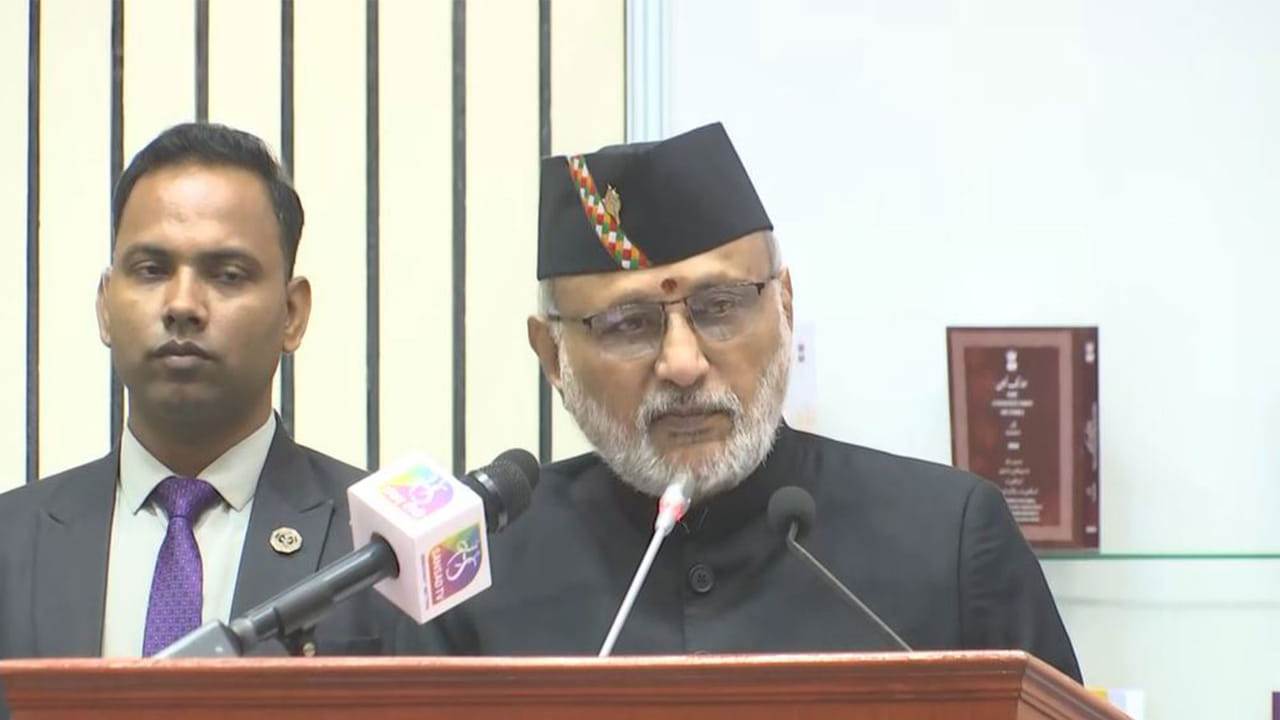
Vice-President CP Radhakrishnan released the Constitution of India in all 22 scheduled languages, aiming to make constitutional principles more accessible to citizens and reinforce the spirit of unity in diversity across the nation.
New Delhi [India], November 26 (ANI): Vice-President CP Radhakrishnan on Thursday released updated editions of the Constitution of India in all 22 languages recognised under the Eighth Schedule, saying the initiative would make the country’s constitutional principles more accessible to citizens and strengthen democratic participation. Addressing a gathering at Vigyan Bhawan on the occasion of the 77th year of the Constitution and Constitution Day, the Vice-President said India’s strength lay in its ability to remain united despite its linguistic diversity. “Despite differences in languages, how are we united? It is because we all believe in one nation. That is the spirit of India,” he said, emphasising that languages were not merely a medium of communication but carriers of culture, tradition, identity and civilisational wisdom.
The event, organised by the Legislative Department of the Ministry of Law and Justice, was attended by Union Minister of State (Independent Charge) for Law and Justice Arjun Ram Meghwal and Legislative Department Secretary Rajiv Mani, among other dignitaries. The Vice-President said making the Constitution available in different Indian languages reflected the spirit of Ek Bharat, Shreshtha Bharat and would enable citizens to understand and engage with its guiding principles in a language they were familiar with. “Our Constitution is our pride and our duty,” he said, describing public participation, or Jan Bhagidari, as essential to upholding the ideals and principles enshrined in the Constitution.
He also cautioned against equating knowledge with proficiency in English, saying English was just one language like any Indian mother tongue. He urged people to respect all languages and appreciate India’s linguistic diversity. Recalling the writings of freedom fighter and poet Subramania Bharati, Radhakrishnan said the poet had highlighted how people could speak different languages but remain united in their thoughts, goals and actions in the service of the motherland. He said that while Bharati had referred to 18 languages during his time, India now recognises 22 languages under the Eighth Schedule. The underlying message of his writings remained relevant — linguistic diversity should not come in the way of national unity. “First comes the nation. If the nation is protected, all our mother tongues will also be protected,” he said.
The Vice-President also paid tribute to the makers of the Constitution, particularly BR Ambedkar, chairman of the Drafting Committee, and acknowledged the contribution of the members of the Constituent Assembly. Highlighting efforts to make the Constitution available in different languages, he referred to its official translations in Nepali, Santali, Bodo, Tamil, Gujarati and Sindhi. He recalled attending the release of the Santali version at Rashtrapati Bhavan last December, in the presence of the President and the Law Minister, and said he had witnessed the happiness among members of the tribal community. He congratulated Meghwal and his team for their efforts, observing that translating the Constitution was a challenging exercise as every word required careful consideration to ensure that its original meaning and spirit were preserved.
Union Minister of State for Law and Justice Arjun Ram Meghwal also spoke on the occasion, highlighting the importance of making the Constitution accessible in different Indian languages and taking its values closer to citizens. The initiative, he said, was aimed at strengthening public awareness and participation in the constitutional framework. Legislative Department secretary Rajiv Mani was also present at the event and addressed the gathering. The programme brought together officials of the Ministry, legal experts and other dignitaries to mark Constitution Day and celebrate India’s constitutional and linguistic diversity.
The Vice-President further said that the country’s languages represented its civilisation, culture, identity and collective wisdom, and referred to the importance of preserving ancient manuscripts and traditional knowledge for future generations. He said such initiatives would help narrow the gap between governance and citizens and contribute to India’s journey towards becoming a developed nation by 2047. (ANI)