
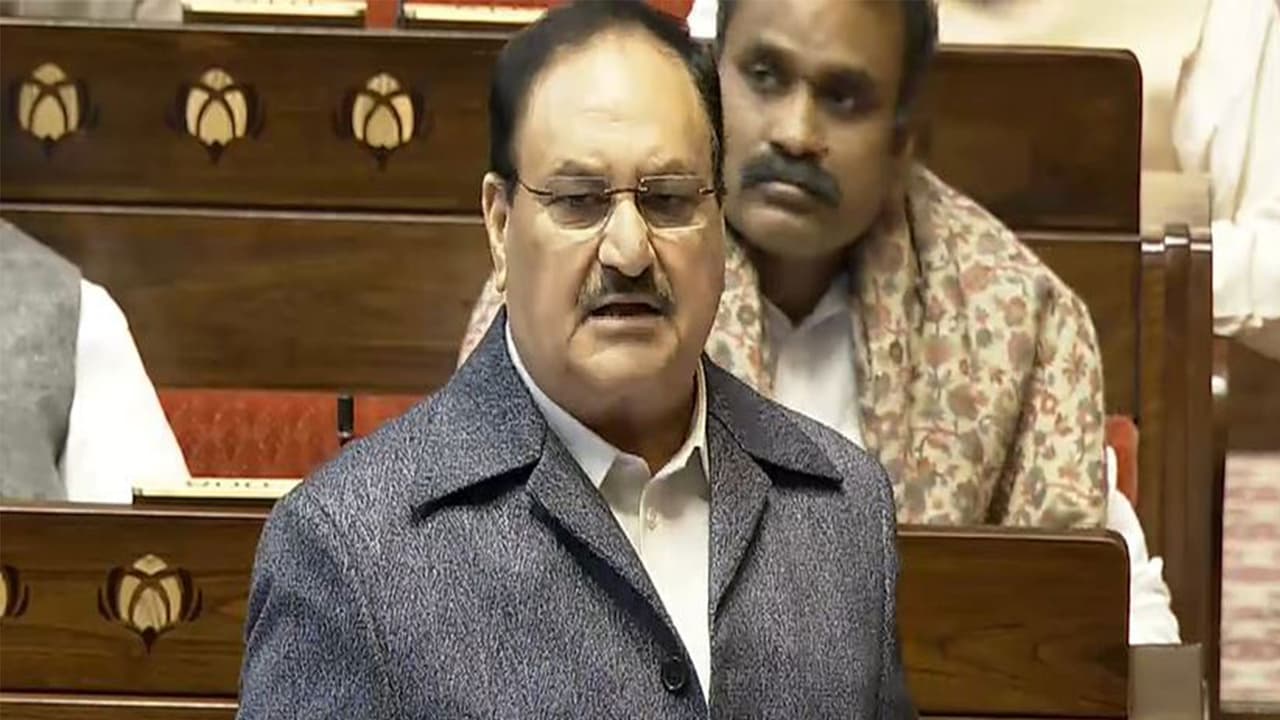
BJP's JP Nadda blamed Pt Jawaharlal Nehru for the 'neglect' of Vande Mataram, alleging an undemocratic process in the Constituent Assembly led to 'Jana Gana Mana' being chosen as the national anthem over it.
JP Nadda Blames Nehru for 'Neglect' of Vande Mataram
Union Minister and BJP MP, JP Nadda, on Thursday, alleged an indifference and neglect towards Vande Mataram when the Constituent Assembly chose 'Jan Gan Man' as the national anthem, and blamed former Prime Minister Pt Jawaharlal Nehru for it. Addressing the Rajya Sabha during a discussion on the 150th anniversary of Vande Mataram, Nadda questioned the process of categorising 'Jana Gana Mana' as the national anthem and 'Vande Mataram' as the national song.
He said, "The final meeting of the Constituent Assembly was held on January 24, 1950, to sign three copies of the Constitution. In it, without any discussion and without any notice, a statement was read out, in which the decision regarding India's national anthem was announced. 'Jana Gana Mana' was declared as India's national anthem, and it was also stated that 'Vande Mataram' would be accorded the same respect as 'Jana Gana Mana'. Whether this decision can be called a constitutional process and a democratic decision is left to the constitution-makers." "Jawaharlal Nehru was entirely responsible for what happened during the selection of India's national anthem in the Constituent Assembly, and for the indifference and neglect towards Vande Mataram," he added.
Cites Nehru's 1937 Reservations
He further alleged that the national song never received the respect it deserved, holding the Indian leaders prior to Independence responsible for it. "The respect that Vande Mataram deserved was never given to it, and the leaders of the country at that time were responsible for this. In 1937, Jawaharlal Nehru expressed reservations about Vande Mataram. In a letter written in September 1937 to Urdu writer Ali Sardar Jafri, he criticised the language of the song, saying there were 'too many difficult words which people do not understand,' and argued that "its ideas are out of keeping with modern notions of nationalism and progress," he said.
Discussion Hailed as 'Mantra to Awaken Nation's Soul'
JP Nadda hailed the discussion in both the Houses of the Parliament, calling Vande Mataram a "mantra to awaken the nation's soul." "I am delighted that over the past two days, more than 80 of our MPs have delivered statements on Vande Mataram. This demonstrates how timely, contemporary, relevant, and deeply relatable this topic is to all of us. This debate, this discussion, brings to mind one more thing: as we discuss Vande Mataram, today's young generation, who did not witness the freedom struggle and have only read about it in the pages of history, will also gain profound insights through this discussion, which will inspire future generations. When we speak of Vande Mataram, we believe it is a mantra to awaken the nation's soul. We believe it is a renaissance of the nation, and we also believe it is a call to rebuild the nation. This mantra inspires us all, giving us the opportunity to connect with our culture and inspiring us to do the same," he said.
On December 9, Union Home Minister Amit Shah initiated the discussion on Vande Mataram in the Upper House of the Parliament and launched a sharp attack on the Congress, saying that the suppression of the national song began during the Indira Gandhi era, when "those who spoke Vande Mataram were imprisoned", and newspapers were shut down. Today, the discussion on Vande Mataram continued for the third day in the Rajya Sabha while the Lok Sabha discussed electoral reforms. (ANI)
(Except for the headline, this story has not been edited by Asianet Newsable English staff and is published from a syndicated feed.)