
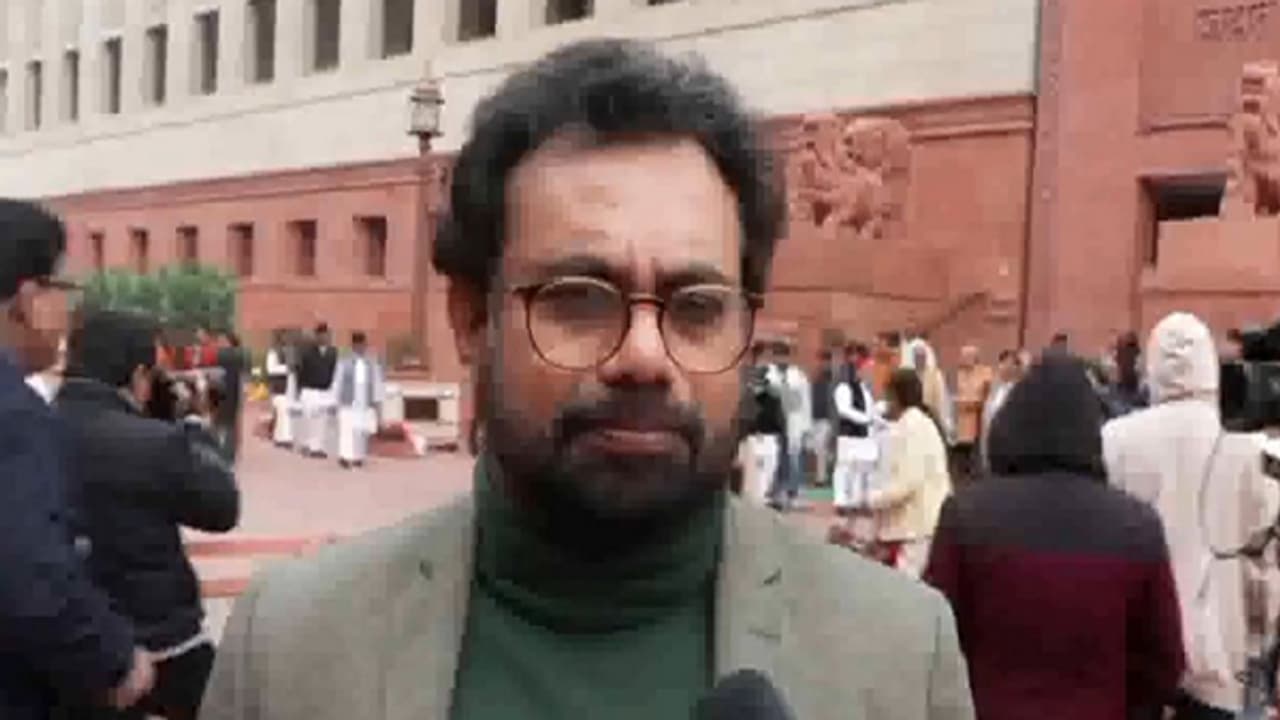
CPI MP John Brittas criticised the new UGC regulations as a 'diluted' SC directive. TMC's Kalyan Banerjee hailed the Supreme Court's stay on the 'unconstitutional' guidelines. The SC stayed the 2026 rules, citing vagueness, reinstating the 2012 rules.
Political Backlash Over UGC Regulations
Communist Party of India MP John Brittas on Thursday criticised the Centre over the new UGC regulations, saying they were a diluted version of a Supreme Court directive. He added that the guidelines' scope should have been broadened and lamented that political controversy, driven by the BJP, should not come at the expense of students. "UGC guidelines were the outcome of the Supreme Court order. This govt had diluted it. The government should have expanded the scope of this guideline, but this controversy has been whipped up, and it's an issue of the BJP. Students should not suffer due to this," Brittas told ANI.
Meanwhile, Trinamool Congress MP Kalyan Banerjee welcomed the Supreme Court's decision, calling the UGC guidelines unconstitutional. "Supreme Court has done the right thing as the UGC guideline was unconstitutional," Banerjee told reporters.
Supreme Court Stays New Regulations
Amid an uproar around the country, the Supreme Court on Thursday stayed the University Grants Commission (Promotion of Equity in Higher Education Institutions) Regulations, 2026. The new UGC regulations, notified on January 23, were challenged by various petitioners as being arbitrary, exclusionary, discriminatory and in violation of the Constitution as well as the University Grants Commission Act, 1956.
The Top Court said that, for now, the 2012 UGC regulations will continue to apply. The Court opined that there is complete vagueness in Regulation 3 (C) (which defines caste-based discrimination), and it can be misused. "The language needs to be re-modified," the Court said.
Details of the New UGC Equity Guidelines
The new regulations, introduced to curb caste-based discrimination in colleges and universities, require institutions to establish special committees and helplines to address complaints, especially from students belonging to the Scheduled Caste (SC), Scheduled Tribes (ST), and Other Backward Classes (OBCs) categories.
Under the new UGC equity guidelines, all colleges and universities must create an Equal Opportunity Centre (EOC) on their campuses. Institutions are also instructed to establish dedicated committees, helplines, and oversight teams to manage complaints and ensure effective support for SC, ST, and OBC students.
Students Protest Against 'Discriminatory' Rules
Earlier on Wednesday, students, mostly belonging to the general category, staged a protest at Delhi University's North Campus against the newly notified University Grants Commission (UGC) equity rules, demanding their immediate withdrawal. The protesting students claimed that the rules promote discrimination on campuses instead of equality. They pointed out that there was no binding provision for the representation of general category students.
Government Assures No Misuse of Law
However, on Tuesday, Union Education Minister Dharmendra Pradhan sought to allay concerns about the new UGC regulations, assuring that the law would not be misused and that there would be no discrimination in its implementation. Speaking to the reporters, Pradhan said, "I assure everyone there will be no discrimination and no one can misuse the law."
(Except for the headline, this story has not been edited by Asianet Newsable English staff and is published from a syndicated feed.)