
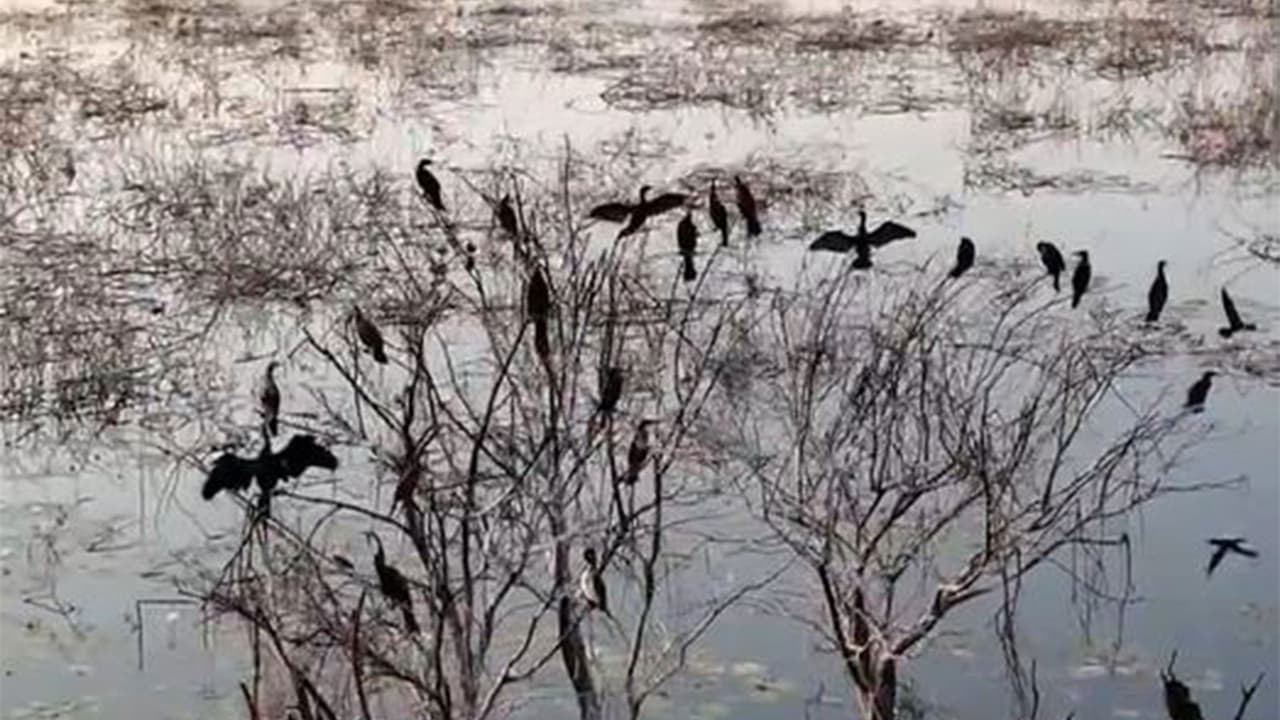
Panjappur Lake in Tiruchirappalli is a thriving urban wetland for migratory and resident birds. Key sightings include nesting Grey Herons, Bar-headed Geese, and the Paddyfield Warbler after a nine-year gap, underscoring its ecological value.
A Thriving Avian Habitat
Tamil Nadu's Panjappur Lake, located in the southern part of the city, continues to function as a vital urban wetland supporting a rich diversity of migratory and resident bird species. During the ongoing winter season, the lake has attracted a wide range of waterbirds, including cormorants, darters, egrets, jacanas, swamphens, Asian openbills, crakes, bitterns, ducks, grebes, northern pintails, and several species of herons.
A significant observation this season was the nesting of Grey Herons deep within the lake's interior vegetation, indicating the suitability of the habitat for breeding. The dense wetland vegetation also serves as a secure roosting site, with large evening congregations of Glossy Ibises and flocks of terns recorded regularly.
The surrounding grasslands and river-edge vegetation further enhance the lake's ecological value. Smaller bird species such as munias, prinias, warblers, wagtails, Red Avadavats, and weavers were documented actively foraging and nesting in these areas.
Notably, the Paddyfield Warbler was recorded locally after a nine-year gap, according to data referenced from eBird, underscoring the importance of reed and grass habitats in sustaining avian diversity. Raptors, including Western Marsh Harriers and Brahminy Kites, were frequently observed around the wetland, while Booted Eagles and Short-toed Snake Eagles were occasionally seen soaring overhead or hunting along the marsh edges. The sighting of the Bar-headed Goose, a long-distance migrant from Central Asia, further highlights the lake's importance as a seasonal refuge for migratory birds.
Ecological Significance and Expert Insights
Continuous monitoring and documentation by the Department of Environmental Sciences at Bishop Heber College, led by Dr. R. Carlton, Dr. Griffith Micheal, and S. Harish Sundhar, have emphasised the ecological significance of Panjappur Lake in supporting Tiruchirappalli's avifaunal diversity. Experts stress that sustained monitoring and conservation-focused management are essential to protect the long-term ecological health of this crucial urban wetland.
The Rise of Birdwatching
Dr. R. Carlton, Assistant Professor, Dep of Environmental Science, said, "So today, we are going to talk about birdwatching, which has become a very popular hobby across the country, especially among IT professionals, largely as a stress-relief activity. In Tamil Nadu, important birdwatching sites include Vedanthangal Bird Sanctuary. In Trichirapalli, though a smaller city, the presence of the Cauvery and Kollidam rivers has created numerous lakes and water bodies that support both agriculture and birdlife."
He added, "One of the oldest and largest lakes here, Panjapur Lake, attracts many birds for feeding, breeding, and resting. Notable sightings include Bar-headed Geese, Eurasian Marsh Harrier, and common species like Ibises, Herons, and Cormorants. Recently, we also recorded the Paddy Field Pipit, which had not been documented in Trichirapalli since 2017. With the help of students and modern tools like eBird and Merlin ID, we have been actively monitoring and recording bird species in and around Trichirapalli."
Trichy as a Migratory Hotspot
Dr. Griffith Micheal, a birds researcher, said, "I have been an avid birdwatcher for the past 10 years. I chose Trichy as a birdwatching hotspot because its varied landscapes, lakes, and water bodies attract many migratory birds. Birds from Siberia, like the Bar-headed Goose, and species from Europe and Western Maharashtra visit during the winter, staying for three to four months before returning home. As a bird photographer, I share my photos on platforms like Facebook and Instagram, which raises awareness among birdwatchers and encourages them to visit. This also helps in conserving lakes like Panjapur Lake near the new bus terminus."
(Except for the headline, this story has not been edited by Asianet Newsable English staff and is published from a syndicated feed.)