
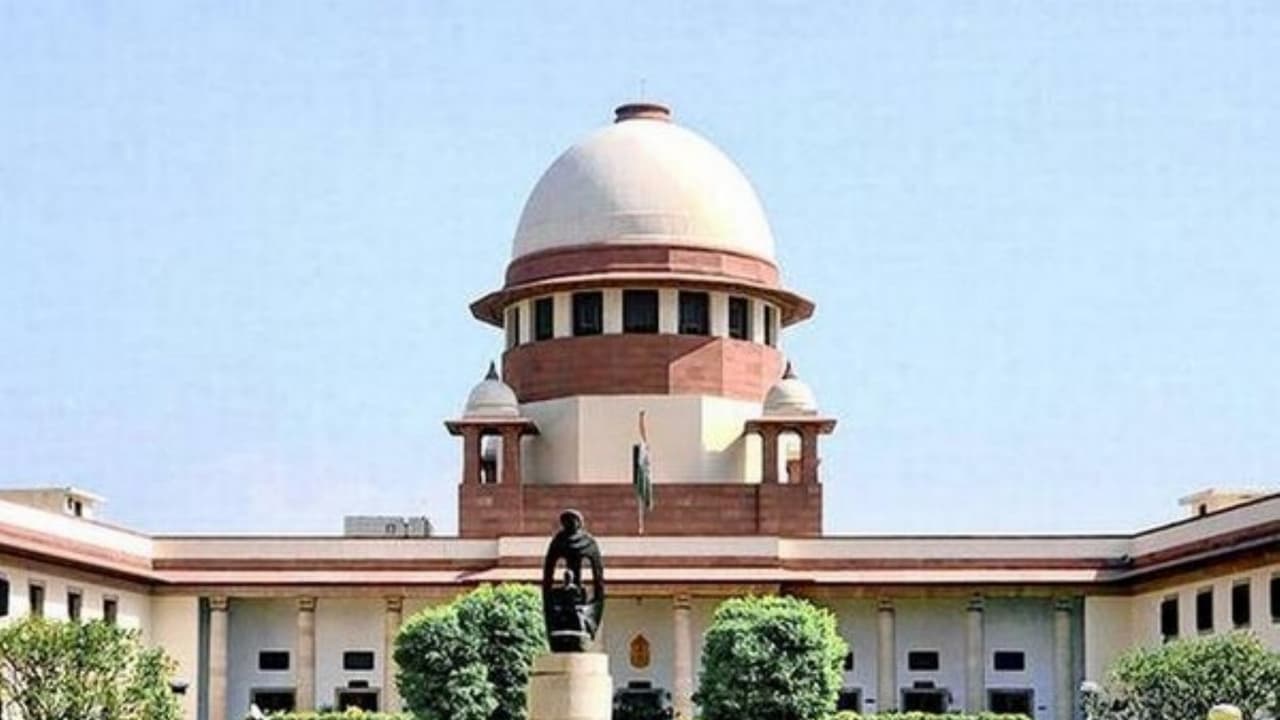
The Supreme Court has asked the Centre to consider a uniform cap on the retail prices of medicines to prevent excessive markups, questioning the large gap between the retailer price and the MRP, especially for life-saving cancer drugs.
The Supreme Court on Tuesday asked the Centre whether a uniform cap should be imposed on the retail prices of medicines and medical devices to prevent excessive markups over the price charged to retailers.
A bench of Justices Vikram Nath and Sandeep Mehta questioned why the Maximum Retail Price (MRP) could not be restricted to 16 per cent above the Price To Retailer (PTR), particularly in cases involving life-saving medicines. Justice Mehta pointed to a cancer drug priced at about Rs 27,000 for consumers despite its PTR being around Rs 3,000, observing that the disparity warranted scrutiny.
Scrutiny on Non-Scheduled Drugs and Public Funds
The bench also questioned the rationale for excluding non-scheduled medicines from the price-control regime under the Drugs (Prices Control) Order, 2013.
The apex court noted that inflated medicine prices could also have a direct impact on public funds when patients receive treatment under government health schemes such as Ayushman Bharat, particularly where hospitals require medicines to be purchased from their in-house pharmacies.
Background of the Petition
Solicitor General Tushar Mehta, appearing for the Centre, said a balance would have to be worked out, while acknowledging the concerns raised by the petitioners. The bench will continue hearing the matter on October 12.
Earlier, the Supreme Court had expressed serious concern over the wide gap between the Price to Retailer (PTR) and Maximum Retail Price (MRP) of life-saving medicines, particularly cancer drugs, questioning the absence of effective price controls.
The petition contended that a large majority of medicines fall outside the scheduled category and are therefore not subject to ceiling prices, allowing manufacturers greater flexibility in fixing MRPs.
The plea sought mandatory generic prescriptions, regulation of the initial prices of non-scheduled medicines and price caps on medical devices.
Petitioner Kishan Chand Jain submitted that around 82 per cent of medicines fall outside the scheduled category under the Drug Price Control Order (DPCO), 2013, and manufacturers are not subject to upfront price fixation for such drugs. (ANI)
(Except for the headline, this story has not been edited by Asianetnews Editorial staff and is published from a syndicated feed.)