
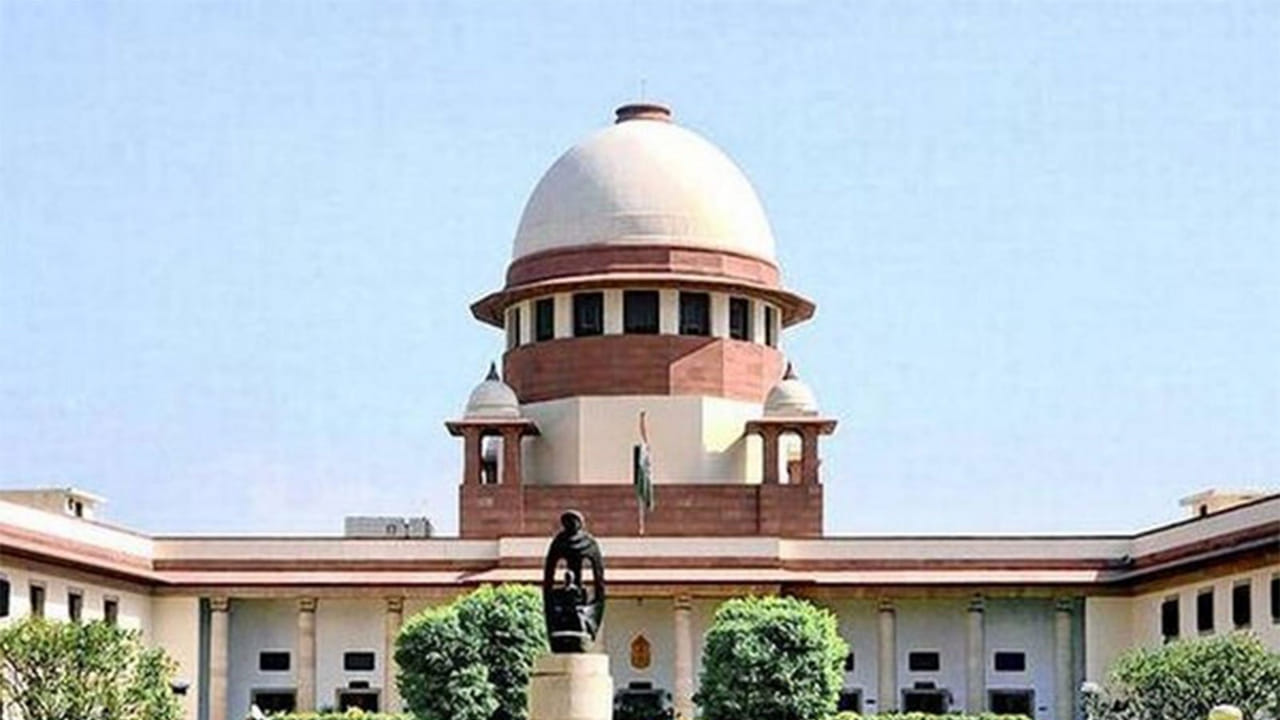
The Supreme Court has pulled up civic authorities over the rising pollution in the Yamuna river. The apex court mandated the CPCB to monitor water quality and hold states accountable for deterioration, stressing the need for better management.
Supreme Court Highlights Severe Civic Failure In Yamuna Clean Up Plan
New Delhi [India], November 16 (ANI): The Supreme Court has observed that despite huge amounts being spent on cleaning the Yamuna, pollution in the river has only increased, exposing the failure of civic administration in towns and cities along its banks. A bench of Justice Manoj Misra and Justice Manmohan, in its order passed on November 4, said that the poor condition of the river reflected the state of civic governance and the discharge of wastewater through 520 drains into the Yamuna. “This Court thinks that everything that is wrong with civic administration in the towns, cities and villages situated along the banks of the river is reflected in the poor health of the river,” the bench observed. The apex court directed the Central Pollution Control Board (CPCB) to monitor water quality at the points where the Yamuna and major drains enter and exit every State, Union Territory and district. It said authorities would be held accountable and penalised if water quality deteriorated within their jurisdiction. “If the water quality deteriorates on any parameter while flowing through, or exiting a State/Union Territory or a District therein, then that State/Union Territory or District... shall be held accountable and penalised,” the apex court said, asking the CPCB to formulate a mechanism for calculating environmental compensation. The bench stressed that industrial pollution and untreated sewage must be tackled at the source, observing that merely setting up more sewage treatment plants (STPs) would not solve the problem. It also flagged that none of Delhi's 37 existing STPs met all prescribed standards and highlighted discrepancies in the government's claims regarding encroachments on 35 water bodies and wetlands in Zone 'O'. Invoking the doctrine of Common But Differentiated Responsibilities, the top court said all States sharing the Yamuna must treat it as one continuous ecosystem and shoulder responsibility in proportion to their contribution to pollution and capacity to address it. It further directed all STPs, Common Effluent Treatment Plants and government-commissioned biogas plants to install tamper-proof smart energy meters within a month and upload live operational and discharge-quality data. The CPCB has also been tasked with conducting quarterly surprise inspections, with environmental compensation recoverable for every day of non-compliance. The bench directed that Delhi's Zone 'O' be protected as a green zone, with structures removed in accordance with law and eligible occupants rehabilitated. To ensure effective implementation, the bench directed all central and State authorities to extend full assistance to the CPCB, including unrestricted access to treatment facilities and records for surprise inspections. It also ordered the appointment of senior nodal officers by the Chief Secretaries of Yamuna basin States and Union Territories and concerned Central Ministries within two weeks to coordinate compliance with its directions. The matter has been listed next on January 13, 2027. (ANI)








