
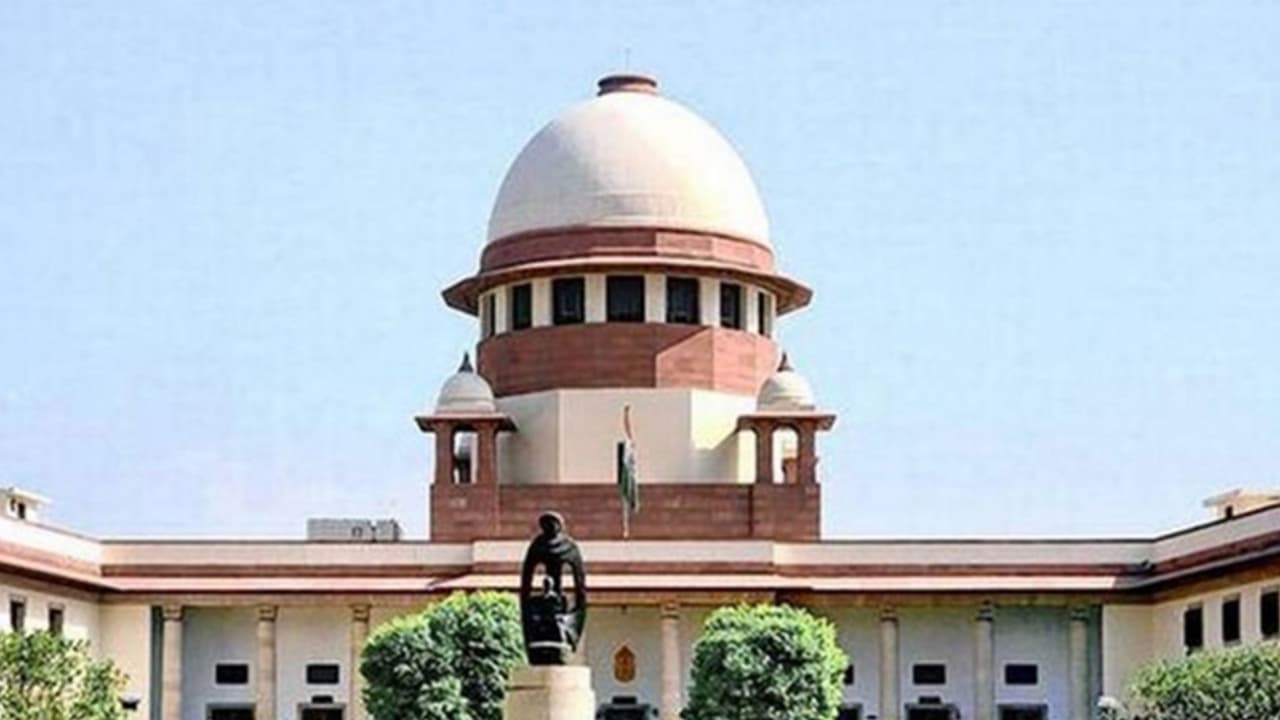
The Supreme Court has formed a five-member High-Powered Committee to create a uniform definition for the Aravalli Hills. The panel will submit a conservation report by August 31 to regulate future mining and protect the ecologically sensitive area.
The Supreme Court has set up a five-member High-Powered Committee to formulate a uniform definition and demarcation of the ecologically sensitive Aravalli Hills and Range for regulating future mining activities. A bench of Chief Justice of India Surya Kant, Justice Joymalya Bagchi, and Justice Vipul M Pancholi directed the committee to submit a conservation report by August 31.
Constituting the expert committee, the bench observed that matters affecting ecological conservation and sustainable development cannot be resolved without informed expert evaluation, and entrusted the committee with reassessing the existing framework relating to the Aravallis. It said that any future action must be based on scientific assessment and aligned with the principles of environmental protection and sustainable development.
The committee will be headed by Kanchan Devi, Director General of the Indian Council of Forestry Research and Education, as per a May 25 order, which was made online on Tuesday.
Addressing Loopholes in Aravalli Definition
The apex court noted that expert evaluation was required to examine concerns that the current definition of the Aravalli Range--limited to land within 500 metres between two or more Aravalli hills--may significantly reduce the extent of protected areas. It observed that such a narrow interpretation could classify ecologically linked regions as "non-Aravalli" areas, potentially opening them up to mining and other environmentally harmful activities.
The committee has also been directed to examine concerns that only 1,048 of Rajasthan's 12,081 Hills satisfy the prescribed 100-metre height criterion, potentially leaving a vast number of Hill formations outside the ambit of environmental protection.
Emphasis on Scientific Assessment
Highlighting the ecological fragility and biodiversity significance of the Aravalli region, the top court said the Committee must objectively evaluate whether the proposed measures could lead to environmental impacts that may be irreversible or difficult to remedy. It stressed that any final decision should be grounded in scientific assessment and aligned with the principles of environmental conservation and sustainable development.
"It must be emphasised that decisions of such far-reaching consequence ought not to be taken without the benefit of expert evaluation. The proposed Committee would be expected to objectively assess the implications of the measures contemplated and assist this Court in determining whether their implementation may give rise to ecological, environmental, or other consequences that may subsequently prove difficult, if not impossible, to reverse," the order stated.
"Such an exercise is essential to ensure that any course of action adopted is informed, scientifically sound, and consistent with the principles of environmental protection and sustainable development," it added.
Expert Committee Composition
The members include Dr. Subhash Ashutosh, former Director General of the Forest Survey of India, Dr. Rajendra Kumar Sharma, former Director of the Geological Survey of India, Brij Mohan Singh Rathore, former Joint Secretary in the Ministry of Environment, Forest and Climate Change (MoEFCC), and Prof. Ashok K. Bhatnagar, former Head of the Department of Botany at Delhi University.
The apex court also named Professor Jagdish Krishnaswamy of the Indian Institute for Human Settlements and Professor Laxmikant Sharma of the Central University of Haryana as special invitees to be associated with the Committee from time to time and an officer of the rank of Director in the MoEFCC will serve as Member Secretary.
Stakeholder Involvement and Case Context
The apex court while noting that the issues involved affect a broad spectrum of stakeholders, including the governments of Delhi, Rajasthan and Haryana, environmental groups, mining lease holders, farmers, mine workers and local communities, directed the committee to issue a public notice inviting representations and suggestions from all interested persons and entities.
The order of the top court came in the suo motu proceedings concerning the definition of the Aravalli Hills and Ranges. The matter will be next heard on September 7. Earlier, top court had stayed mining across the entire Aravalli region.
The Aravalli Range functions as the ecological lifeline of northwestern India, acting as a vital natural barrier between the arid desert regions of the northwest and the fertile plains of northern India. (ANI)
(Except for the headline, this story has not been edited by Asianet Newsable English staff and is published from a syndicated feed.)