
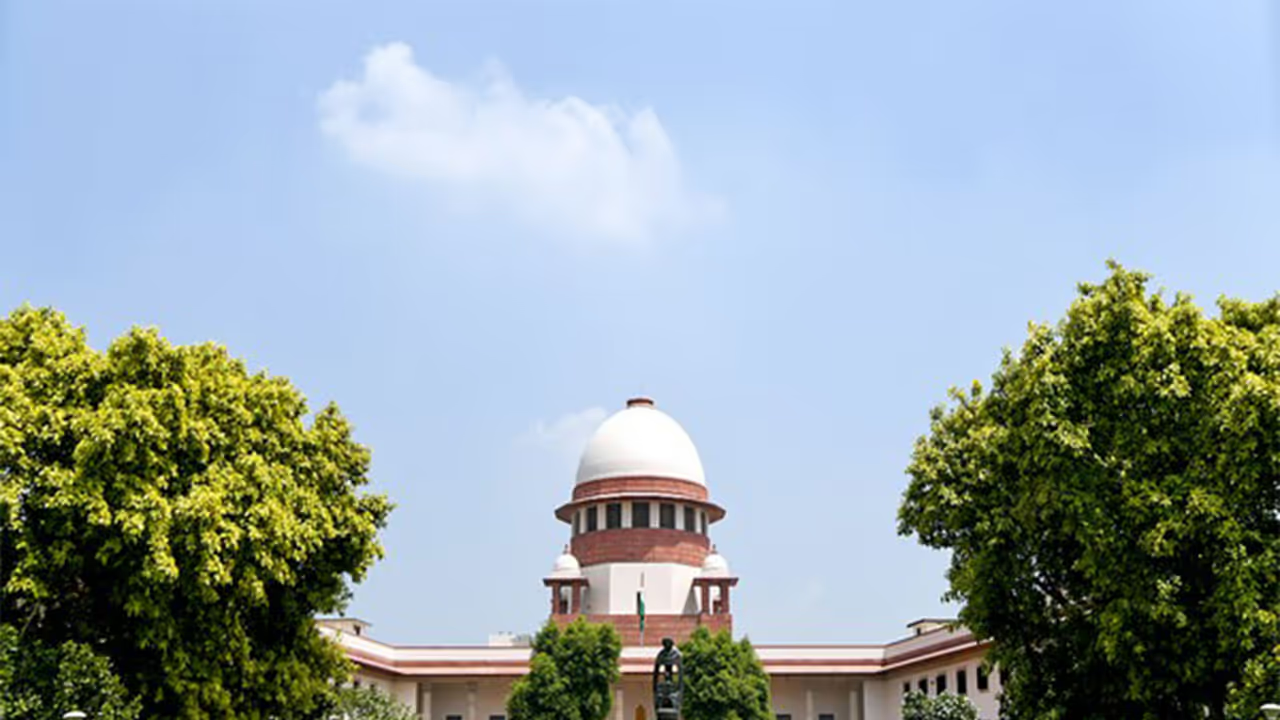
The Supreme Court has rejected a plea by Delhi riots accused Shadab Ahmad to relax his bail conditions to attend law school, advising him to approach the trial court instead.
Supreme Court Rejects Plea to Modify Bail Conditions
New Delhi [India], October 26 (ANI): The Supreme Court on Monday declined to modify the bail conditions imposed on Delhi riots larger conspiracy case accused Shadab Ahmad, who sought permission to travel to Ghaziabad to attend law classes, allowing him to withdraw his plea with liberty to approach the trial court.
A bench of Justices Aravind Kumar and Vipul M Pancholi was hearing Ahmad’s application seeking relaxation of the condition barring him from leaving the National Capital Territory of Delhi without prior permission of the trial court. He had also sought permission to mark his attendance at the Delhi Police Crime Branch office once a week instead of twice, on Mondays and Thursdays.
Education and Legal Repercussions
Ahmad’s counsel told the bench that he had secured admission to a three-year law course in Ghaziabad and was seeking to pursue his education as part of his “reformation”. He said classes had commenced in August and Ahmad was falling behind, adding that he would travel in the morning and return by evening.
However, Justice Kumar questioned whether Ahmad had first approached the trial court and refused to relax the conditions. “Go tell the trial court. This we will not modify... We know why you have joined that law college, leaving out all the law colleges inside Delhi,” the judge remarked. When the counsel submitted that the trial court could not modify the attendance condition imposed by the Supreme Court, the bench maintained its position. The counsel subsequently sought permission to withdraw the application.
Background of the Case
Ahmad was granted bail on January 5 along with co-accused Gulfisha Fatima, Meeran Haider, Shifa-ur-Rehman and Mohd Saleem Khan. A Delhi court subsequently ordered his release on January 8.
The Supreme Court had imposed 11 conditions on the accused, including restrictions on leaving Delhi without prior permission, attending rallies or public meetings, and circulating posters, banners or campaign material through physical or digital platforms. The accused, several of whom were student activists associated with protests against the Citizenship Amendment Act in 2019-2020, are facing charges under the Unlawful Activities (Prevention) Act and the Indian Penal Code for allegedly conspiring to orchestrate the communal riots in Delhi in February 2020. (ANI)
(Except for the headline, this story has not been edited by Asianetnews Editorial staff and is published from a syndicated feed.)