
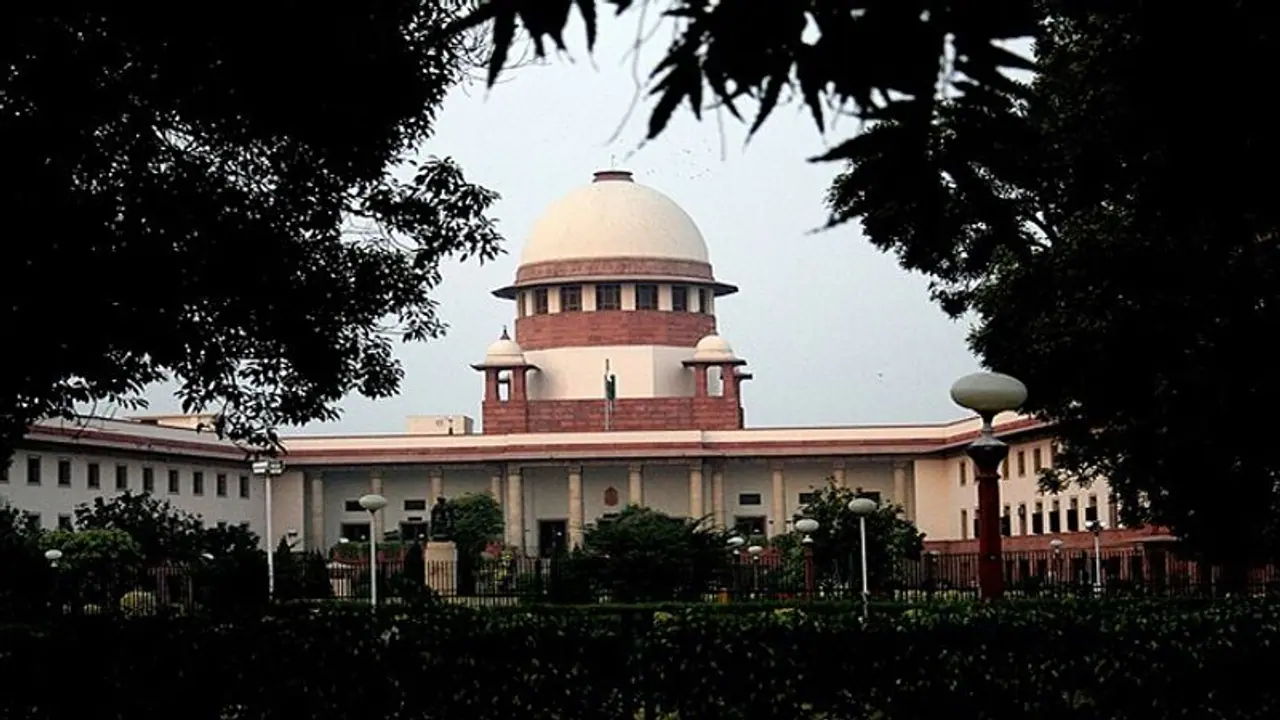
Justices Sanjiv Khanna and Dipankar Datta, while issuing a notice to the Union government, emphasized that a stay on the law was not feasible at this point, as it is a statutory provision.
In a recent development, the Supreme Court on Friday (January 12) declined to stay the implementation of a new law that alters the process of appointing the Chief Election Commissioner (CEC) and Election Commissioners (ECs). The law, which allows a panel excluding the Chief Justice of India (CJI) to make these appointments, faced scrutiny.
Justices Sanjiv Khanna and Dipankar Datta, while issuing a notice to the Union government, emphasized that a stay on the law was not feasible at this point, as it is a statutory provision. The matter was brought to the court through a petition filed by Congress leader Jaya Thakur, challenging the law's compatibility with the separation of powers.
Senior advocate Vikas Singh, representing Jaya Thakur, contended that the law disrupts the separation of powers and urged for a stay before new appointments transpire under this provision. While agreeing to examine the constitutional aspects of the law, the bench maintained that a stay on its operation wasn't plausible at this juncture.
The next hearing is scheduled for April.
Besides Thakur's petition, a group of lawyers has also filed two additional petitions challenging the constitutionality of the Chief Election Commissioner and other Election Commissioners (Appointment, Conditions of Service and Term of Office) Act, 2021. These petitions argue that the law jeopardizes free and fair elections, a fundamental aspect of the Constitution's basic structure.
The new law, approved by President Droupadi Murmu on December 28, introduces a modified procedure for appointing CEC and ECs. It outlines the formation of a search committee, led by the Union law minister and two other individuals not below the rank of secretary, tasked with presenting a panel of five candidates to the selection committee.
This selection committee, chaired by the Prime Minister, leader of the Opposition, and a union minister, makes recommendations to the President for the appointments.
UNSC confirms death of Lashkar founder and Hafiz Saeed's deputy Hafiz Abdul Salam Bhuttavi
This legislative shift marks a departure from a March 2021 decision by a Constitution bench, which mandated the inclusion of the CJI in the selection panel until a new law was formulated.
The earlier judgment emphasized transparency in the appointment process and drew parallels with the selection mechanisms for the director of the Central Bureau of Investigation (CBI) and Lokpal.
