
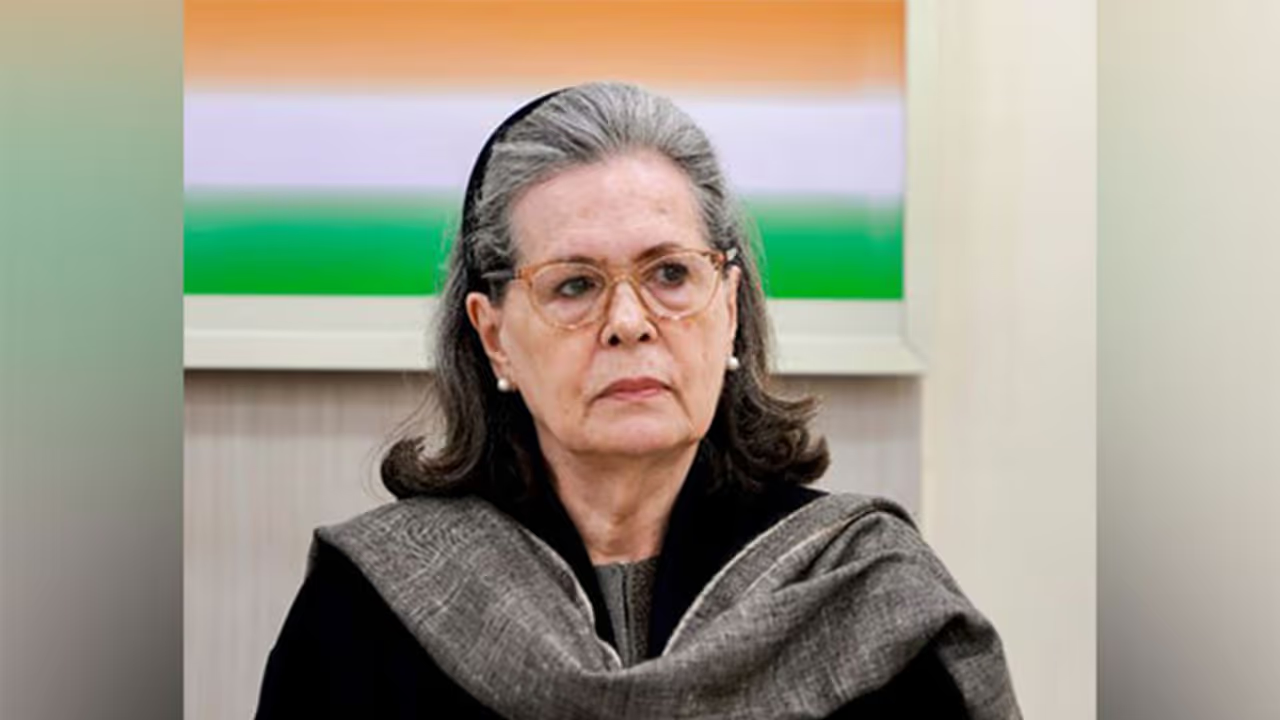
Sonia Gandhi criticizes the BJP for damaging India's democratic institutions, defends historical Emergency-era decisions, and discusses her new memoir, Belonging: A Journey of Love, detailing her life in India and entry into public service.
Sonia Gandhi Criticizes BJP's Impact on Democratic Institutions
Congress Parliamentary Party (CPP) Chairperson Sonia Gandhi levelled a sharp critique against the ruling Bharatiya Janata Party (BJP), accusing it of inflicting serious damage on the country's democratic institutions over the past twelve years. In an interview with a national daily, 'The Hindu', the Congress Parliamentary Party Chairperson noted, "Over the last twelve years, great damage has been done to the fabric of our country, our democracy and our institutions."
She further said that people have begun to understand the damage being done and expressed confidence in the Indian electorate’s ability to restore democratic health and proper governance. "Even after this government goes, it will take time to restore our systems to health, and great effort from political parties. People are now beginning to be restless and recognising the damage. But I am optimistic, and I know that the people of India will welcome a return to proper governance," she said.
Reflecting on the 1975 Emergency
Offering her perspective on the 1975 Emergency, Gandhi noted that while democratic rights were curtailed during the 21 months, Indira Gandhi recognised the situation, subsequently called for general elections in March 1977, and publicly expressed regret for the excesses committed. "It was only after the Emergency that I came to know the true gravity of what had been happening. Yes, democratic rights had been curtailed, and there was a suspension of habeas corpus, but it was done constitutionally," she stated.
She added, "Yet, when I take myself back to that period and try and see it from Mrs Gandhi's (Indira Gandhi) point of view, I see her struggling to cope with the rapidly deteriorating prevailing circumstances: violent protests, government offices and public transport set on fire, widespread organised unrest and even a call for the bureaucracy and armed forces to disobey orders."
She emphasised that the decision to invoke Emergency was ultimately resolved through democratic means, with Indira Gandhi formally expressing regret over the excesses. "Hindsight allows us to put things better in perspective. Let's not forget that it was Mrs Gandhi herself who came to recognise what was happening and called for the March 1977 election. And you know very well that she herself later publicly expressed regret and apologised for excesses during the Emergency," she said.
Sonia Gandhi Discusses Her New Memoir
Further, speaking on her memoir Belonging: A Journey of Love ahead of the launch, Gandhi told 'The Hindu' that the book is a love story of how she grew to love former Prime Minister and her husband Rajeev Gandhi's family and his country, and how later the same love brought her into public life.
"I had no desire to talk about it for so long. But it is not only a love story between the two of us, but it's also the story of how I grew to love Rajiv's family and the country to which they belonged, and then I too came to belong in it. And of how this love brought me into public life, when I saw the purpose of all the sacrifices they had made being threatened, and the party was weakening. I felt I had to do something," she stated.
The memoir, titled Belonging: A Journey of Love, chronicles Sonia Gandhi's journey, from her childhood in post-war Italy and her romance that brought her to India to the personal losses that profoundly shaped her life and her relationship with her adopted country.
(Except for the headline, this story has not been edited by Asianetnews Editorial staff and is published from a syndicated feed.)







