
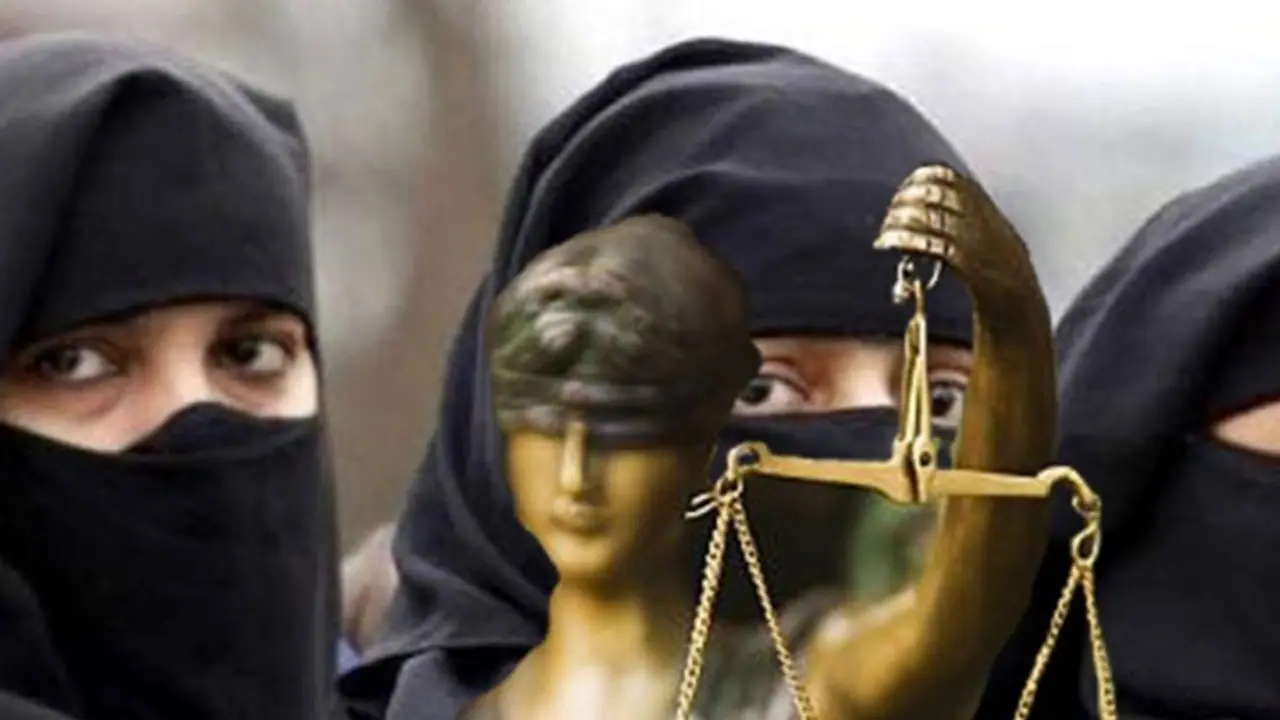
Most of the participants are unfamiliar with the Islamic law of marriage. Experts believe that the ban can have adverse consequences. In fact, triple talaq is considered alien to Quran.
While women are rejoicing the latest verdict on the matter by the Supreme Court, it is yet to be seen when the six petitioners who approached the top court will get justice. This is just the first step toward a huge change and it certainly comes with baggages. The debate that follows is the first thing that comes in our way when it comes to judging the verdict.
While Union Minister for women and child development, Maneka Gandhi applauded the SC's verdict, Islamic experts believe otherwise. While religious sensitivity is one thing, they speak of a deeper impact on the psyche of Muslims. Triple talaq is a practice under which a Muslim man can divorce his wife by simply uttering "talaq" three times. However, it is prevalent among India's Muslim community, majority of whom follow the Hanafi Islamic school of law. Naturally, this mode of talaq is not universal among the Muslims across the world. Many other Islamic schools of thought prefer the divorces to be deferred for more than three years.
The government may have cited the example of many other Islamic countries like Pakistan, which have banned triple talaq, but it remains to be seen how practical it is to ban it in a multi-religious country like India, which is always in the hot bed of controversies pertaining to religion.
While some consider it a political game to win the minority women's votes, there are others who believe it is justice meted.
Why is Triple Talaq in the news?
Various Islamic experts believe that the concept of Triple Talaq is alien to Quran and that pronouncing it in one go has never been the norm. It is after the second divorce that a man can revoke his statement and take back his wife. The concept of triple talaq in one sitting is redundant. True, the concept is being misused in many cases as husbands take the liberty of divorcing their wives in an instant.
Precisely why, Muslim organisation, Bharatiya Muslim Mahila Andolan (BMMA), launched a campaign to ban triple talaq and "nikah halala", a known practice where divorced women, in case they want to go back to their first husbands, have to consummate a second marriage. Zakia Soman, one of the cofounders of the organisation had told Al Jazeera in an earlier interview, "In the course of our work, we have regularly been approached by our sisters, complaining about mistreatment and misuse of the oral talaq system. In most cases, men go scot-free and believe their action is approved by the Quran."
The beginning of a political drama
What started as a debate soon turned into a political drama as parties scuffled over whether triple talaq is justified or not. Citing illegal talaqs through SMS, telegrams, letters and E-mails, activists designed their cases in favour of the ban. However,they did not consider the fact that these instances were anomalies and were one off instances most of the time. Faizan Mustafa, vice chancellor of the National University of Law, told Al Jazeera, "Out of 4,710 people 525 divorces took place. Out of this only one divorce was by SMS. Therefore, they have played it out of proportion. Media has further portrayed as if every Muslim is divorcing through SMS."
He further explained, "Nearly 41 percent of women themselves wanted divorce. If a woman herself wants divorce and husband gives, it is out of mutual agreement. It is a divorce by consent. In Islam it is known as Talaq-e-Mubarra. It's OK.It is only when these two situations are not there, triple divorce will look bad. And, therefore, I would also say in that situation the better solution would be that the three pronouncements should be considered as one. So that there is a scope for reconciliation."
What does Islamic law says?
For Islam, marriage is a contract. Likewise, it has charted out ways of anulling it. It is not that only a man has the right to pronounce 'talaq', even a woman in her own rights can ask for a 'khula' (divorce). Arbitration is required in both the cases. However, apparently, activists have highlighted the misuse of instant divorces by men to justify their demands for the ban.
The demands of BMMA to ban unilateral divorce, interestingly, stands on shaky grounds, especially when Islamic Marriage Act allows equal opportunities for both the parties to reconcile through arbitration. Zakia has her own logic here. She says, "None of the Quranic guidelines of discussion, arbitration, witnesses, specified time period or even a genuine attempt to resolve differences are being followed. In such circumstances, the question of alimony or the rights of children doesn't arise."
While Muslim women also fight custodial rights, there are Quranic laws that consider women as the sole custodians of the child in case of a talaq. It is a different thing that the women are not aware of their own rights, which renders then childless and helpless.
Illiteracy is the root cause
So, what exactly are we fighting here? The Islamic laws or the illiteracy?It is almost certain that even after the triple talaq verdict, cases of instant divorce will prevail because most of the people practicing it use it as a tool and not as a regulation governing marriage. Most of the participants, in fact, are unaware of the Quranic laws and the aspects that provide women some rights against the 'demonic' triple talaq.
