
The Supreme Court will order the CBSE to examine data protection issues with the APAAR ID and implement the Orissa High Court's ruling to make it strictly voluntary for all students across India, addressing privacy and consent concerns.
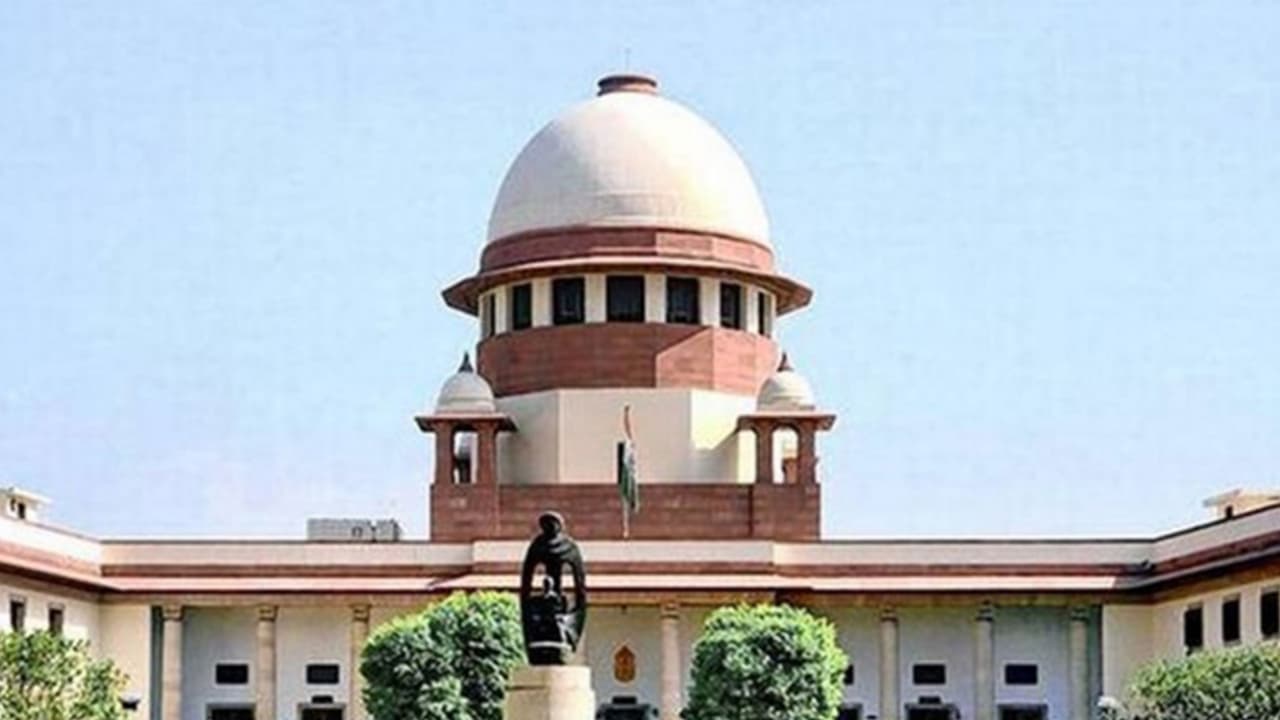
The Supreme Court on Monday agreed to direct the Central Board of Secondary Education (CBSE) to examine the data protection concerns surrounding the APAAR ID scheme and to implement across the country the Orissa High Court's ruling that generation of APAAR IDs must remain strictly voluntary.
A bench led by Chief Justice of India Surya Kant and comprising of Justices Joymalya Bagchi and V. Mohana said it would pass an appropriate order directing CBSE to examine the issues flagged by the petitioners and ensure compliance with the Orissa High Court's directions on a pan-India basis.
Privacy Concerns and Lack of Statutory Backing
The observations came during the hearing of a plea filed by Abhisek Baxi challenging the Aadhaar-linked APAAR ID framework on the ground that it violates the fundamental Right to Privacy, including the Right to be Forgotten.
Senior Advocate Indira Jaising, appearing for the petitioner, argued that children were effectively being compelled to enrol in what was projected as a voluntary scheme. She submitted that the APAAR framework had been introduced only through Ministry of Education circulars without any statutory backing, despite involving large-scale collection of children's personal data.
"Data collecting schemes need a law. There is no statute. It has been introduced through circulars by the Ministry of Education," Jaising submitted, adding that the scheme was not compliant with the Digital Personal Data Protection Act.
She argued that although APAAR was described as voluntary, it had become mandatory in practice because students required an Aadhaar-linked APAAR ID to be included in CBSE records for Classes XI and XII. "It may be a benefitting scheme, but it necessitates having an Aadhaar and APAAR," she submitted, adding that this directly implicated the right to privacy and the right to be forgotten.
Violation of DPDP Act Alleged
Jaising also contended that the consent mechanism did not satisfy the standards prescribed under Section 6 of the Digital Personal Data Protection Act. She argued that consent must be "informed" and capable of being withdrawn.
"Everybody is not aware of the implications of what they are signing. All of us sign consent forms," she said, urging the Court to direct that Section 6 of the DPDP Act be expressly incorporated into the APAAR consent form.
SC to Enforce Orissa HC Ruling Nationwide
Referring to the Orissa High Court's judgment, Jaising said the High Court had directed authorities to adopt an opt-out model by including a refusal clause in the consent form.
The Court observed that it could direct the clarification ordered by the Orissa High Court to be implemented on a pan-India basis. "Is it alright if we say that the clarification directed by the High Court be done on a pan-India basis?" the CJI asked, before indicating that the Court would direct CBSE to implement the High Court's ruling nationwide.
Jaising further cautioned that the APAAR database could facilitate surveillance and argued that the purpose limitation for retaining students' data had not been clearly defined. Justice Joymalya Bagchi, however, observed that CBSE was bound to use the data only for institutional purposes and noted that layered consent existed for storing the information.
The CJI also verbally noted that India now has a data protection law and no authority could act in violation of it. "We have a law in this country. Nobody can violate that law," the CJI remarked.
The Court noted that the APAAR system also served legitimate administrative purposes, including facilitating school transfers when parents are transferred, maintaining student records and assisting in educational planning such as assessing teacher-pupil ratios.
What is the APAAR ID Scheme?
APAAR (Automated Permanent Academic Account Registry) is a unique 12-digit lifelong academic identification number introduced by the Ministry of Education under the "One Nation, One Student ID" initiative. Linked with Aadhaar, it digitally stores and tracks a student's academic records, including marksheets, certificates and co-curricular achievements through DigiLocker and other government platforms.
The petition challenges the scheme on the ground that its implementation without a statutory framework and informed consent violates privacy and data protection safeguards. (ANI)
(Except for the headline, this story has not been edited by Asianet Newsable English staff and is published from a syndicated feed.)