
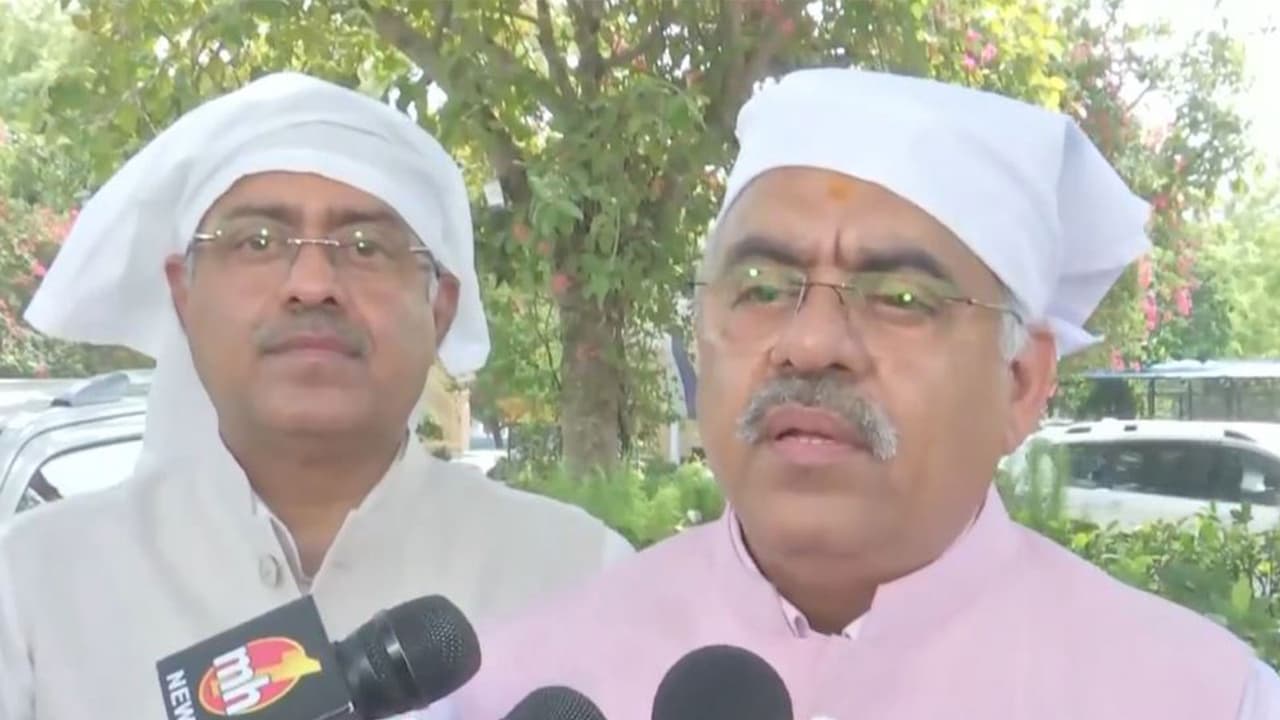
BJP MP Tarun Chugh has demanded the arrest of Punjab CM Bhagwant Mann in the ongoing sacrilege row. This comes after the Akal Takht summoned AAP MLAs and ministers over a new anti-sacrilege bill, with Mann agreeing to appear.
Bharatiya Janata Party (BJP) MP Tarun Chugh launched a sharp attack on Punjab Chief Minister Bhagwant Mann on Monday, demanding his arrest in connection with the ongoing sacrilege row. The BJP MP's comments follow the recent summoning of AAP ministers and MLAs by Sri Akal Takht Sahib regarding the anti-sacrilege bill. Talking to reporters, the BJP MP accused the Chief Minister of accumulating "sins", demanding a case of sacrilege be registered against him. He said, "Bhagwant Mann has committed many sins, and to hide those, he indulged in even more sins. Nothing is above Sri Akal Takht Sahib. Leaving his arrogance behind, Bhagwant Mann should appear before Sri Akal Takht Sahib. A case of sacrilege should be registered against him, and he should be arrested."
CM Mann Affirms Supremacy of Akal Takht
Earlier, on Sunday, Punjab Chief Minister Bhagwant Mann confirmed that all Aam Aadmi Party (AAP) MLAs and Cabinet ministers would appear before the Akal Takht after being summoned, reaffirming that the highest temporal seat of the Sikhs holds supreme authority for him and his party. Addressing a press conference alongside AAP convenor Arvind Kejriwal in Amritsar, Mann said, "Our MLAs and ministers have been summoned to Takht Sri Akal Takht Sahib tomorrow for some discussion, to present their point of view. And all our MLAs and ministers will go there. We consider the supremacy of Akal Takht Sahib to be the greatest....all our MLAs and ministers, as they have been called, some ministers have been asked only to clarify their point in writing, they will give it in writing."
Controversy Over Anti-Sacrilege Bill
This comes after the Akal Takht summoned the Punjab Cabinet and all Sikh MLAs across party lines to appear on June 29, seeking an explanation over how a law concerning Sikh religious affairs was passed without consulting them.
The law in question, the Jaagat Jot Sri Guru Granth Sahib Satkar (Amendment) Bill, 2026, was passed by the Punjab Assembly on April 13 and received the Governor's assent within days. Amending the 2008 Principal Act, the new law provides for a term that may extend to life imprisonment for criminal conspiracy in an offence of sacrilege of the Saroop(s) of Guru Granth Sahib with the intention to disrupt peace or communal harmony, and a fine between Rs 5 and 20 lakh. For an offence in the Act, except the offence of sacrilege, the perpetrator shall be punished with imprisonment for a term, which may extend to five years and with a fine of up to Rs 10 lakh.
The main objective of the legislation is to provide stricter punishment for acts of sacrilege. The law also asked the Shiromani Gurdwara Parbandhak Committee to maintain a Central Register containing details with regard to the record of printing, storage, distribution, and supply of the Saroops of Jaagat Jot Sri Guru Granth Sahib. The register shall contain a unique identification number of each Saroop, date of printing and publication, date and place of supply, place of storage and the name and address of the custodian.
Duties and Definitions Under the New Law
Defining the duties of a custodian, it asked them to ensure safe custody, protection from damage, misuse, or loss in any manner and observance of Sikh Rehat Maryada; and immediate reporting of any incident involving damage, disappearance, or suspected sacrilege to the concerned police and management authorities.
According to the amendment, published in Gazette on April 12, 2026, "sacrilege of the Saroop(s) of Jaagat Jot Sri Guru Granth Sahib" for the purposes of this Act means any wilful and deliberate act, committed with the intent of desecration by way of physical damaging, defacing, burning, tearing or theft of the Saroop(s) of Jaagat Jot Sri Guru Granth Sahib or part thereof, or by words, either spoken or written, or by signs or by visible representations or through electronic means or otherwise, which is of such a nature as to hurt the religious feelings of persons professing the Sikh faith. (ANI)
(Except for the headline, this story has not been edited by Asianet Newsable English staff and is published from a syndicated feed.)