
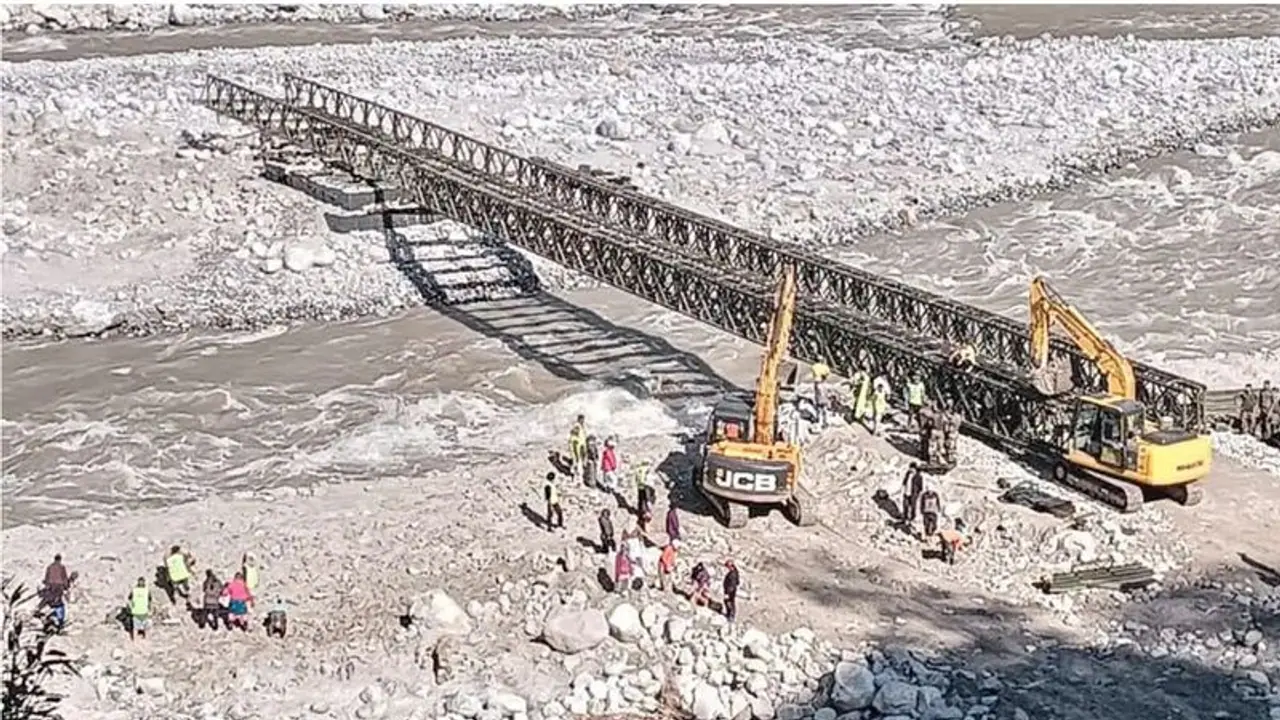
Indian Army and BRO mobilize to rebuild road connectivity and bridges in Sikkim following flash floods, showcasing resilience and determination.
Following the devastating flash floods in Sikkim, the Indian Army and the Border Roads Organisation (BRO) have launched an extensive effort to restore road connectivity between Mangan and Chungthang in North Sikkim. These floods caused significant destruction in the region. Notably, army personnel, in collaboration with local residents, have successfully completed the construction of a bailey bridge over the Teesta River, with images and videos of the operation circulating on the internet.
The Trishakti Corps, in a statement, expressed their ongoing commitment to rebuilding and reconnecting the affected areas in North Sikkim. They revealed that Army Engineers from the Trishakti Corps, in partnership with BRO and the civil administration, began the construction of two bridges in Mangan. Their aim is to establish an alternative route from Mangan to Sanklang and Chungthang.
Working tirelessly, the troops have completed the construction of the first 150-foot bridge on October 22, and they anticipate that the second bridge will be finished by October 27. The completion of these bridges will restore vehicle connectivity between Mangan and Chungthang, thereby allowing access to the Lachung valley, which had been cut off since October 4.
The statement further praised the extraordinary skills, resolute determination, dedication to the task, and unwavering commitment displayed by the troops. Their efforts have rekindled hope within the affected communities that normalcy will soon return to the region.
Mangan town, which serves as the headquarters of Mangan district, is located 66 kilometers to the north of the state capital, Gangtok. Many areas in north Sikkim, especially those ahead of Mangan, had been isolated since October 4. On that day, a cloud burst over Lhonak Lake triggered flash floods in the Teesta River. This incident significantly impacted the strategically important small Himalayan state, which shares borders with China, Bhutan, and Nepal, as reported by PTI.
A Defence official, as reported by the news agency, mentioned that footbridges and zip lines were promptly set up at Chungthang and the Sanklang-Mangan crossing. These measures facilitated the movement of people on foot and the provision of relief materials through the zip lines. A zip line is a cable or rope stretched between two points of different heights, which allows a person or materials to slide down with the aid of a suspended harness, pulley, or handle.
The flash flood in the Teesta River occurred in the early hours of October 4, claiming the lives of at least 78 people in Sikkim and the neighboring northern West Bengal. This natural disaster left a significant impact on the region, prompting swift and coordinated efforts to restore connectivity and provide relief to the affected areas.
