
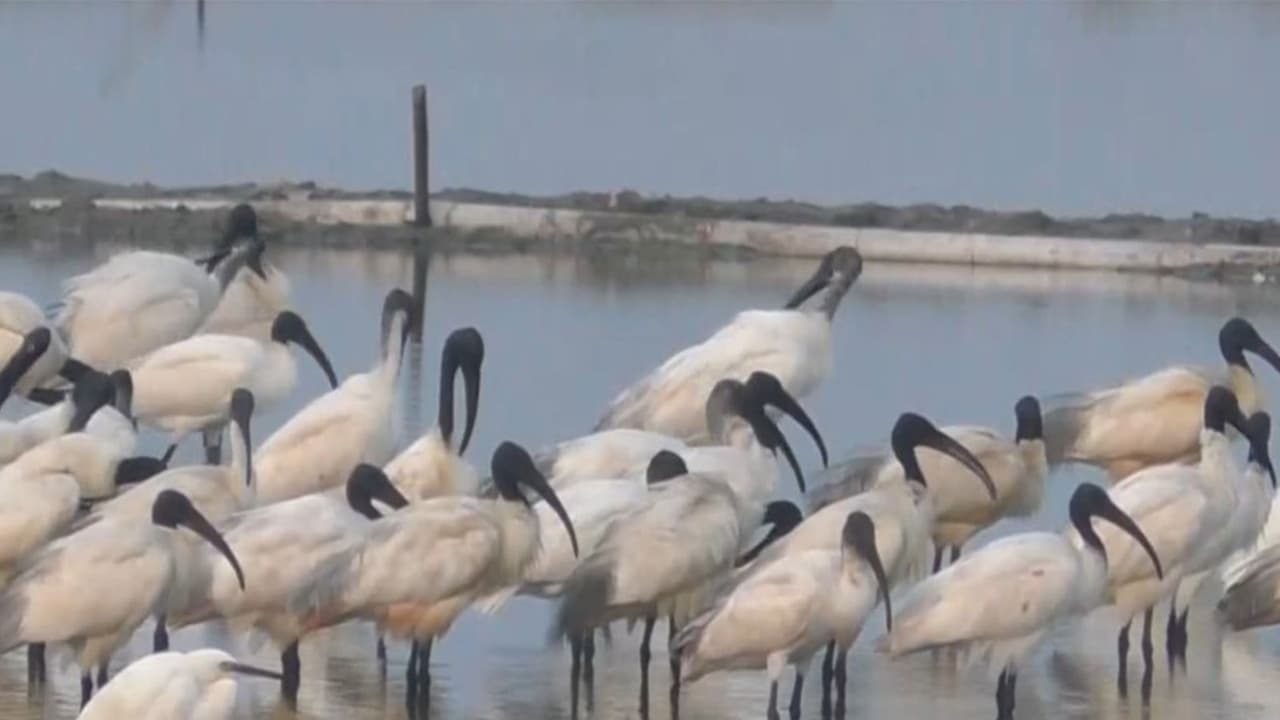
Large numbers of the rare, 'Near Threatened' Black-headed Ibis are flocking to Thoothukudi's salt pans due to increased food from recent rains. This event, along with other migratory bird sightings, is seen as a positive sign for the area's ecosystem.
Rare Ibis Sighting in Thoothukudi
The presence of the rare bird species Black-headed Ibis in large numbers in the salt pans (uppul areas) of Thoothukudi district has drawn significant attention from bird watchers and environmental enthusiasts. The Black-headed Ibis, characterised by its elegant white plumage, black head, and long curved beak, is listed as a "Near Threatened" species in Asia by the International Union for Conservation of Nature. It is predominantly found in wetlands, riverbanks and salt pans, where it feeds on fish, insects and other small aquatic creatures.
In recent days, increased rainfall in the salt pans has increased the abundance of small fish, aquatic insects, and overall food resources. As a result, Black-headed Ibis, which prefer wetland habitats, have been observed arriving in groups and foraging in the area.
Influx of Migratory Birds
Large flocks of rare migratory bird species, including the Oriental Darter, Little Cormorant, Spoonbill, and Medium Egret, have also been spotted in the Thoothukudi district. According to Ornithologists, these birds arrive in southern districts, such as Thoothukudi, as part of their winter migration from Northwest Asia and Eastern Europe.
These birds take flight from their breeding grounds around September-October and arrive in the Indian Continent to stay till March-April. Other than Tamil Nadu, these birds are known to flock to Gujarat, MP, Tamil Nadu, Karnataka, Kerala, Telangana, and North India. The reason for their migration ranges from weather preference to food abundance.
They are omnivorous birds who look for places where insects are likely to reside, often in grasslands and farm fields. Flocking together while migrating is also a way to confuse larger predators, while their murmurs make for a serene environment. They flaunt a naturally stunning aesthetic with light pink and black feathers and a sharp beak, which they use to grab grasshoppers and other pests from plants.
A Positive Sign for the Ecosystem
The increased sighting of this rare bird species in the salt pans is considered a positive indicator of the gradual restoration of the natural balance of the coastal and wetland ecosystem of Thoothukudi. Moreover, it has generated hope that this region may become a safe habitat for other migratory birds in the future
Other migratory birds have made their way into India, particularly around Chilika Lake in Odisha, where more than 87 species were sighted, according to the Chilika Wildlife Division in late November. (ANI)
(Except for the headline, this story has not been edited by Asianet Newsable English staff and is published from a syndicated feed.)