
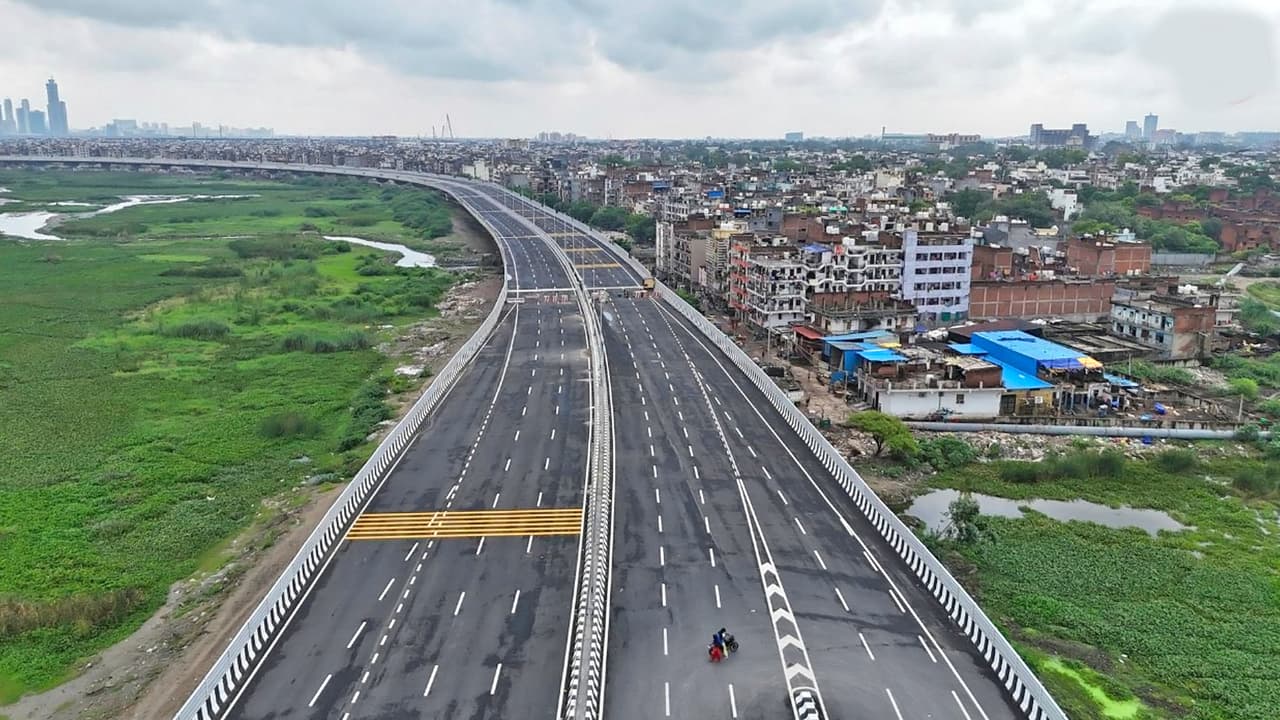
Prime Minister Narendra Modi has inaugurated the 594 km Ganga Expressway in Uttar Pradesh. Costing Rs 36,230 crore, the six-lane corridor connects 12 districts from Meerut to Prayagraj, cutting travel time from 10-12 hours to 6-8.
Prime Minister Narendra Modi has inaugurated the Ganga Expressway, a landmark infrastructure project that is set to become the longest expressway in Uttar Pradesh and one of India’s most ambitious greenfield highway corridors. Stretching 594 kilometres from Meerut to Prayagraj, the six-lane access-controlled expressway is expected to dramatically reduce travel time, improve freight movement, and unlock major industrial growth across the state.
Constructed at an estimated cost of Rs 36,230 crore, the expressway has been designed as more than just a transport corridor. Officials have positioned it as a long-term economic growth engine that can improve connectivity between western and eastern Uttar Pradesh while attracting new investment in logistics, agriculture, manufacturing and tourism.
The Ganga Expressway links 12 districts across Uttar Pradesh — Meerut, Hapur, Bulandshahr, Amroha, Sambhal, Budaun, Shahjahanpur, Hardoi, Unnao, Rae Bareli, Pratapgarh and Prayagraj. By connecting these regions through a high-speed corridor, the state aims to create a stronger transport backbone that can support both passenger travel and industrial expansion.
Travel time reduction
One of the biggest immediate benefits of the project is travel time reduction. The drive between Meerut and Prayagraj, which currently takes 10 to 12 hours, is expected to fall to around 6 to 8 hours, allowing faster movement of people and goods across the state. Vehicles will be allowed to travel at speeds of up to 120 kilometres per hour, making the expressway one of the fastest road corridors in the region.
The expressway has been built as a six-lane highway, but it has been planned with future expansion in mind. Authorities have left room to widen it into an eight-lane corridor as traffic grows in the coming years. This reflects the long-term vision behind the project, which goes beyond immediate traffic needs and anticipates rising demand from both commuters and commercial users.
A major strategic feature of the Ganga Expressway is a 3.5-kilometre emergency airstrip in Shahjahanpur, designed to allow Indian Air Force fighter aircraft to land during emergencies. This adds a national security dimension to the project, making it not only an economic asset but also an important part of India’s defence infrastructure.
Ganga Expressway At A Glance
| Metric | Details |
| Length | 594 km |
| Cost | Rs 36,230 crore |
| Lanes | 6 (expandable to 8) |
| Districts covered | 12 |
| Land for industrial nodes | 6,507 acres |
| Proposed investments | Rs 47,000 crore |
| Investment proposals | 987 |
| Travel time | Cut 10-12 hours to 6-8 hours (between Meerut & Prayagraj) |
The Uttar Pradesh government has also integrated a broader development plan along the corridor. Officials have identified nearly 6,507 acres of land for 12 Integrated Manufacturing and Logistics Clusters that will come up along the expressway. These industrial zones are intended to attract businesses in warehousing, food processing, e-commerce and manufacturing. According to project estimates, the state has already received 987 investment proposals worth nearly Rs 47,000 crore linked to these planned industrial hubs.
This means the Ganga Expressway is being developed not simply as a road project but as a full economic corridor. Improved road access can lower transportation costs for businesses, reduce delivery times and make previously underdeveloped districts more attractive for investment. Areas that were once considered too remote may now become viable for factories, storage hubs and commercial centres.
Visuals of the Ganga Expressway
For the agricultural sector, the expressway could provide significant advantages. Farmers in central and eastern Uttar Pradesh often face delays in transporting produce to large urban markets. Faster road connectivity could help reduce spoilage of perishable goods, improve supply chain efficiency and give farmers better access to buyers. Improved freight movement can also reduce overall logistics costs for agricultural exports from the region.
Tourism is another area expected to benefit. Cities such as Prayagraj, known for the Triveni Sangam, and other religious and cultural centres along the route may see increased visitor numbers due to easier access. Faster travel from western Uttar Pradesh and the National Capital Region could make weekend and short-distance tourism more practical for domestic travellers.
The expressway also fits into a wider infrastructure push in Uttar Pradesh. It is expected to connect with other major road projects such as the Yamuna Expressway, Agra-Lucknow Expressway, and routes linked to the upcoming Noida International Airport at Jewar, helping create a larger transport network across northern India.
The broader goal behind the Ganga Expressway is to reduce the economic divide between western and eastern Uttar Pradesh. Western UP has historically seen stronger industrial growth, while eastern districts have remained more dependent on agriculture. By physically connecting these regions with faster transport links, the state hopes to encourage more balanced development and improve economic opportunities across multiple districts.
Infrastructure experts say the real success of the project will depend on whether the planned industrial and logistics investments actually materialise. While many expressways improve travel, fewer manage to create lasting economic transformation. The Ganga Expressway’s long-term impact will be judged not just by traffic volumes, but by whether it can create jobs, attract industries and improve incomes in the districts it passes through.
With the inauguration now complete, the Ganga Expressway stands as one of the most significant road infrastructure projects in Uttar Pradesh’s history. It represents a major attempt to combine faster mobility with industrial expansion, defence utility and regional development — potentially reshaping the state’s economic landscape for years to come.
