
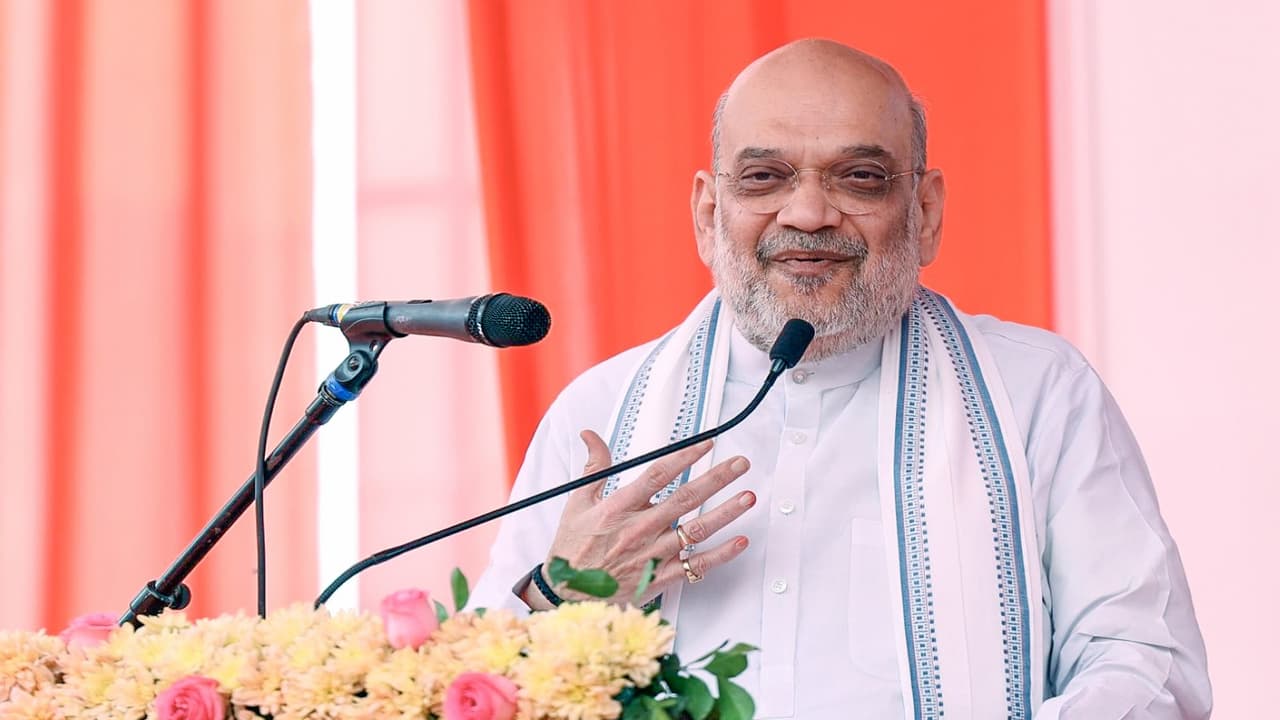
The 5th NIA Anti-Terror Conference concluded with a focus on enhancing India's anti-terror capacity via a model ATS structure for better coordination, following PM Modi's firm directive on zero tolerance for terrorism.
Amid Prime Minister Narendra Modi's firm directive on zero tolerance to terrorism, the 5th Anti-Terror Conference of the National Investigation Agency (NIA) concluded on Saturday with a strong emphasis on enhancing India's anti-terror capacity, supported by a model ATS structure designed to enhance coordination and seamless real-time information exchange among the central and state security and investigative agencies.
According to a release, the conference saw the Central Government reiterate its policy of no tolerance for terrorism in any form, and its commitment to strengthening the country's anti-terror apparatus.
The conference was inaugurated on Friday by Union Home Minister Amit Shah.
HM Shah Directs Uniform ATS Implementation
Addressing the meeting, the Home Minister directed the states to expeditiously implement the uniform Anti-Terror Squad (ATS) structure to strengthen India's counter-terrorism capabilities. He emphasised that without the availability of robust, uniform, and consistent operational capacity across the country, we cannot ensure proper use of intelligence and effective coordinated counteractions.
Recent Counter-Terror Successes Lauded
As per the release, the Home Minister lauded the operational and investigative success of various agencies and state police forces in the two recent terror attack cases of Pahalgam and the Delhi Red Fort blast. These agencies had made the country proud with their thorough actions in the Pahalgam targeted attack case, he said.
Referring to the successful tracking and elimination of the three terrorists involved in the dastardly attack, he said, "This is the first terrorist incident in which we punished the people who planned the act of terrorism through Operation Sindoor, and the terrorists who carried out the attack were neutralised through Operation Mahadev." He termed the twin action as "a strong and decisive response from the Government of India, India's security forces, and the people of India to the terrorist masterminds in Pakistan."
Addressing Evolving Threats and Technology
Pointing to the constantly changing technology and terror landscape, the Minister stressed the importance of continuously checking and re-evaluating the same. The Minister stressed the need for all agencies, in the Centre and States, to address international dimensions, such as cyber warfare, hybrid warfare alertness, multi-security, and free flow of intelligence.
Underlining the importance of strengthening their investigation and prosecution capabilities, the Minister asked the states to conduct regular training for their security and police personnel. On the occasion, the Home Minister congratulated all the officers and staff who were honoured with service medals for their outstanding performance. He also paid his heartfelt tributes to over 36,000 CAPFs personnel and police personnel across the country who had made the supreme sacrifice while performing their duties.
Concluding Remarks: Focus on Radicalisation and Conviction Rates
In his concluding remarks, Union Home Secretary Govind Mohan hailed the institutionalisation of this very important conference as a tool to underline India's zero tolerance to terrorism in any form, be it cross-border terror, narco terrorism or cyber-enabled terrorism.
He stressed the need to be more vigilant about various threats facing the country, particularly those arising from radicalisation, and recruitment, and exploitation of vulnerable youths to carry out violent acts.
Unmasking Digital Anonymity
The newly initiated Track 2 in the Anti-Terror conference discussed very important issues like digital device data and big data analytics, but, most importantly, unmasking digital anonymity, the Home Secretary further observed. He lauded the high 90+ per cent conviction rate delivered by the NIA, and said the Centre's aim was to scale conviction rates across all police forces in the country to the same level.
The conference focused on the lessons learnt during investigations, preemptive disruptions of terror modules, learnings in various theatres such as LWE, North East, and various hybrid threats to national security. It served as a platform to explore and evaluate the new security threats, such as deepfakes and hybrid warfare, and also emphasised the need for digital forensics and data analysis in CT investigations. Other significant discussions were focused on countering financing of terrorism, maritime terrorism and illicit trafficking and evolving counter- terrorism jurisprudence.
The inaugural session was attended by the heads of State Police/CPOs/CAPFs, in addition to over 150 delegates from several state/UT police and central organisations who attended the two-day conference. Union Ministers of State Shri Nityanand Rai and Shri Bandi Sanjay Kumar were also present at the inauguration.
(Except for the headline, this story has not been edited by Asianet Newsable English staff and is published from a syndicated feed.)