
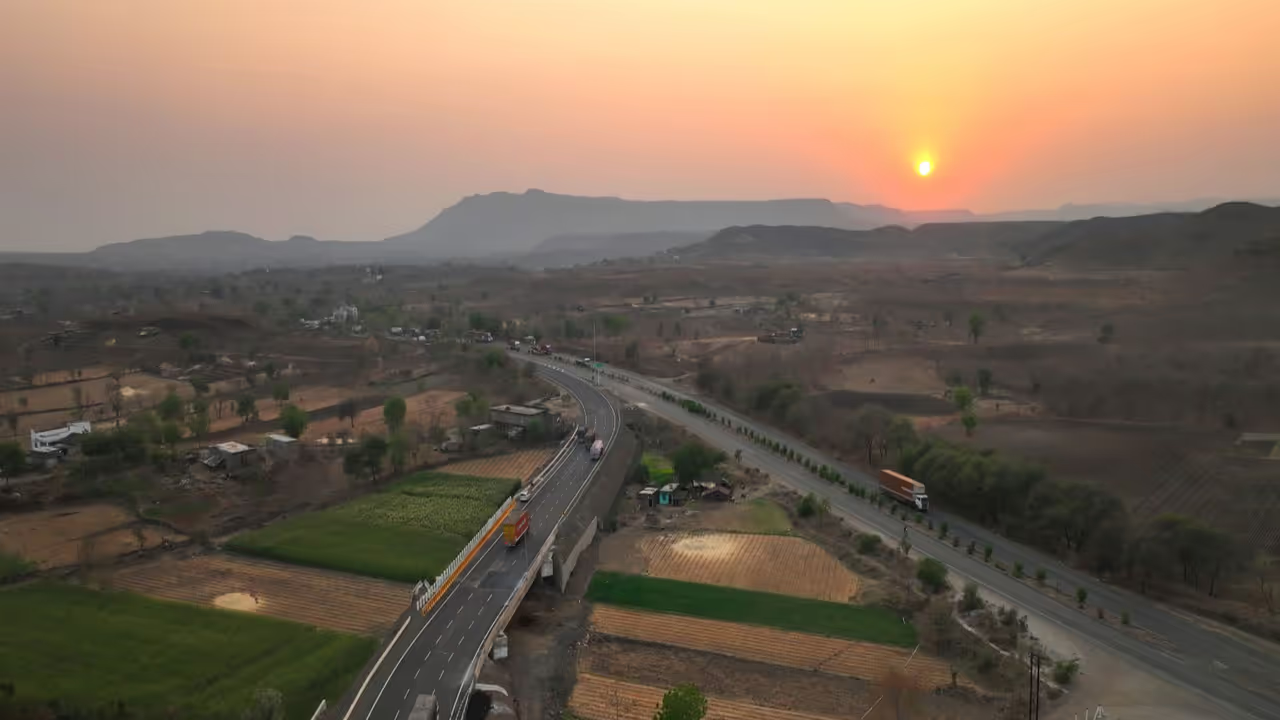
NHAI is preparing a DPR to upgrade the 160km Indore-Maharashtra stretch of NH-52 to six lanes. The project on the Agra-Mumbai corridor aims to enhance connectivity, improve logistics, ease traffic, and upgrade crucial ghat sections.
The National Highways Authority of India (NHAI) has initiated the preparation of a Detailed Project Report (DPR) for upgrading the Indore-Khalghat-Sendhwa-Maharashtra stretch of National Highway-52 from a 4-lane to a 6-lane configuration.
The proposed upgrade will cover around 160 kilometres and aims to strengthen regional connectivity, improve logistics efficiency and accommodate rising traffic demand on the crucial Agra-Mumbai corridor.
According to NHAI, the DPR work is currently underway and the construction work will be taken up in phases after the report is finalised. The authority stated that the project is being designed as a long-term solution to address increasing vehicular pressure and ensure smoother traffic management in the coming years.
Project Scope and Significance
The NH-52 stretch forms an important part of the Agra-Mumbai corridor, connecting northern India with western and southern regions of the country. The route links major economic centres such as Indore and Mumbai and witnesses heavy cargo movement daily. Nearly 40,000 vehicles use the corridor every day and the proposed 6-lane upgradation will render this route more reliable, safer, and time-efficient.
Upgrading Challenging Ghat Sections
Under the project, challenging ghat sections including Bheru Ghat, Bakaner Ghat and Bijasan Ghat will also be upgraded to six lanes.
NHAI said during the previous four-lane works, measures such as road realignment, slope balancing, carriageway widening and several safety interventions had already led to significant improvements in traffic management and road safety in these areas. Under the proposed six-lane expansion, these improvements will be further enhanced.
Key Features and Planned Improvements
As part of the project, a new parallel bridge over the Narmada river in the Khalghat region has also been proposed to ease traffic load on the existing bridge and ensure seamless six-lane continuity across the corridor.
The project is expected to improve traffic flow, reduce travel time and strengthen interstate connectivity.
To address congestion in urban and semi-urban areas, bypasses and service roads will be developed in crowded towns wherever required. Additionally, flyovers, underpasses and service roads are also planned at major junctions to separate local and highway traffic, thereby improving safety and reducing bottlenecks.
The authority added that special emphasis is being placed on permanent solutions for identified accident-prone blackspots, particularly in the Bijasan Ghat area. Measures such as redesigning sharp curves, improving drainage systems, installing advanced road furniture and deploying modern traffic management systems are proposed to enhance road safety.
Economic and Regional Benefits
The project is also expected to complement NH-47 and the proposed Indore Western Bypass, strengthening regional and national logistics networks.
The Pithampur industrial area, considered one of central India's major industrial hubs, will significantly benefit from reduced logistics costs and improved supply chain efficiency.
The upgraded corridor is expected to substantially reduce travel time between Indore and Mumbai via the Maharashtra border, making transportation faster and more reliable. The improved road infrastructure would also lower fuel consumption and transportation costs while contributing to reduced carbon emissions.
NHAI stated that the project will play a major role in transforming the Indore-Mumbai corridor into a safer, modern and high-capacity transport route, boosting trade, tourism, industry and logistics activities across the region. (ANI)
(Except for the headline, this story has not been edited by Asianet Newsable English staff and is published from a syndicated feed.)