
Congress leaders Supriya Shrinate and Sonia Gandhi condemned the renaming of MGNREGA to the VB-G RAM G Bill. Shrinate vowed to fight from Parliament to the streets, while Gandhi accused the Centre of 'bulldozing' the scheme without consultation.
Congress to 'Fight From Parliament to Streets'
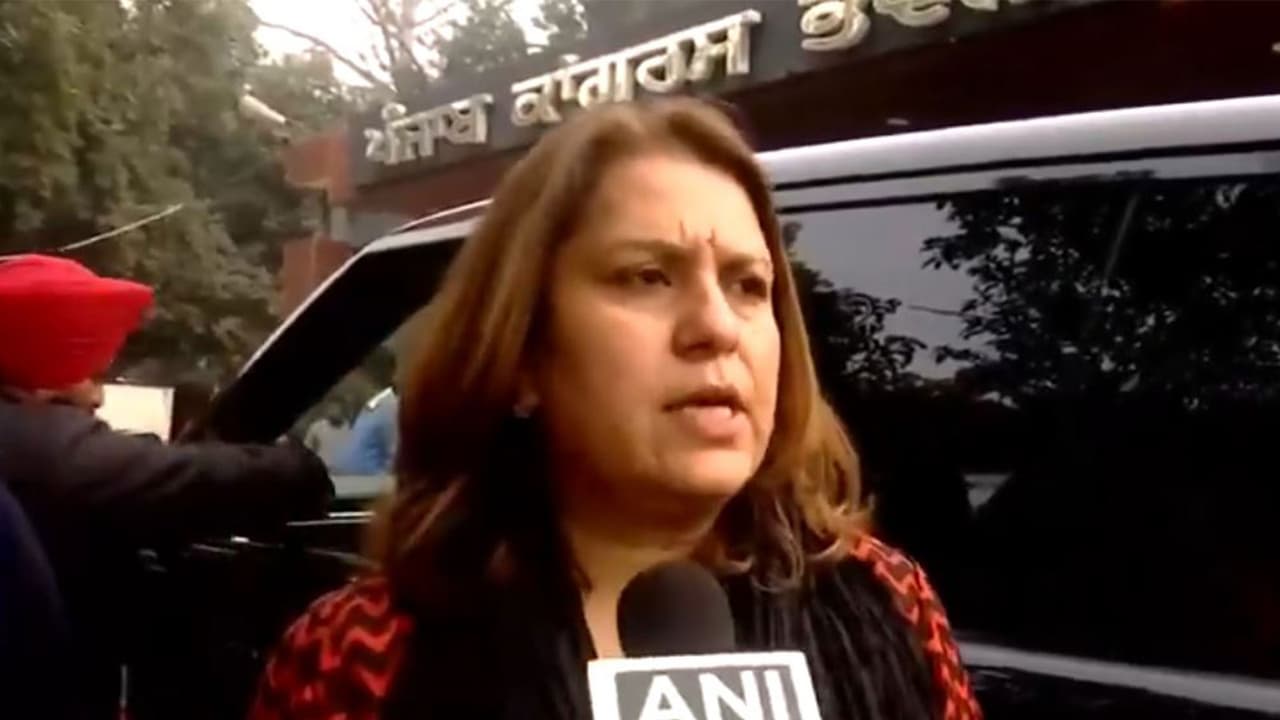
Congress leader Supriya Shrinate on Saturday expressed her discontent after the Mahatma Gandhi National Rural Employment Guarantee Act (MGNREGA) was renamed as VB-G RAM G Bill (Viksit Bharat Guarantee for Rozgar and Ajeevika Mission (Gramin)) and passed in the Parliament. She said that the Congress Party will fight from Parliament to the streets.
Speaking to ANI, Supriya Shrinate said, "We disagree with the removal of Mahatma Gandhi's name. The scheme (MGNREGA) that guaranteed work has been completely scrapped. There is no guarantee of work under this new law. The name of Lord Ram has been used as an acronym, which is an insult to him. In the coming days, people will take to the streets. The Congress Party will fight from Parliament to the streets. Earlier, they had to repeal farm laws, now they will have to repeal this bill."
Sonia Gandhi Accuses Centre of 'Bulldozing' MGNREGA
Earlier, Congress Party's Parliamentary Chairperson and Rajya Sabha MP Sonia Gandhi on Saturday accused the Centre of 'bulldozing' the MGNREGA, which proved to be a lifeline for the poor during the COVID times.
In a video message addressed to the countrymen, Sonia Gandhi alleged that the Prime Minister Narendra Modi-led Central government has ignored the interests of unemployed, poor and deprived people in rural areas.
"In the last 11 years, the Modi government has ignored the interests of the unemployed, the poor, and the deprived in rural areas, making every effort to weaken MGNREGA, even though during the COVID times, it proved to be a lifeline for the poor," Sonia Gandhi said.
"It is a matter of great regret that just recently, the government ran a bulldozer over MGNREGA. Not only was Mahatma Gandhi's name removed, but the form and structure of MGNREGA was changed arbitrarily--without any deliberation, without consulting anyone, without taking the opposition into confidence," she added.
A 'Revolutionary Step' for the Poor
Reflecting on the passage of the Act, introduced in 2005 and enacted in 2006, Gandhi highlighted how the "revolutionary step" benefited crores of rural families and provided livelihoods for the "deprived, exploited, poor, and the poorest of the poor."
"I still remember vividly, 20 years ago when Dr. Manmohan Singh ji was the Prime Minister, the MGNREGA Act was passed in Parliament by consensus. It was such a revolutionary step, the benefits of which reached crores of rural families. Especially, it became a means of livelihood for the deprived, exploited, poor, and the poorest of the poor," the Congress leader said.
'Attack on Interests of the Poor'
Gandhi said that the implementation of MGNREGA was "never a party-specific matter" and the scheme always looked towards the interests of the people.
"The Congress had a major role in bringing and implementing MGNREGA, but it was never a party-specific matter. It was a scheme connected to the national interest and the people's interest. By weakening this law, the Modi government has attacked the interests of crores of farmers, labourers, and landless poor in the rural sector across the country," he said.
"We are all ready to counter this attack. Twenty years ago, I too fought to secure the right to employment for our poor brothers and sisters; today, I remain committed to fighting against this black law," Sonia Gandhi emphasised.
Details of the New VB-G RAM G Bill
Meanwhile, the Congress is set to hold a Congress Working Committee (CWC) meeting next week, on December 27, to decide on its plan of opposing the VB G RAM G Bill nationwide.
During the recently concluded winter session, the Parliament passed the Viksit Bharat Guarantee for Rozgar and Ajeevika Mission (Gramin) (VB--G RAM G) Bill, with Rajya Sabha approving the legislation hours after Lok Sabha passed it.
The Bill guarantees 125 days of wage employment per rural household, up from the existing 100 days, for adult members willing to undertake unskilled manual work.
As per Section 22 of the Bill, the fund-sharing pattern between the Central Government and the State Governments will be 60:40, while for the North Eastern States, Himalayan States, and Union Territories (Uttarakhand, Himachal Pradesh, and Jammu and Kashmir), it will be 90:10. (ANI)
(Except for the headline, this story has not been edited by Asianet Newsable English staff and is published from a syndicated feed.)