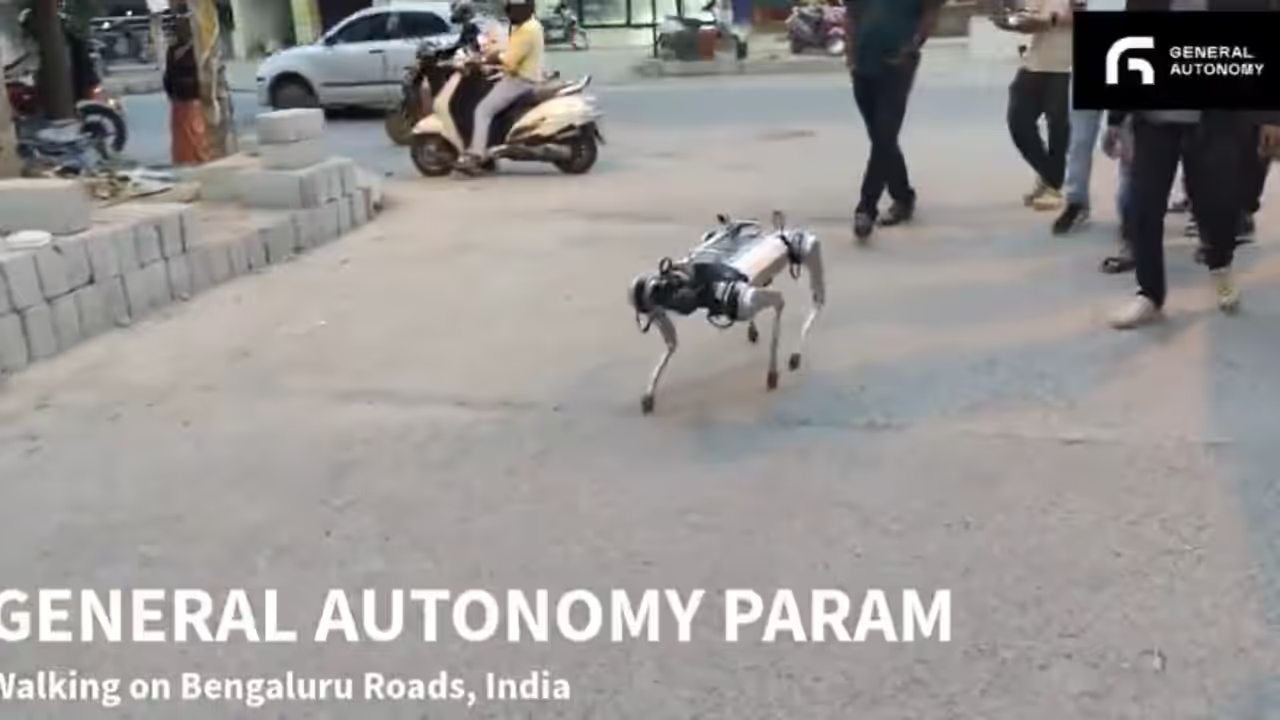
At the India AI Impact Summit 2026, a stark contrast in robotics was evident. Bengaluru startup General Autonomy showcased "Param," a genuinely indigenous robodog, demonstrating local innovation.
At the India AI Impact Summit 2026 in New Delhi, the spotlight on robotics technology featured a stark contrast between genuine indigenous innovation and a high-profile controversy over misrepresentation. While one Bengaluru startup proudly showcased a truly Made-in-India quadruped robot, a leading private university landed in hot water for mistakenly claiming credit for imported technology.
General Autonomy, a Bengaluru-based robotics firm, introduced its domestically developed robodog named Param. Billed as “India’s most powerful indigenous robot dog,” Param was built entirely by Indian engineers without reliance on imported assembly components. The startup highlighted its autonomous navigation, obstacle detection, stair-climbing ability, and automated fall recovery — capabilities that earned it attention on social media. A video of Param navigating Bengaluru streets went viral, and the robot was even presented to Prime Minister Narendra Modi during a Startup India deep tech showcase.
In sharp contrast, Galgotias University faced backlash and government criticism over its display at the same summit. A viral video showed a university representative referring to a robotic dog called “Orion” as a product of the institution’s research centre. However, observers quickly identified the device as the Unitree Go2, a commercial Chinese-made robodog widely sold online. The misidentification triggered criticism about transparency and authenticity at national tech events, prompting the Ministry of Electronics and Information Technology to warn against misinformation in exhibits.
Galgotias University later clarified that the robot was procured for student learning and not developed in-house, apologising for the confusion. Officials said a staff member was “ill-informed” and not authorised to speak to the media. Despite the statement, organisers asked the university to clear its pavilion amid the controversy, which quickly became a talking point online about credibility in India’s innovation ecosystem.
Related Articles

The events at the summit underscored both the promise and pitfalls of India’s AI ambitions: on one hand, genuinely indigenous robotics like Param signal real progress; on the other, missteps like the Galgotias robodog incident highlight the importance of clear communication, ethical representation and technological authenticity at high-profile platforms.