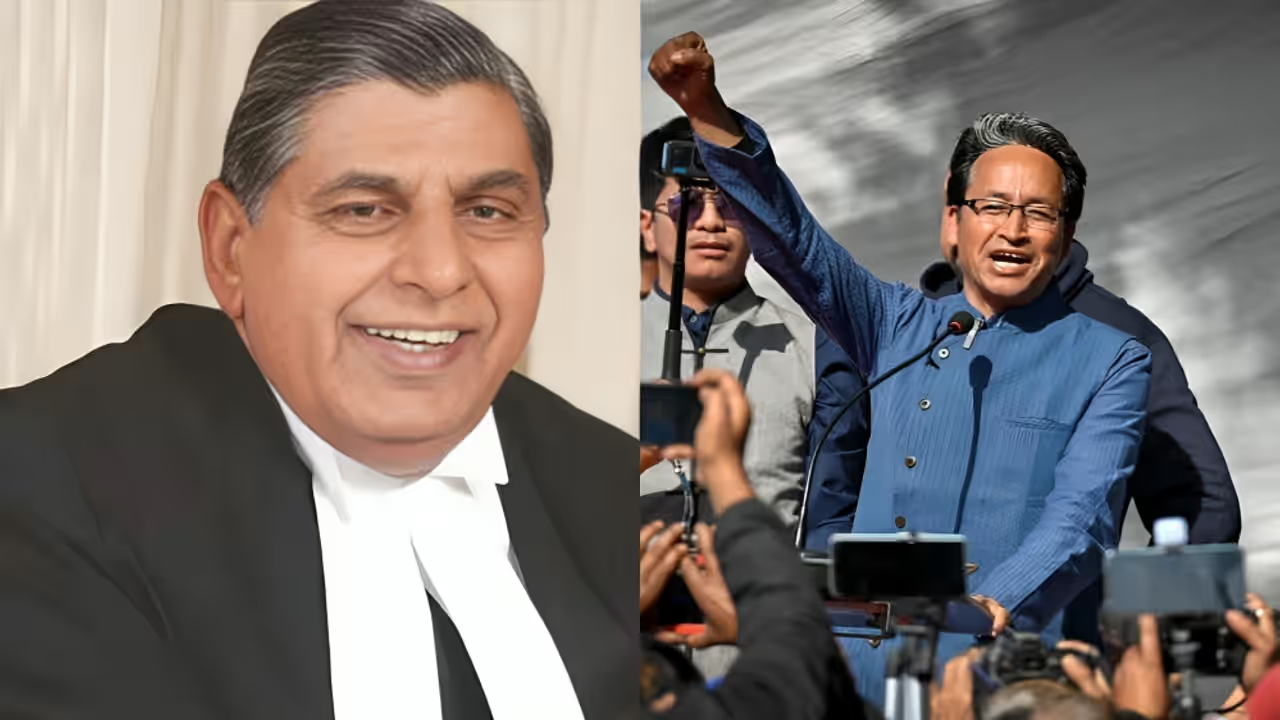
MHA has appointed former Supreme Court Justice BS Chauhan to lead independent judicial inquiry into the September violence in Leh, where four people were killed and many injured during protests demanding statehood and 6th Schedule status for Ladakh.
The Ministry of Home Affairs (MHA) on Friday officially notified that Justice BS Chauhan, a retired Supreme Court judge, will lead a judicial inquiry into the events in Leh on September 24. The MHA said the probe will examine the law and order situation, police action, and the circumstances that led to the deaths of four individuals.
According to the announcement, the move is intended to ensure a free, fair and impartial investigation into what happened during a protest that turned violent.
Who is Justice BS Chauhan?
Justice Chauhan served as a judge of the Supreme Court of India between 2009 and 2014. Prior to that, he held positions as Chief Justice of Orissa High Court and as a judge in the Allahabad and Rajasthan High Courts.
After retiring from the Supreme Court, he was appointed Chairperson of the Law Commission from 2016 to 2018. He also headed a commission that investigated the 2020 alleged encounter killing of gangster Vikas Dubey, clearing the Uttar Pradesh Police of wrongdoing.
Related Articles

The Leh protests: What happened
On 24 September 2025, protests in Leh demanding statehood for Ladakh and Sixth Schedule status escalated. Security forces clashed with protesters; at least four people were killed and many more wounded.
According to reports, protesters tried to set fire to a BJP office and engaged in unrest. Security forces used tear gas, baton charges, and live rounds to regain control.
Prominent activists, including Sonam Wangchuk, and other leaders of the movement were detained soon after the violence.
The protests were part of a wider demand by youth and regional bodies in Ladakh for stronger constitutional safeguards, autonomy, and recognition of tribal rights under the Sixth Schedule.
Why the judicial probe was demanded
Political and religious organisations in Ladakh had insisted on an independent investigation into the police action as a precondition for renewed talks with the central government. The demand gained urgency because of the deaths and injuries during the unrest.
Given the severity of the clash and the public outcry, the appointment of a former Supreme Court judge is intended to lend credibility and credibility to the investigation.
Government response and dialogue pledge
Alongside the probe announcement, the MHA reaffirmed that the government remains open to dialogue. It said talks with the Apex Body Leh (ABL) and Kargil Democratic Alliance (KDA), through the High Powered Committee or any other forum, will continue. The government expressed confidence that ongoing discussions will help address Ladakhi aspirations. The MHA said it is committed to addressing the long-standing demands of Ladakh's people.
Ladakh has been seeking Sixth Schedule protections, which grant tribal regions autonomy over land, forests, water, villages, and local governance. Many locals feel they lack adequate constitutional safeguards after Union Territory status removed earlier administrative autonomy.
The protest movement has been led by younger groups, activists and community bodies. The triggering factor for the unrest was a hunger strike by Wangchuk and others starting around 10 September, demanding statehood and constitutional assurances, which escalated when key hunger strikers fell ill and were hospitalised.
The persistent discontent arises from perceived neglect, threatened land rights, and lack of local control over resources and development decisions.
(With ANI inputs)