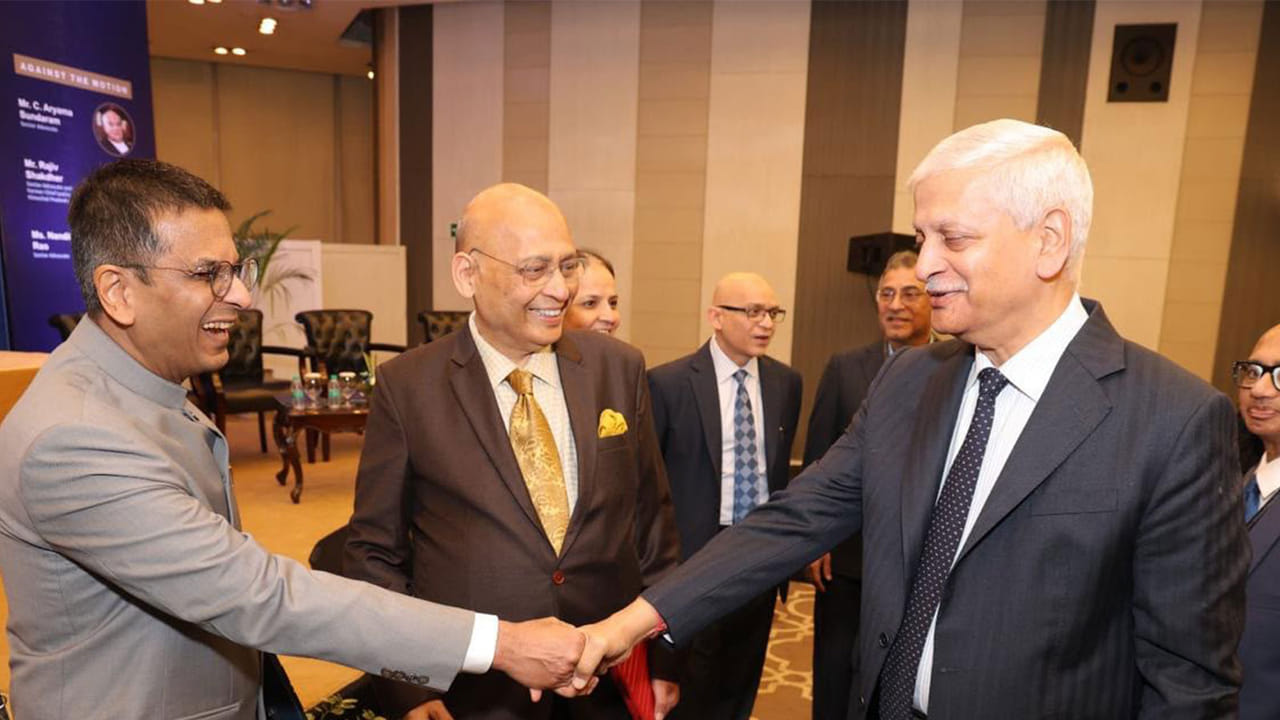
Legal experts and former Chief Justices gathered to debate the constitutional tension between individual privacy rights and the government's need for technology-enabled surveillance in the interest of national security and public safety.
Legal Experts Debate Right to Privacy Versus State Surveillance Use
New Delhi [India], November 23 (ANI): The balance between the right to privacy and the State’s power to use technology-enabled surveillance came under sharp focus at a debate organised by leading law firm Shardul Amarchand Mangaldas & Co., with former Chief Justices of India, senior advocates and legal experts examining how far the government can go in the name of national security and public safety.
The debate, held on November 22, centred on the motion: “This House Believes That the Right to Privacy Should Not Preclude the State from Using Technology-Enabled Surveillance.” The discussion witnessed opposing views on whether technology-driven surveillance should be permitted to protect citizens, prevent crime and maintain public order, and what constitutional safeguards should govern its use.
Former Chief Justices of India Justice U.U. Lalit and Justice D.Y. Chandrachud, along with eminent jurist and parliamentarian Dr Abhishek Manu Singhvi, adjudicated the debate. It was moderated by journalist Barkha Dutt, founder-editor of Mojo Story. Arguing in favour of the motion were Senior Advocates Pinky Anand, Balbir Singh and Chetan Sharma, Additional Solicitor General of India. Opposing the motion were Senior Advocates C.A. Sundaram, Rajiv Shakdher, former Chief Justice of the Himachal Pradesh High Court, and Nandita Rao.
The debate examined the growing reach of surveillance technology in everyday life, including financial transactions, phone calls and movement in public spaces. Speakers weighed the potential of such technology to help the State respond to security and public-order concerns against the risks of excessive collection of personal information and its use without adequate checks. The exchanges also brought into focus the challenge of ensuring that technological advancements do not undermine individual freedoms and the constitutional right to privacy.
Shally Bhasin, Partner at Shardul Amarchand Mangaldas & Co, said the balance between privacy and public safety was one of the defining constitutional questions of the time and deserved informed and open debate. She said the discussion brought rigour and balance to both sides of the motion. The debate concluded with participants highlighting the continuing challenge of balancing public safety with personal privacy as technology advances faster than regulatory and constitutional responses.