
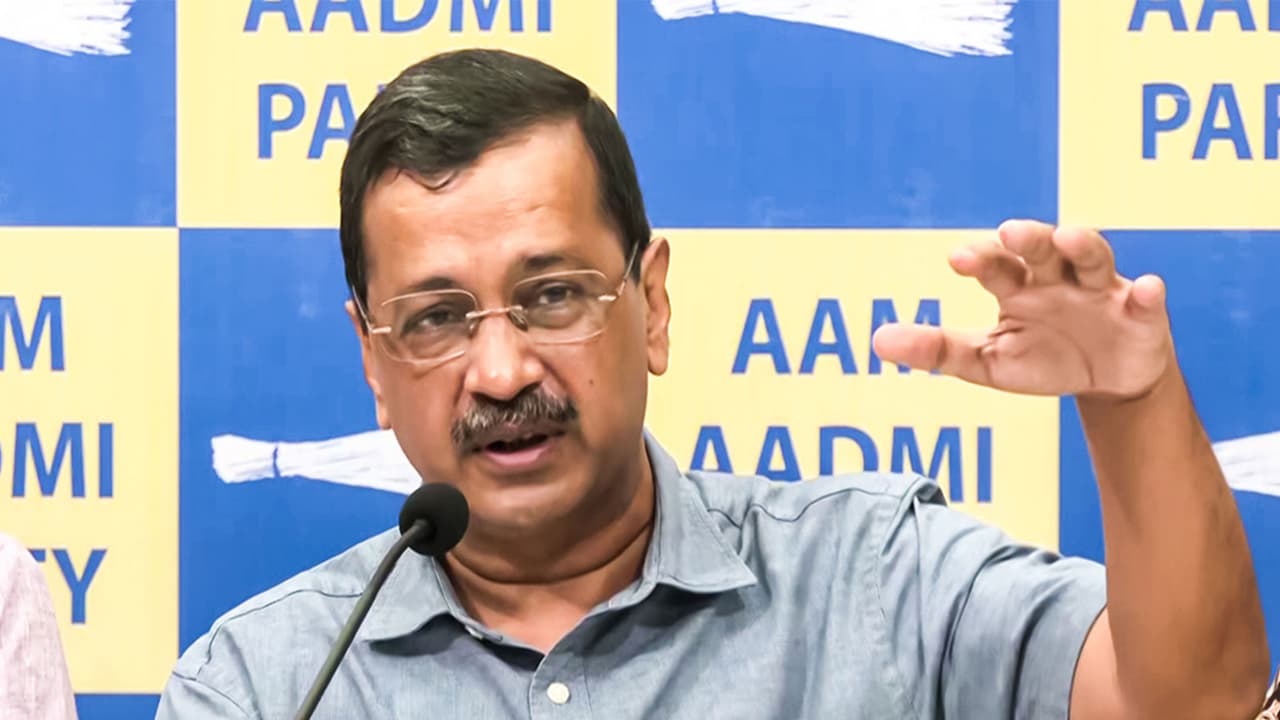
Arvind Kejriwal and Manish Sisodia have asked the Delhi HC to dismiss the CBI's petition challenging their discharge in the excise policy case. They argue the CBI filed its plea in 'haste' and an 'unserious manner' within hours of the order.
Former Delhi Chief Minister Arvind Kejriwal and former Deputy Chief Minister Manish Sisodia have approached the Delhi High Court seeking dismissal of the CBI's revision petition challenging their discharge in the excise policy case, alleging that the probe agency filed the plea with "unprecedented haste" and in an "unserious manner".
Sisodia's Plea Cites 'Unprecedented Haste'
Sisodia, in his application filed before the High Court, has raised preliminary objections to the maintainability of the CBI's criminal revision petition, arguing that the agency approached the court within just four hours of the trial court passing its discharge order.
According to Sisodia's plea, the Special Judge, CBI, Rouse Avenue Courts, discharged all 23 accused in the case through an order dated February 27, 2026, after hearing detailed arguments for more than two months. The discharge order, according to the application, runs into 549 pages and 1,135 paragraphs.
Sisodia has argued that the CBI filed its revision petition within four hours of the discharge order despite the length and detailed findings contained in the judgment. He has contended that the timing of the filing "manifestly shows non-appreciation" of the findings recorded by the Special Judge.
Legal Objections to CBI's Petition
The former Deputy Chief Minister has further argued that the CBI's revision petition is effectively an "Appeal in garb of Revision Petition", rather than a legally maintainable revision petition.
According to his application, the CBI has failed to identify any specific finding, paragraph or portion of the trial court's discharge order that demonstrates alleged perversity, illegality, or jurisdictional error.
Sisodia has relied upon principles laid down by the Supreme Court regarding the limited scope of revisional jurisdiction. Citing judgments including Amit Kapoor v. Ramesh Chander, the plea states that revisional powers are intended to address patent defects, jurisdictional errors, errors of law, grossly erroneous findings, absence of evidence, ignoring of material evidence, or arbitrary and perverse exercise of judicial discretion.
The application argues that revisional jurisdiction cannot be exercised routinely for the purpose of reappreciating evidence or substituting the High Court's assessment for that of the trial court.
Sisodia has alleged that the CBI has not pointed to any specific finding in the discharge judgment that can be described as perverse. He has also claimed that the agency has not produced relevant material or documents along with its revision petition to establish the alleged illegality or perversity in the trial court's findings.
The plea points out that the CBI's revision petition is approximately 36 pages long, while challenging a discharge judgment running into hundreds of pages. Sisodia has alleged that rather than identifying specific errors in the trial court's reasoning, the CBI petition seeks to "re-narrate and re-examine evidence". The application argues that such re-examination or re-appreciation of evidence is beyond the permissible scope of revisional jurisdiction.
'Omnibus' Petition Causes 'Grave Prejudice'
Sisodia has also raised concerns over what he described as the omnibus nature of the CBI's petition, arguing that the manner in which the agency has presented its challenge causes "grave prejudice" to the respondents. According to the plea, the respondents are unable to clearly ascertain the specific case they are required to meet because the CBI has allegedly failed to identify precise errors in the discharge judgment.
Sisodia has therefore urged the Delhi High Court to dismiss CBI Criminal Revision Petition No. 134 of 2026 as non-maintainable. He has alternatively sought any other appropriate order that the court may deem fit in the interests of justice. The application was filed on August 12, 2026, through advocate Vivek Jain, and Sisodia has also filed an affidavit affirming the contents of the application. The matter is likely to be listed along with the main CBI revision proceedings on August 17, according to the filing.
Case Background
The development comes after the CBI challenged the trial court's decision discharging all 23 accused in the Delhi excise policy case. The case relates to alleged irregularities in the formulation and implementation of the now-scrapped Delhi excise policy. The CBI had investigated allegations concerning the framing and implementation of the policy and alleged that various individuals and entities had benefited from irregularities in the process.
Kejriwal and Sisodia have denied the allegations against them. The latest applications before the High Court focus primarily on the maintainability and scope of the CBI's revision petition, rather than seeking a fresh adjudication of the underlying allegations. The High Court will now consider the objections raised by the former Delhi Chief Minister and his former deputy against the CBI's challenge to their discharge.
(ANI)
(Except for the headline, this story has not been edited by Asianetnews Editorial staff and is published from a syndicated feed.)