
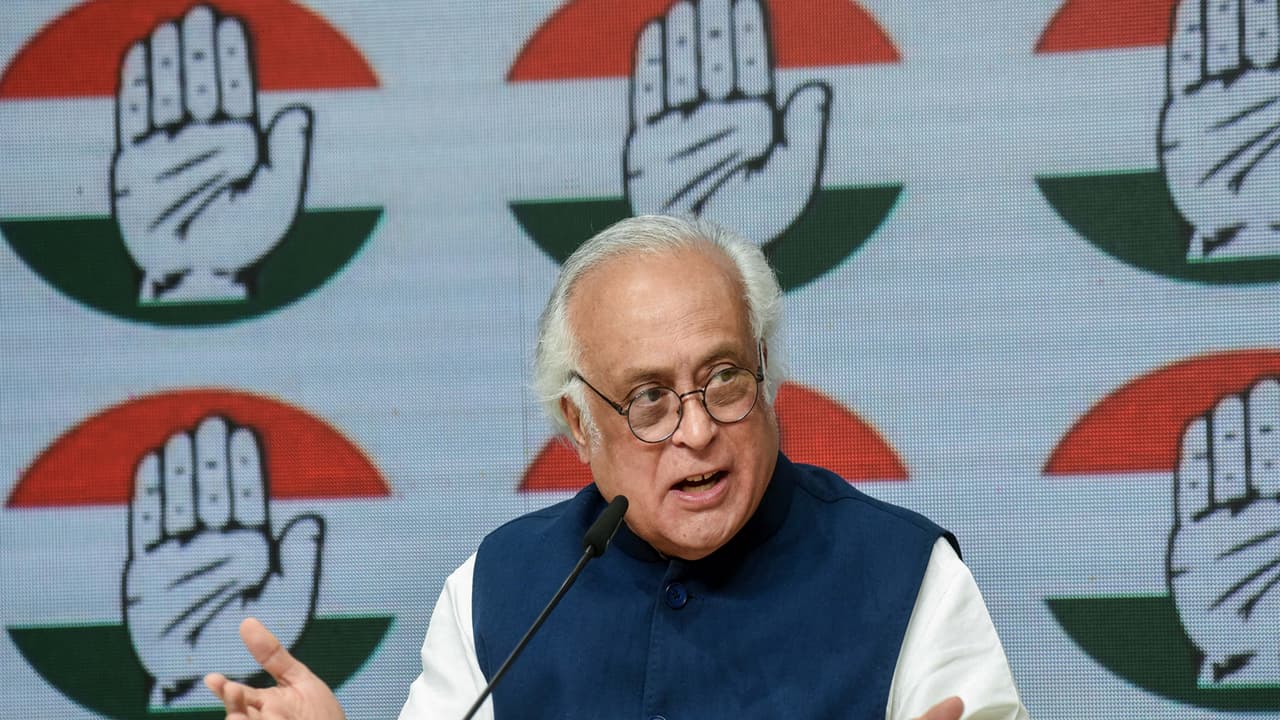
Jairam Ramesh has written to Environment Minister Bhupinder Yadav, calling the Great Nicobar project's environmental clearance a 'mockery'. He alleges it's based on rushed, inadequate studies and demands the release of a confidential committee report.
Senior Congress leader Jairam Ramesh has written to the Union Minister of Environment, Forest and Climate Change Bhupinder Yadav over escalating his criticism of the Great Nicobar Island Development Project, and alleging that environmental clearances were based on "grossly inadequate" studies and that key reports were being kept away from public scrutiny.
Calling the assessment process into question, he said, "These reports are an insult to science and make a mockery of the Environmental Impact Assessment (EIA) process," while urging the government to reconsider the project in its present form.
Sharing his letter on X, Ramesh said, "Here is my latest letter to the Union Minister of Environment, Forests and Climate Change on the Great Nicobar Island Development Project (GNI)." Here is my latest letter to the Union Minister of Environment, Forests and Climate Change on the Great Nicobar Island Development Project pic.twitter.com/Has61V8PQB — Jairam Ramesh (@Jairam_Ramesh) May 10, 2026 In his detailed letter, the Congress leader referred to the Government's "Great Nicobar Project: FAQs" published on May 1, 2026, which stated that "the potential ecological impacts of the project have been comprehensively identified, assessed, and are being effectively managed through a robust Environmental Impact Assessment process and a detailed Environmental Management Plan (EMP)."
However, Ramesh disputed this claim, saying he had already responded to the FAQs earlier and was now making additional submissions based on official environmental rules and past correspondence with the Ministry dating back to September 2024.
Ramesh Cites Environmental Norms and Past Assurances
Citing environmental norms, Ramesh argued that port projects in the Andaman and Nicobar Islands require multi-seasonal studies due to fragile ecosystems. He referred to a 2009 Office Memorandum, which states that port projects above 5 million tonnes in the islands must undergo "comprehensive Environmental Impact Assessment, including physical and mathematical modelling and ground verification."
He also cited sectoral EIA guidelines, stating that marine baseline data must be collected for "at least two seasons," while biological and ecological data should cover "two to three seasons, including pre- and post-monsoon variations."
Ramesh further invoked the CRZ Notification, 2019, saying it mandates comprehensive EIA for ecologically sensitive coastal stretches, pointing out that ISRO mapping had marked parts of Galathea Bay as an eroding coastline.
Referring to parliamentary proceedings, he cited former Environment Minister Prakash Javadekar's 2015 Lok Sabha statement rejecting reliance on rapid assessments. Quoting the then Minister, Ramesh said: "A Rapid EIA, which is based on one season data, may not address all the environmental concerns... comprehensive EIA studies based on three season data are required throughout the country."
Alleges 'Grossly Inadequate' EIA Report
Ramesh alleged that the Environmental Impact Assessment (EIA) report submitted in March 2022 was based on limited seasonal data and short-term surveys. He claimed the report itself admitted that baseline studies were conducted "during winter season (1 December 2020 to 28 February 2021)," which he described as effectively a "Rapid EIA."
He further highlighted that "Quick primary survey of ecology and biodiversity" lasted 9 days; Turtle surveys were conducted for 7 days; Some forest surveys were conducted for just 4 days.
He also cited an admission from the report stating, "what is uncovered so far is not complete and what is hidden may be even more valuable," arguing that the assessment itself acknowledged its limitations. He also referred to reports by the Zoological Survey of India and Wildlife Institute of India, calling them "rapid assessments based on limited field visits."
Ramesh alleged that environmental clearances were granted on the basis of "inadequate and rushed studies."
"It is evident that these studies... are not even rapid EIAs and are based on baseline data collection over a few days and weeks at best and are grossly inadequate. These reports are an insult to science and make a mockery of the EIA process," he said in the letter.
Questions Secrecy of High-Powered Committee Report
The Congress leader also cited a 2023 National Green Tribunal (NGT) order noting "unanswered deficiencies" in the clearance and the constitution of a High-Powered Committee (HPC) for reassessment. He questioned the government's stand that the HPC report was "confidential," stating that this contradicts transparency norms.
"I am at a complete loss to understand the logic and legality behind the claim that the HPC's report is confidential... When the EIA reports, DPRs and master plans are in the public domain, what is the basis to withhold this report?" he wrote. He urged the Ministry to make the HPC report public "in the interests of good governance and informed public debate."
Urges Government to Revisit Project
Ramesh concluded by warning that Great Nicobar's biodiversity is "globally unique" and could be irreversibly damaged. "The Great Nicobar Island's biodiversity is globally unique... It is this unique ecosystem that will be destroyed by the project. The compensatory afforestation argument is completely bogus," he wrote.
He urged the government to "pause, reflect, and revisit the project in its present design and detail," adding that even security experts believe strategic needs can be met without ecological destruction.
About the Great Nicobar Project
The Great Nicobar Project seeks to transform Great Nicobar into a strategic maritime and economic hub by leveraging its proximity (about 40 nautical miles) to the East-West shipping route and reducing dependence on foreign transhipment ports, keeping in view the defence and National Security purposes.
It includes major infrastructure components: a 14.2 million twenty-foot equivalent unit( MTEU) International Container Transhipment Terminal, a Greenfield International Airport (4000 Peak Hour Passengers-PHP), a 450 MVA gas-solar power plant, and a planned township.
The Great Nicobar Project is fully aligned with the Shompen Policy of 2015 and the Jarawa Policy of 2004, which mandate that large-scale development proposals prioritise the welfare and integrity of Particularly Vulnerable Tribal Groups (PVTGs) and follow a structured consultation process, the government said in an official statement earlier this week. (ANI)
(Except for the headline, this story has not been edited by Asianet Newsable English staff and is published from a syndicated feed.)