
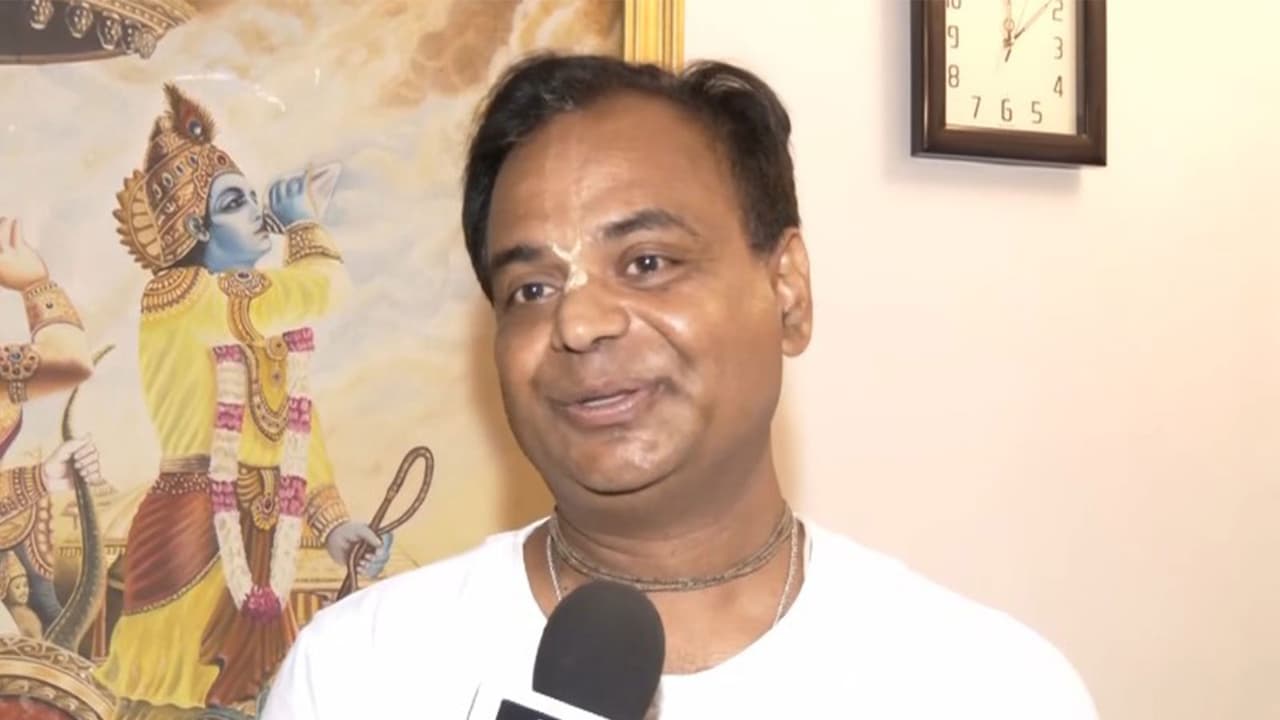
ISKCON VP Radharaman Das addresses the West Bengal mid-day meal row over eggs. He dismisses 'misinformation', arguing vegetarian foods like soy and lentils offer higher protein than eggs, citing nutritional data to support his claim.
ISKCON Vice President Radharaman Das on Saturday responded to the ongoing row over the West Bengal mid-day meal scheme amid reports that eggs may be removed from the menu if ISKCON is assigned the responsibility of preparing meals in schools. Radharaman Das highlighted ISKCON's global outreach and vegetarian movement while speaking on the issue.
"The founder of ISKCON, Acharya Prabhupada, was also a Bengali who spread the spirit of Krishna Consciousness to the whole world. Today, there are 8 crore (80 million) vegetarians worldwide through ISKCON, and they are very happy and healthy," he said.
ISKCON counters nutritional concerns
Responding to claims and concerns over nutritional value, Radharaman Das rejected what he called misinformation and argued that vegetarian foods provide equal or higher protein content compared to eggs. "No, this is actually a major misinformation campaign, I would say. Let me give you some facts. In 100 grams of eggs, there's about 13 grams of protein. Whereas, in 100 grams of soy chunks, there are 52 to 54 grams of protein. So it's much higher, about four times more protein in soybeans," he said.
Radharaman Das further compared protein levels in other vegetarian foods and cited examples to support the argument. "Then, put that aside, the common dal (lentils) that vegetarians eat at home--on average, every dal has 25 grams of protein. That's also twice as much as your eggs. Then there's paneer; it also has 22 grams. So, if we talk about science, let's talk about facts," he said.
Cites vegetarian states, sportspersons
Referring to dietary patterns across states, he added that vegetarian regions show strong nutritional outcomes. "Yesterday, I was looking at the map of India. In any state where there's a higher number of vegetarians, like Rajasthan where 61% are vegetarians, and from Madhya Pradesh to Gujarat, Haryana, and Uttar Pradesh--the number of vegetarians is higher here," he said.
He further cited sportspersons and global trends to support vegetarianism. "And that's what the facts show--13 grams in eggs, while it's more in rajma (kidney beans), soybeans, and dal. Take Virat Kohli, such a great cricketer; he and his wife are pure vegetarians. He's at the top of cricket--what more can we say?" he added.
"I could even name many gold medalists in the Olympics who are vegetarians. Now, there's a global trend of people becoming vegetarians and even vegans. So, this is based on facts and science, and that's why they are adopting a vegetarian diet," he said.
The controversy over mid-day meal menu
The controversy intensified after claims circulated on social media that eggs in mid-day meals could be replaced with alternatives such as paneer and soyabean.
Earlier on Wednesday, Radharaman Das dismissed the reports and clarified that no final decision had been taken regarding the menu. "It has come to my notice that some people are sharing the following proposed menu for the midday meal in Kolkata. However, I would like to clarify that no such menu has been finalized, and this list has not been issued by us. Once the menu is finalised, we will make an official announcement. Kindly refrain from sharing this incorrect information," Das said in a post on X.
About the PM POSHAN Scheme
According to the Ministry of Education, the PM POSHAN (Pradhan Mantri Poshan Shakti Nirman) scheme provides hot cooked meals to children studying in Balvatika and Classes one to eight in government and government-aided schools.
Under the scheme, states and Union Territories are encouraged to decide menus suitable to local conditions while adhering to prescribed nutritional norms. The Centre has also issued detailed guidelines on quality, safety and hygiene, including the use of quality-certified ingredients, training of cooks, and mandatory tasting of meals by school management committee members and teachers before they are served to children. The overall responsibility for implementing the scheme and providing nutritious meals rests with the respective state governments and Union Territory administrations.
(Except for the headline, this story has not been edited by Asianet Newsable English staff and is published from a syndicated feed.)
