
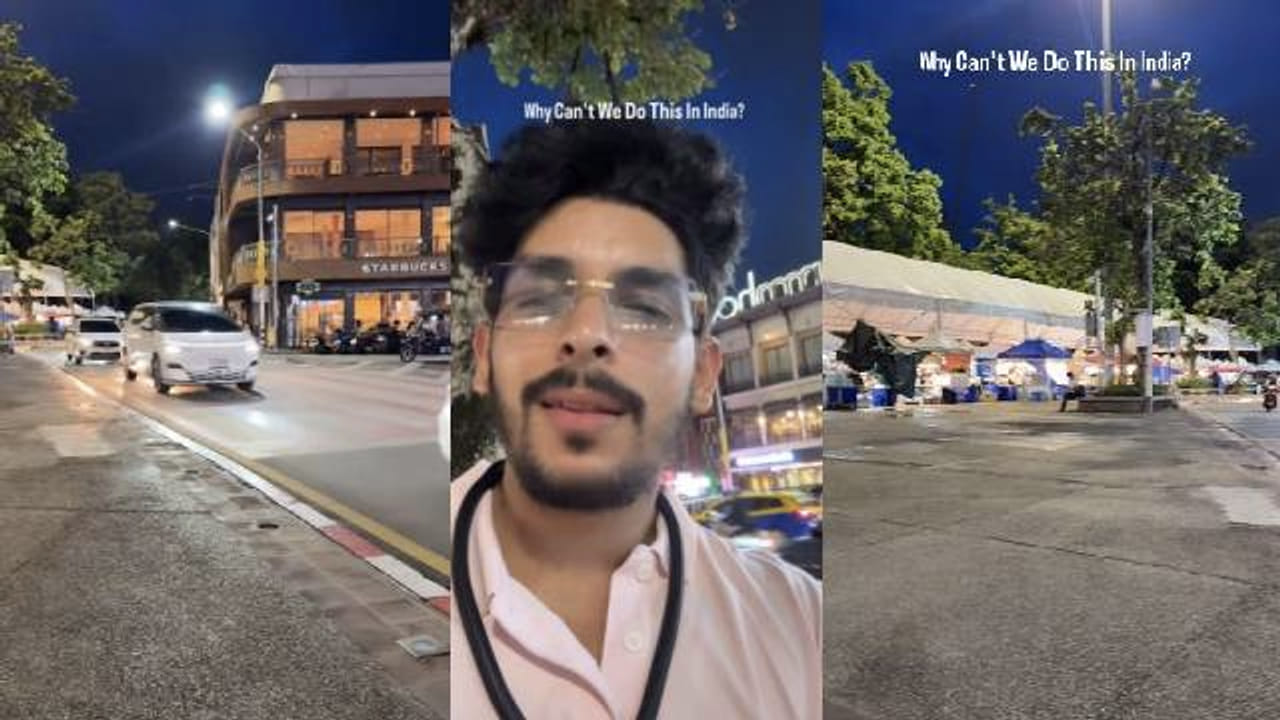
A traveller in Thailand's Chiang Mai found traffic moving without honking and drivers halting for walkers, and his video has started a discussion back home.
A road where vehicles keep moving and almost nobody honks, where drivers actually stop so people can cross, and where the surroundings stay clean. For anyone used to Indian traffic, that picture is unfamiliar, and it is what drew the attention of an Indian traveller in Thailand.
Automobile content creator Akshat Shrivastava posted a video from Chiang Mai, comparing the city's everyday discipline on the road and its cleanliness with what people usually encounter in India. His observations have since started a discussion online.
In the clip, he notes that he is not in Bangkok or Phuket but in Chiang Mai, itself a popular destination for tourists. What struck him was how calmly traffic moved even on a busy stretch. He points to the absence of needless honking, vehicles sticking to the rules and clean surroundings.
One moment in particular holds his attention. A Tesla comes to a stop with its hazard lights on so a pedestrian can get across. He notes that respecting people on foot ought to be ordinary road behaviour rather than something remarkable.
Akshat also speaks about travelling through Chiang Rai, another Thai city. Even away from the main tourist spots, he says, public spaces looked organised and well kept.
He is careful not to present Thailand as flawless or to suggest India has nothing going for it. Instead he argues that there are everyday habits Indians can pick up from countries such as Thailand, Vietnam and Sri Lanka. His message is straightforward. Do not throw garbage on the streets, follow traffic rules, avoid unnecessary honking and respect people walking on the road.
He also makes a point that responsibility does not sit only with the government. Keeping cities clean and orderly is something citizens have a role in as well.
The video drew responses from people who agreed with what he described. Some shared their own experiences of travelling abroad, while others noted that civic sense and responsible behaviour in public spaces can make a substantial difference to daily life.
What gives the message its weight is that it is not simply a comparison between two countries. It is a question about everyday habits closer to home. Building better roads and infrastructure matters, but what happens on those roads also depends on the people using them.
The takeaway from his Thailand visit, as he frames it, is that a cleaner, quieter and better organised city does not start with someone else making the change.










