
Union Minister G Kishan Reddy announced record 1 billion tonnes coal production, stating supply exceeds demand and prices won't be hiked. PM Modi assured adequate coal for summer electricity and sufficient fertiliser stocks amid global crises.
Record Coal Production Surpasses Demand
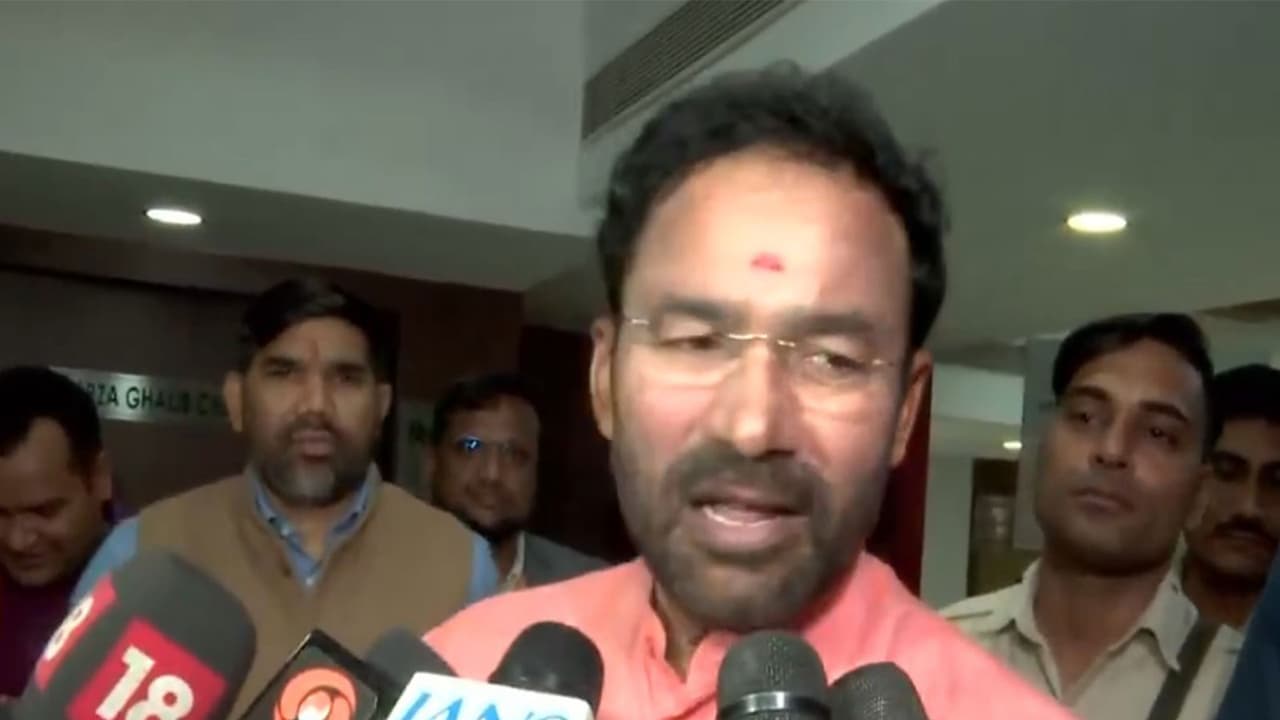
Union Coal and Mines Minister G Kishan Reddy on Monday emphasised the record production of one billion tonnes coal for the second consecutive time and called it a "success story." Speaking to reporters, Reddy stated that the government doesn't have the capacity to store such large quantity of coal, adding due to which coal production had to be stopped at some places. "For the second consecutive time, we have produced 1 billion tonnes of coal. This is a success story... We have produced so much coal that we don't even have space to stock it... That is why we even had to stop coal production at some places... Our coal production even extends the country's demand," Reddy said.
No Plans for Coal Price Hike
He also informed that no decision has been taken to hike coal prices, adding that it should not increase. Reddy asserted that the District Collector and state government should take responsibility so that the coal prices do not increase. "No such decision has been taken to hike coal prices. Coal prices should not increase. If it has been increased anywhere, the District Collector and the state government should take responsibility and put a stop to it... We have taken proactive measures to ensure coal prices don't increase," said Reddy.
PM Modi Assures Energy and Fertiliser Security Amid Global Crisis
This comes in the backdrop of ongoing energy crisis across the world due to the West Asia conflict. Prime Minister Narendra Modi on Monday said that the Centre has made adequate arrangements for fertilisers amid concerns over imports due to the West Asia conflict, saying that the government has never "allowed the burden of global crises to fall on farmers."
Addressing the Lok Sabha, PM Modi assured the nation that adequate coal stocks are present to generate electricity as the summer season approaches in India. The Prime Minister said, "A major question is - what will be the impact of the war on agriculture? The farmers of our country have filled our grain reserves. Therefore, India has adequate food stocks. It is also our endeavour that sowing for the Kharif season takes place properly. The government has made adequate arrangements for fertilisers to deal with such situations. In the past as well, our government did not allow the burden of global crises to fall on farmers. In the last decade, six urea plants have been commissioned, adding 76 lakhs metric tonnes of capacity of urea."
There were concerns around the supply of fertilisers for farming, as India depends on West Asia for a major part of its imported fertilisers. Earlier in March, QatarEnergy had announced that it is stopping the production of some downstream products in the country, including urea, polymers, methanol, aluminium and other products amid the ongoing conflict in the region.
Sufficient Coal Stocks for Summer Power Demand
Addressing the "major challenge" of electricity production, PM Modi said, "Another major challenge of the war is that the summer season is beginning in India. In the coming days, with rising temperatures, the demand for electricity will increase. Currently, adequate coal stocks are available at all power plants across the country."
Ethanol Blending, Railway Electrification to Counter Fuel Crisis
Further, PM Modi invoked ethanol blending in fuel and electrification of railways as steps to counter the global fuel crisis, as Iran has virtually blocked the Strait of Hormuz. "Due to ethanol blending, we are saving the import of about 4.5 crore barrels of oil every year. Similarly, railway electrification is also bringing great benefits. If such large-scale railway electrification had not happened, an additional 180 crore litres of diesel would have been required every year. We have also expanded the metro network. In 2014, the metro network was less than 250 km, which has now increased to more than 1100 km," he said. (ANI)
(Except for the headline, this story has not been edited by Asianet Newsable English staff and is published from a syndicated feed.)
