India laid the foundation stone on Thursday for a core integration and flight-testing centre at Puttaparthi in Andhra Pradesh, the facility that will drive development of the Advanced Medium Combat Aircraft (AMCA), the country’s first fifth-generation stealth fighter.
New Delhi: India laid the foundation stone on Thursday for a core integration and flight-testing centre at Puttaparthi in Andhra Pradesh, the facility that will drive development of the Advanced Medium Combat Aircraft (AMCA), the country’s first fifth-generation stealth fighter.
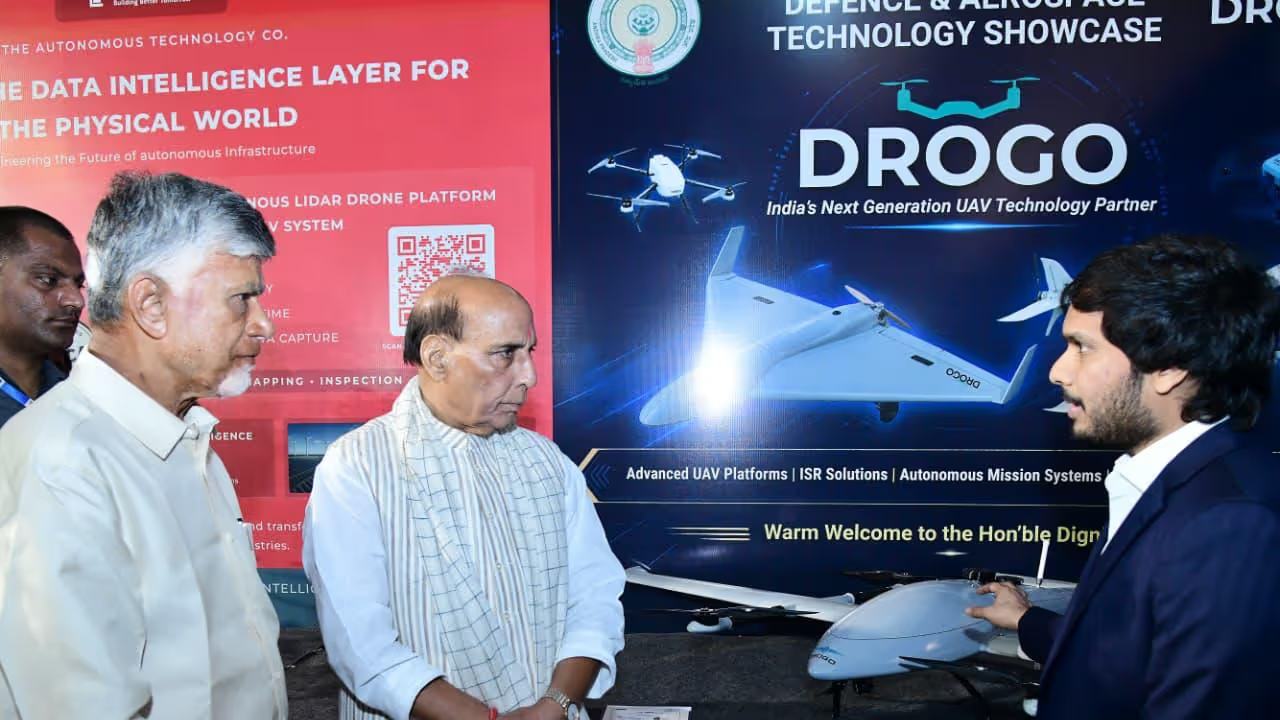
The defence minister, Rajnath Singh, and the chief minister of Andhra Pradesh, N Chandrababu Naidu, presided over groundbreaking ceremonies for a cluster of strategic projects spanning fighter aviation, naval systems, energetics, and drone manufacturing.
The AMCA programme
The Puttaparthi centre, being built at an estimated Rs 2,000 crore as part of a broader Rs 15,000-crore programme, will be operated by the Aeronautical Development Agency (ADA), a DRDO affiliate.
Related Articles

The AMCA is a twin-engine, multirole platform designed to compete in the class of the American F-35, Russia’s Su-57, and China’s J-20.
India currently operates no fifth-generation aircraft; its most capable indigenous jet, the Tejas, is a fourth-generation platform that entered limited service in 2016.
Cabinet Committee on Security approved the AMCA programme in March 2024, with initial operational clearance targeted for the early 2030s.
Naval and undersea systems
A second foundation stone was laid for a naval systems manufacturing facility at T Sirasapalli in Anakapalli district.
The Rs 480-crore plant, being built by the state-owned Bharat Dynamics Limited (BDL), will produce autonomous underwater vehicles, underwater countermeasure systems, and next-generation torpedoes — systems India has largely imported until now.
Energetics and ammunition
At Madakasira, two further projects were inaugurated.
Agneyastra Energetics Limited, a subsidiary of Bharat Forge, will invest Rs 1,500 crore in a defence energetics facility.
HFCL Limited will invest around Rs 1,200 crore in an ammunition and electric fuses plant. Electric fuses — precision detonation components critical to artillery shells, bombs, and missiles — have long been an import-dependent vulnerability in India’s ammunition supply chain.
Drone manufacturing
A consortium of eight drone companies also signed an agreement to establish a manufacturing cluster in Kurnool.
“The push reflects a broader government effort to build a domestic drone industry, a priority sharpened by the decisive role of low-cost unmanned systems in recent conflicts,” an official said.
The bigger picture
Singh said defence production had grown from Rs 46,000 crore in 2014 to approximately Rs 1.54 lakh crore today, while exports had risen from around Rs 600 crore to roughly Rs 40,000 crore.
India has historically ranked among the world’s largest arms importers; successive policy reforms, including a positive indigenisation list barring import of specified items and a raised FDI ceiling in defence manufacturing, have sought to reverse that dependence.
Besides, several other companies also signed memoranda of understanding with the Andhra Pradesh government to establish defence units in the state.