An oil tanker carrying crude to India navigated the conflict-ridden Strait of Hormuz by temporarily switching off its tracking signal. This "going dark" tactic was used to avoid detection amid heightened regional tensions. The incident highlights the increasing risks for commercial shipping in the world's most important energy chokepoint.
An oil tanker carrying crude oil to India managed to navigate the conflict-hit Strait of Hormuz by briefly going “dark,” switching off its tracking signal to avoid detection during escalating tensions linked to the US-Iran conflict. The incident highlights the growing risks faced by commercial shipping in one of the world’s most important energy corridors.
The vessel, identified as the Shenlong Suezmax tanker, was carrying Saudi Arabian crude oil loaded from the Ras Tanura port and was headed for Mumbai. Ship-tracking data showed that the tanker temporarily switched off its Automatic Identification System (AIS) transponder while passing through the narrow waterway, a tactic often used by ships operating in dangerous or sensitive areas.
The AIS system normally broadcasts a vessel’s identity, location, speed and destination to ensure safe navigation and monitoring. However, in conflict zones, some vessels deliberately disable these signals to reduce the risk of being tracked or targeted. In this case, the tanker reportedly went dark while moving through the Strait before reappearing on tracking systems once it had crossed the most dangerous section.
Related Articles

Also Read: First India-bound tanker since Iran-US conflict reaches Mumbai Port
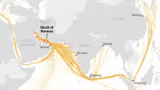
The Strait of Hormuz, located between Iran and Oman, is one of the most strategically important maritime chokepoints in the world. Roughly one-fifth of global oil supplies pass through this narrow passage each day, making it crucial for global energy markets.
Tensions in the region have escalated sharply after the United States and Israel launched strikes against Iran, triggering retaliatory threats and attacks targeting commercial vessels in the Gulf. Reports indicate that several ships have been struck or attacked in or near the Strait since the conflict intensified, forcing many shipping companies to reconsider routes or delay sailings.
Against this volatile backdrop, the Shenlong’s successful transit marked a significant development for India’s energy supply. The tanker later entered Indian waters and berthed near Mumbai, becoming one of the first ships to reach the country through the Strait since hostilities escalated in the region.
The incident also reflects a broader trend emerging across global shipping routes. Maritime tracking data shows that several commercial vessels have begun switching off their AIS signals or manipulating tracking information while passing through high-risk areas. Analysts say such tactics are intended to reduce visibility and avoid becoming targets in an increasingly militarised maritime environment.
Also Read: Iran Allows Indian Ships Safe Passage Through Strait of Hormuz Amid War
India, which imports a large portion of its crude oil from the Middle East, is particularly vulnerable to disruptions in the Strait of Hormuz. A significant share of the country’s energy supplies travels through this corridor, making safe navigation in the region critical for maintaining stable fuel availability and prices.
The ongoing crisis has also prompted New Delhi to explore alternative energy supply routes and sources, including increasing imports from countries such as Russia and exploring pipeline options that bypass the Strait. However, for now, the passage remains a vital lifeline for India’s energy security.
As geopolitical tensions continue to rise in the Gulf, the episode underscores the growing challenges faced by global shipping and energy markets. With ships forced to adopt unusual tactics such as going “dark,” the conflict is reshaping how oil and cargo move through one of the world’s most important maritime chokepoints.