
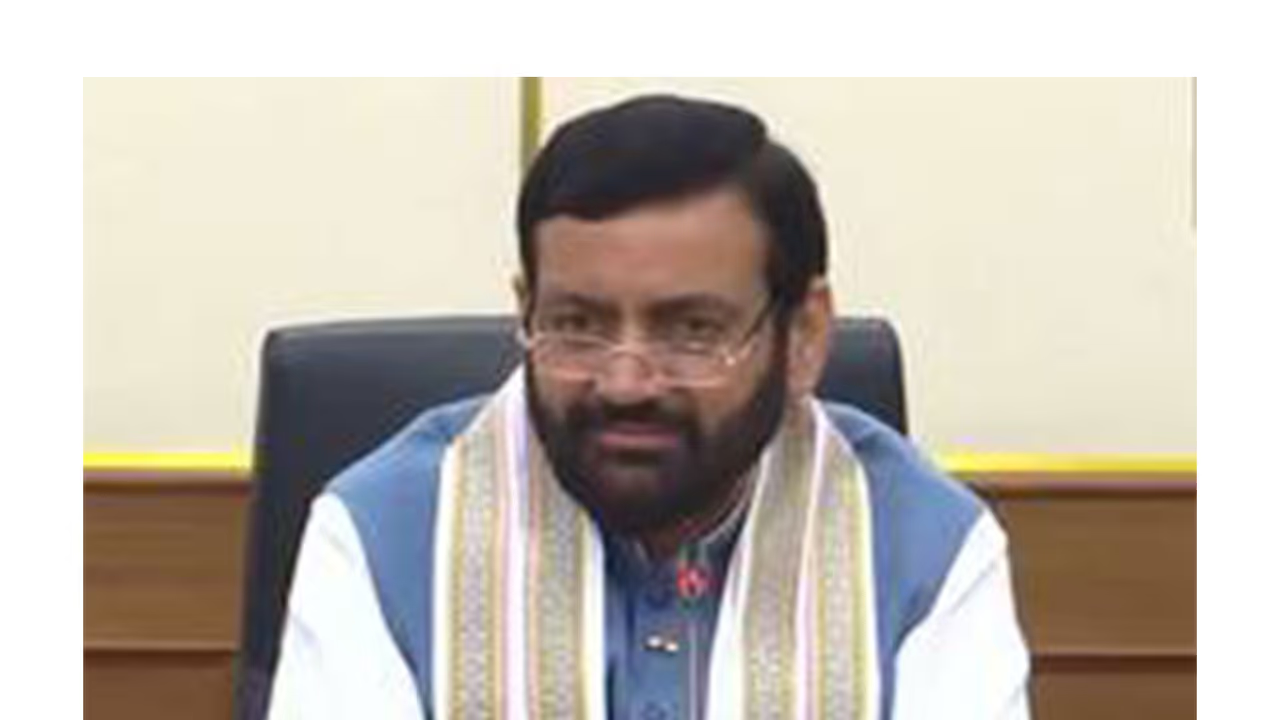
Haryana CM Nayab Singh Saini emphasized water conservation, directing officials to ensure scientific use of treated wastewater from all STPs and CETPs to reduce pressure on groundwater and ensure long-term water availability for various sectors.
CM Directs Efficient Use of Treated Water
Haryana Chief Minister Nayab Singh Saini has said that water conservation is the need of the hour and that the scientific and planned use of treated water can significantly reduce pressure on groundwater and drinking water sources while ensuring the long-term availability of water for industries, the energy sector, green spaces and agriculture.
Chairing a special review meeting on the Reuse of Treated Wastewater (TWW) Policy held late Monday evening, the Chief Minister directed officers to ensure that all Sewage Treatment Plants (STPs) and Common Effluent Treatment Plants (CETPs) in the state produce treated water strictly in accordance with prescribed standards and that its optimum utilisation is ensured. Public Health Engineering Minister Ranbir Gangwa was present during the meeting.
According to a release, the Chief Minister said treated water should not go to waste under any circumstances. He directed the officers concerned to develop a robust and well-planned distribution network so that it can be supplied efficiently to thermal power plants, green belts, agriculture and other sectors requiring water.
Phased Implementation Plan
Officers of the Public Health Engineering Department informed that the Irrigation and Water Resources Department has prepared a phased plan to promote the reuse of treated wastewater. In the first phase, a Rs. 500-crore project covering 35 STPs across 21 districts was prepared and approved under NABARD. Of these, 27 STPs have been finalised for the reuse of treated wastewater through micro-irrigation. Work has already been completed on 19 STPs, while work on the remaining eight is in progress. The project aims to benefit nearly 40,000 acres of agricultural land.
The Officers further informed that 57 STPs have been included in the second phase, comprising 13 STPs with a combined capacity of 157.50 MLD and 44 STPs with a combined capacity of 370.75 MLD. At present, Haryana has 207 STPs/CETPs, and the remaining treatment plants will also be brought under the programme in a phased manner.
Vision@2047: 100% Reuse Target
The release said that efforts are underway to complete all first-phase projects on schedule, develop technically viable STPs under the second phase and integrate the remaining STPs into the programme. The objective under the Vision@2047 roadmap is to ensure 100 per cent reuse of treated wastewater generated in the state by March 2031.
Comprehensive Mapping Ordered
The Chief Minister directed that all STPs and CETPs across the state be comprehensively mapped. A detailed profile should be prepared for every plant, including its treatment capacity, quantity of treated water generated, potential utilisation and the infrastructure required to supply water to nearby areas. He said systematic planning and better inter-departmental coordination would enable large-scale utilisation of treated water while reducing dependence on groundwater and potable water sources. (ANI)
(Except for the headline, this story has not been edited by Asianetnews Editorial staff and is published from a syndicated feed.)